A 20-room hotel closes six rooms for a three-week refurb. Nobody runs a tap in them. On reopening day the first guest turns on the shower and gets a blast of warm, stale water that has sat in the pipes since the decorators left.
Water like that is where Legionella bacteria can multiply. Legionella flushing is the cheap, boring routine that stops it, and this guide sets out what the HSE says and how to run it.
Quick answer: Flush every outlet in an empty room at least once a week. That is the HSE's guidance for landlords, and the same logic applies to hotels, serviced flats and HMOs. Run the hot and cold taps and the shower, flush the toilet, record it, and flush again before the next guest or tenant arrives.
What Legionella flushing means in an empty room
Legionella flushing means running water through every outlet in a room so the stored, stagnant water is replaced with fresh supply. In a hotel or HMO that covers the basin taps, the shower, the bath and the toilet cistern. It is not a deep clean or a chemical treatment. It is moving water, which is the cheapest control you have.
The aim is simple. Warm, still water suits bacteria, and an unused room provides plenty of both. A weekly flush swaps the old water for new before the problem builds.
Why empty rooms are the problem
Empty rooms are a problem because water that does not move drifts towards room temperature. The HSE says a system carries risk where the water temperature sits between 20 and 45°C, and a cold tap in a warm, unused room spends most of its time in that band.
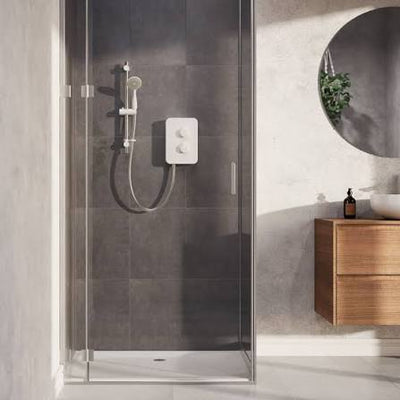
Two other things make it worse. The HSE lists scale and biofilm as nutrient sources for the bacteria, and showers create breathable droplets, which is how Legionella reaches the lungs. That makes the shower the outlet to watch, so keep your showering hardware clean, descaled and in good order.
What the HSE says about weekly flushing
The HSE guidance for landlords says outlets should be used at least once a week to limit stagnation. It recommends flushing the system before letting a property, and a suitable flushing regime or draining down for long vacancies. It gives 60°C as an example setting for the hot water cylinder.
Use every outlet at least weekly, flush before letting, and treat long voids with a proper regime or drain-down. Keep hot water hot, cold water cold, and keep it moving.
Hotels sit slightly differently on paper. Anyone in control of premises has duties under health and safety law, and the HSE's L8 Approved Code of Practice explains how to manage the risk.
The HSE's what you must do page is the starting point. No statute says "flush every seven days". The weekly figure is guidance, but it is the sensible benchmark to meet and the one you would want to point to if anyone asked.
This is Great Britain guidance. Northern Ireland follows HSENI, so check there if your property is in NI.
A room-by-room flushing routine you can log
A good routine takes about ten minutes a room and ends with a written record. Use the steps below as a starting point, and let your own risk assessment set the run times.
- Reduce the spray. Lower the shower head into the tray or bath, or take it off the hose, and keep your face clear.
- Run every tap and the shower. Let the cold run cold and the hot run hot at the basin, bath and shower.
- Flush the toilet. Do it at least once, and run any other outlet in the room, such as a bidet or kitchenette tap.
- Look at the fittings. Check the head for scale, splits or a musty smell, then refit it or swap it.
- Write it down. Record the date, the room, the outlets and who ran them.
Worked example: six empty rooms for three weeks
Take the hotel above. Each room has three outlets: a basin, a shower and a toilet. At roughly three minutes an outlet plus a minute to log it, that is about ten minutes a room. These timings are illustrative, so use the run times in your own risk assessment.
| Item | Figure |
|---|---|
| Rooms empty | 6 |
| Outlets per room | 3 (basin, shower, toilet) |
| Time per room | About 10 minutes |
| One round of six rooms | About 60 minutes |
| Three weekly rounds plus one before reopening | About 4 hours in total |
Where flushing goes wrong
Flushing only the cold tap. Hot lines stagnate too, and a flush that skips them proves nothing.
- Skipping the toilet. The cistern holds water, and flushing it is free.
- Leaving the handset in the tray. A coiled hose or a head resting in the bath holds standing water.
- Standing in the spray. Lower or remove the head first, then keep clear while it runs.
- Logging nothing. A flush without a record is a flush you cannot prove.
- Trusting the thermostatic mixing valve. A TMV caps the temperature at the outlet to prevent scalds. It does not sanitise water upstream.
- Ignoring scale. A limescaled head feeds biofilm, so descale or replace it.
Shower heads, hoses and taps worth replacing
The HSE's landlord advice includes cleaning and disinfecting showerheads regularly, so a head that cannot be cleaned is a liability. When one is scaled, split or musty, replace it rather than nursing it along.
Our handset shower heads start at about £30 including VAT (checked 17 October 2026), and the taps collection covers basin and bath mixers for rooms where the fittings have worn out.
- Spare handsets on the shelf, so a scaled head is swapped the same day.
- Wall holders as well as heads, so a handset is never left lying in the tray.
- One range across the building, so replacements match from room to room.
- A replacement interval written into your risk assessment.
Who is responsible and what to write down
The duty sits with whoever controls the premises: the hotel operator, the landlord or the managing agent. A simple HMO system can often be assessed in-house, as the HSE says for landlords. A larger or more complex system needs a competent person to carry out the risk assessment.
Keep a one-page log per property. Note the date, the room, the outlets run, who ran them, and anything odd such as discoloured water or a musty smell. The HSE says written records are not a legal requirement for landlords, though it suggests they may be wise. A log is also the first thing you will want if anyone asks what you did.
Legionella flushing FAQs
If you control the premises you must assess and control the risk, and flushing unused outlets is a standard way to do it. No law sets a flushing interval, but HSE guidance expects outlets to be used at least weekly. Your written risk assessment should state your routine.
Weekly is the benchmark in HSE landlord guidance, which says outlets should be used at least once a week to limit stagnation. Flush again before the next guest or tenant arrives. For long voids, your risk assessment may call for a set flushing regime or draining the system down.
There is no single legal number. Run each outlet until the hot water runs hot and the cold runs cold, then follow the time set in your risk assessment. Record the date and the outlets you ran. Longer pipe runs and larger systems usually need more time than a single en-suite.
Yes. Treat the cistern as an outlet, because it holds water that sits unused in a vacant room. Flush it at least once during the weekly round and note it in the log alongside the taps and shower, so your record covers every outlet in the room.
Showers make breathable droplets, so reduce them. Lower the head into the tray or bath, or remove it, and keep your face out of the spray. Then refit a clean head. Your risk assessment may set a specific method for the showers you have.
The HSE advises landlords to tell tenants to clean and disinfect showerheads regularly. In practice, descale heads on the schedule in your risk assessment and replace any that are scaled, split or musty. Hard water areas need attention more often.
No. A thermostatic mixing valve limits the outlet temperature to protect against scalds. It does not disinfect water, and the stored water upstream still needs managing. Keep hot water hot (the HSE gives 60°C as a cylinder example), cold water cold, and keep it moving.
Related reading
Hard Water in Hotels: Why Limescale Kills Kettles and Irons
Descaling shower heads, kettles and irons in hard water areas.Electric Shower kW Guide: 8.5, 9.5 or 10.5kW Compared
Choosing the right electric shower rating for rooms and flats.Replace the fittings that cannot be cleaned
Kent Traders stocks shower, tap and bathroom hardware for hotels, HMOs and landlords, with trade pricing for account holders.
Shop showeringOpen a trade account