A landlord had fire-rated downlights fitted throughout an HMO loft conversion, ticked the box, and moved on. Two years later a contractor topping up the loft insulation buried every fitting under 300mm of mineral wool, pressed right against the housings. The downlights were fire-rated. The installation, once insulated, wasn't.
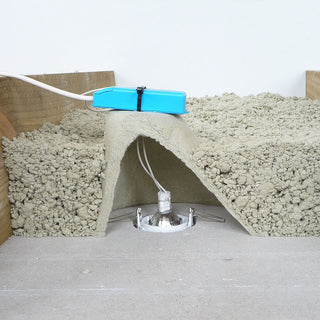
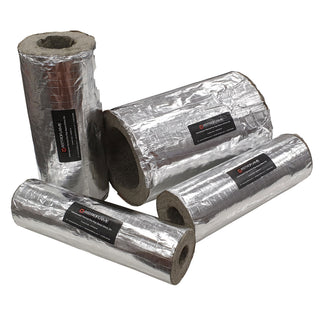
A fire-rated downlight is tested on its own, but piling loft insulation directly over it can still cause overheating, since the fitting was never tested under that thermal load. A loft cone creates a protected air gap around the fitting so insulation sits up to it, not against it.
Why "Fire-Rated" Doesn't Automatically Mean "Insulation-Safe"
A fire-rated downlight is certified to resist fire spread through the ceiling for a set duration, usually 30, 60 or 90 minutes. That rating is tested under defined conditions, and continuous loft insulation piled directly against the housing isn't always part of that test. Insulation traps heat the fitting would otherwise dissipate into open loft air, which can push the housing beyond its safe operating temperature even though the fire rating itself is genuine.
This is a separate issue from fire spread. It's about the fitting overheating under normal use once it's smothered, which is exactly the failure mode a loft cone is built to prevent by keeping insulation off the housing while still letting it sit flush against the ceiling below.
| Situation | What's needed |
|---|---|
| Fire-rated downlight, open loft, no insulation nearby | Downlight alone is sufficient |
| Fire-rated downlight, insulation being laid around it | Loft cone or fire hood required |
| Non-fire-rated downlight in any ceiling under a loft | Replace with fire-rated fitting first |
This sits under Approved Document B (fire safety), not a standalone product rule. Approved Document B sets the fire-spread requirements a ceiling penetration must meet, and the loft cone is one accepted way of maintaining that protection once insulation is added around a downlight fitting.
Retrofitting an Existing Loft
The scenario that catches most landlords isn't a new install, it's a later insulation top-up. Downlights fitted years earlier get buried when a loft gets re-insulated for energy efficiency, and nobody revisits whether the original fittings need a cone added now that insulation depth has increased. Before any loft insulation job, it's worth confirming what's already recessed into the ceiling below.
- Check the fire rating and duration on any existing downlights before insulating around them
- Fit a loft cone per downlight if continuous insulation will sit against the housing
- Match the cone's fire rating (commonly 30-minute) to the downlight's own rating, not below it
For the downlight fitting itself, our fire-rated LED downlights guide covers what the fire rating actually certifies and where it's required, and our intumescent fire seals range covers the related door-side compliance products from the same Astroflame line.
Frequently Asked Questions
Don't Let Insulation Undo a Fire-Rated Install
Astroflame fire-rated loft cones and Luceco fire-rated downlights, trade priced and in stock now.
Browse Fire Rated Loft Cone →Browse Astroflame Fire Protection →