Hard water in hotels shows up as white flakes in a guest's tea long before anyone connects it to the tap. By then the kettle element has been scaling for months.
Hard water carries dissolved calcium and magnesium. Heat it and those minerals form limescale on kettle elements, iron soleplates and shower heads, shortening their life. Check your local hardness figure, descale on a schedule, choose steel kettles over plastic, and keep one unsoftened drinking tap if you fit a softener.
What counts as hard water in hotels?
Hard water is tap water with a lot of dissolved calcium and magnesium in it, picked up as rainwater filters through chalk, limestone and other rock. The Drinking Water Inspectorate (DWI) measures it in milligrams per litre of calcium carbonate. Your local geology decides the number, so two properties in different regions can sit in very different bands.
| Band | Hardness (mg/l CaCO3) | What to expect |
|---|---|---|
| Soft | Up to 100 | Little scale. Very soft water can be more corrosive to pipework. |
| Slightly hard | 100 to 150 | Light scale builds slowly. |
| Moderately hard | 150 to 200 | Scale becomes visible on heating elements over time. |
| Hard | 200 to 300 | Scale and tide marks are routine. The WHO links 200 and above with scale. |
| Very hard | More than 300 | Heavy scale. Plan a strict descaling routine. |
Those bands come from the DWI guidance on water hardness. It also says to ask your water company for an accurate figure, because local variation is not shown on the national map. Most suppliers offer a postcode checker.
Limescale forms when heated hard water drops its dissolved carbonates as a solid crust. The DWI calls this temporary hardness: boil it and it comes out of the water as scale. Here is the sequence.
- Cold hard water enters the kettle, iron or cylinder carrying calcium and magnesium carbonates.
- Heat pushes the carbonates out of solution.
- They stick to the hottest surface, which is usually the heating element or steam chamber.
- The crust insulates the metal, so the element works harder to heat the same water.
- The DWI says scaling shortens element life and makes appliances less efficient.
Which hotel equipment suffers most from limescale?
Anything that heats water or pushes it through small holes suffers first. The DWI names kettles and electric irons specifically, and Wessex Water lists taps and shower heads.
| Item | What limescale does | Sensible fix |
|---|---|---|
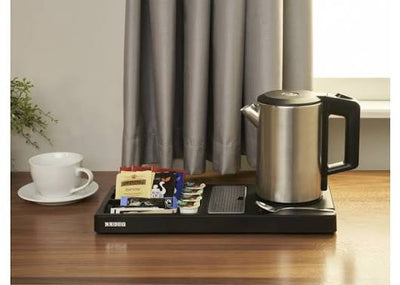
| Guest-room kettle | Crusts the element and sheds flakes into the cup. | Descale on a schedule and choose steel over plastic. |
| Steam iron | Builds scale on the heating parts. | Follow the maker's descale routine and water advice. |
| Shower head | Furs the spray holes and leaves white deposits. | Soak per the maker's guidance and replace worn handsets. |
| Taps and basins | Leave tide marks and a dull finish. | Wipe down daily in housekeeping. |
| Hot water cylinder | Collects scale and sludge inside. | Visual check for scale when possible, per HSE guidance. |
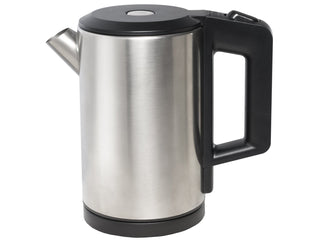
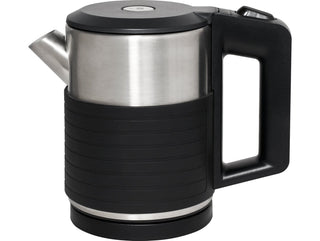
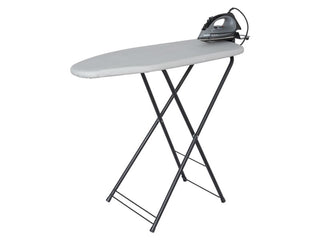
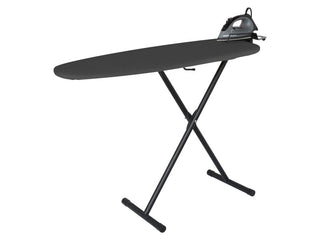
Start with the kettles. Wessex Water advises that in a hard water area plastic kettles tend to be worse for limescale than metal ones, so steel guest-room kettles are the safer default. Irons come next, and hotel steam irons are easy to swap room by room when one clogs.
What does limescale cost a 20-room hotel?
Take a 20-room hotel with one kettle and one steam iron per room. These are illustrative assumptions, not measured failure rates, so swap in your own. Prices are ex VAT as listed on 15 October 2026.
| Item | Unit price | Replace all 20 | Replace 5 a year |
|---|---|---|---|
| Corby Canterbury 1L steel kettle | £27.75 | £555.00 | £138.75 |
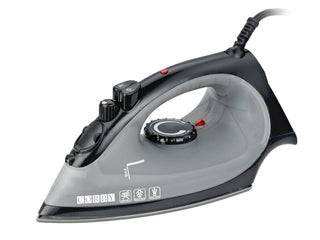
| Corby Sherwood 1200W steam iron | £18.13 | £362.60 | £90.65 |
| Combined | £917.60 | £229.40 |
Losing a quarter of your kettles and irons each year to scale costs £229.40 ex VAT before housekeeping time.
Trade tipKeep one spare kettle and one spare iron per floor. Housekeeping can swap a scaled unit in seconds and descale it away from the guest room.
How often should you descale kettles, irons and shower heads?
In a hard or very hard area, descale guest-room kettles monthly; in a soft area a quarterly check is enough. That schedule is our judgement, not a standard, so adjust it to what you see inside the kettles.
- Kettles: Wessex Water suggests squeezing lemon juice in, adding chopped lemon, covering with water, boiling, and leaving it to cool for a few hours before pouring away and wiping. Shop-bought descaling solutions also work.
- Steam irons: follow the manufacturer's manual. Do not put descaler in an iron unless the manual allows it.
- Shower heads: remove the head, soak it as the maker advises, rinse well and refit.
- Taps and basins: wipe dry as part of the daily room clean.
Should a hotel fit a water softener?
A softener protects appliances, but most replace hardness with sodium, so the DWI says to keep an unsoftened tap for drinking and cooking. Guest kettles are usually filled from the bathroom basin, so a whole-building softener puts softened water in the cup. Ask your plumber how to handle that in your layout.
The DWI also says magnetic scale devices do not soften water, and suggests buying them only on a sale-or-return basis.
When does limescale become a safety issue?
In stored hot water, scale and sludge are things the HSE tells duty holders to look for. Its hot and cold water systems guidance asks for a visual check of cylinder surfaces for scale and sludge when possible, and for tanks to be checked as clean at least annually.
RuleHSE guidance says hot water should be stored at 60°C or above, and outlets should reach at least 50°C within one minute of running. This is Great Britain guidance for managing Legionella risk. Your risk assessment decides the exact checks.
Which limescale mistakes do hotels keep making?
- Descaling only after a guest complains.
- Buying plastic kettles for a hard water area.
- Softening every tap, including the one used for drinking.
- Trusting a magnetic scale gadget without a sale-or-return deal.
- Ignoring the hot water cylinder because nothing looks wrong.
Watch outA white crust on a shower head is a warning that the hot side of the system may be scaling too. Do not treat it as a cosmetic job.
What should you buy for a hard water property?
Buy equipment you can inspect, descale and swap quickly. Stock below was checked on 15 October 2026, and prices are ex VAT.
- Steel kettles, such as the Corby Canterbury 1L at £27.75.
- Steam irons with a clear descale routine in the manual; the Corby Sherwood 1200W is £18.13.
- Replacement handsets from the handset shower heads range; the Grohe Euphoria 110 Mono is £25.75, and some lines are on low stock.
- A spare of each item per floor so housekeeping can swap and descale away from the room.
- A one-page descaling log taped inside the housekeeping cupboard.
Frequently asked questions
Hard water contains a lot of dissolved calcium and magnesium, picked up as rain filters through rock such as chalk and limestone. The DWI classes water above 200 mg/l of calcium carbonate as hard. It is not a health risk, but it forms limescale on heating elements and fittings.
Ask your water company or use its postcode checker. The DWI map shows typical hardness across England and Wales but warns that local variation is not shown. A figure for your exact postcode tells you how aggressive your descaling routine needs to be.
No. Southern Water says hard water does not affect drinking water quality, and the DWI notes there are no UK drinking water standards for hardness. The problem is mechanical: scale builds on kettles, irons, taps and shower heads, and wears equipment out.
Wessex Water advises that in a hard water area plastic kettles tend to be worse for limescale than metal ones, because the smooth surface holds scale less firmly. For guest rooms, a steel kettle is the sensible default, though it still needs regular descaling.
Yes. Wessex Water suggests adding lemon juice and chopped lemon, covering with water, boiling, then leaving it to cool for a few hours. Pour the water away and wipe the inside with a soft sponge. Descaling solutions from hardware shops are the alternative.
Most domestic softeners swap hardness for sodium. The DWI recommends keeping an unsoftened tap for drinking and cooking, because extra sodium can be a problem for premature babies and people on low-sodium diets. Have a qualified plumber fit the softener and service it.
HSE guidance lists sludge, scale and rust build-up among the things to control in water systems, and asks for visual checks of cylinders for scale and sludge when possible, plus an annual check that tanks are clean. Scale alone does not prove a problem, so your Legionella risk assessment should decide the checks.
In a hard or very hard area, monthly is a sensible starting point; in a soft area, quarterly is usually enough. That is our judgement rather than a rule. Look inside a few kettles each month and shorten the interval if you see a crust.
Related reading
Hotel rooms
Hotel Room Irons: Why the Anti-Theft Box covers which irons survive guest rooms and why.
Stock the rooms before the limescale gets there
Steel guest-room kettles at trade prices, in stock now from Kent Traders.
Shop steel kettles