A landlord ordered a nice illuminated mirror for an HMO bathroom refit and asked the electrician to "just wire in a normal double socket" behind it, to save on the mirror's built-in one. The electrician refused on the spot. A standard 13A socket has no place in a bathroom's electrical zones, illuminated mirror or not.
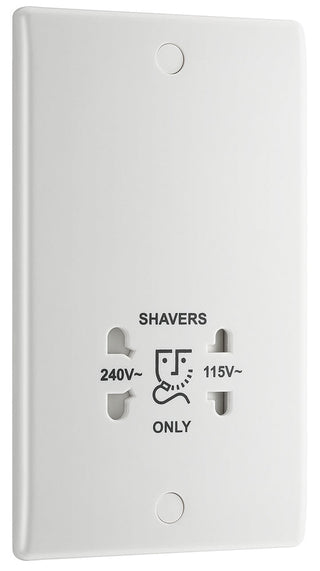
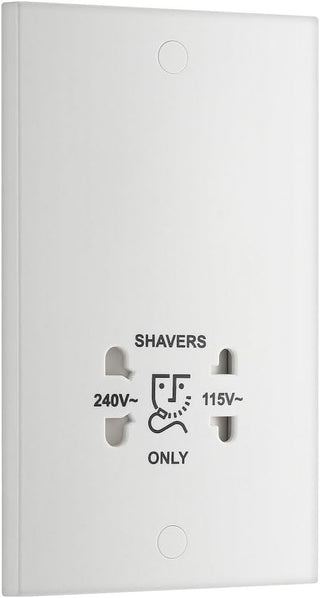
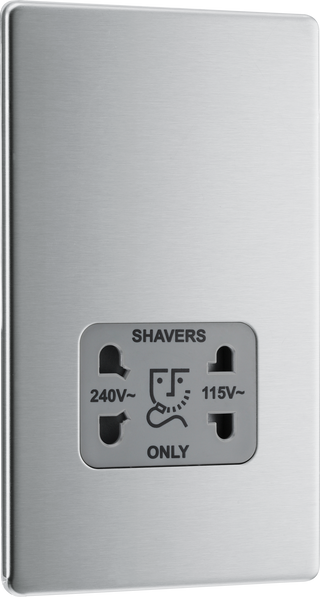
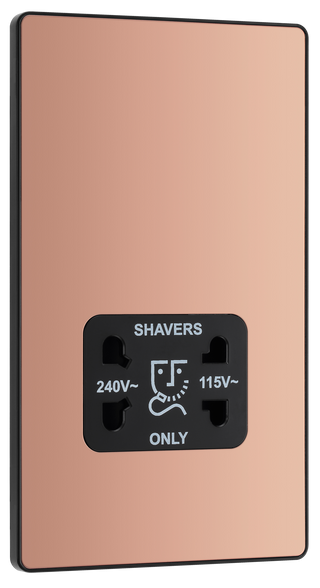
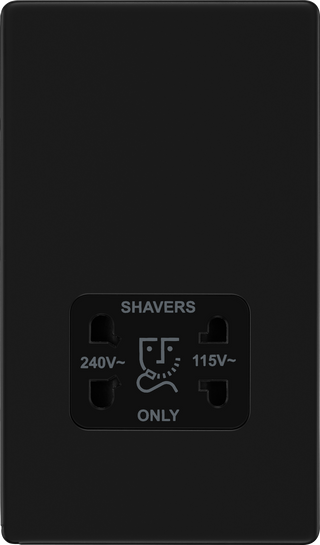
An illuminated mirror's shaver socket isn't a normal plug socket in a different faceplate. It contains an isolating transformer that separates the shaver circuit from the mains supply, which is what makes it safe inside a bathroom's electrical zones. A standard 13A socket, without that isolation, isn't permitted in those zones however it's built into the mirror.
Why a Shaver Socket Isn't Just a Smaller Plug Socket
The difference sits inside the unit, not on the faceplate. A shaver socket contains a small isolating transformer, and that transformer physically separates the shaver's circuit from the mains earth. If a fault occurs in a shaver plugged into an isolated socket, there's no path back to earth through the user, which is the entire point of allowing it into a room where someone might be standing on a wet floor holding a live appliance.
A standard socket has no such isolation. That's the actual reason bathrooms can't simply have a normal double socket added behind a mirror, whatever the mirror looks like or however integrated the wiring seems. The rule follows the electrical principle, not the furniture.
| Zone | What's permitted |
|---|---|
| Zone 1 (above bath/basin, up to 2.25m) | No sockets of any kind, isolated or otherwise |
| Zone 2 (0.6m surround) | Isolating shaver socket only, no standard sockets |
| Outside zones / Zone 3 | Standard sockets permitted, still recommended on RCD protection |
Where the mirror's shaver socket physically sits matters just as much as its type. Even an isolated shaver socket has a permitted zone. If a mirror is mounted low enough to bring its built-in socket into Zone 1, the socket type alone doesn't resolve the positioning problem, the whole fitting needs repositioning.
Dual Voltage: The Other Detail Worth Checking
Most UK shaver sockets are dual voltage, supplying both 115V and 230V from the same outlet, which covers shavers bought abroad as well as UK ones. This isn't a legal requirement in the way isolation is, but it's worth confirming on the specific product before ordering for an HMO or hotel refit, since guests and tenants bring a genuine mix of appliance voltages with them.
Isolation is a Building Regulations matter, not just a product spec. Bathroom electrical work sits under Approved Document P, which sets out when notifiable work applies. Worth checking before a mirror install is treated as a simple swap.
For the wider bathroom fit-out beyond the mirror itself, our bathroom and wet room electrical buying guide covers zone-by-zone product choices in more detail, our HMO socket count guide is useful background if the same refit touches adjoining bedrooms, and our fan isolator switches range covers the other zoned bathroom fitting most refits need alongside the shaver socket.
Frequently Asked Questions
Get the Isolation Right, Not Just the Finish
Dual voltage shaver sockets in every major finish, trade priced and in stock now.
Browse Shaver Sockets →