By Kent Traders · Updated 27 October 2026 · 8 min read · UK
A fire door is tested as a complete assembly: leaf, frame, seals and hardware. Cut a hinge recess or a lock mortice into the leaf and you remove timber that was part of that test. Fire door hinge pads and lock kits put the protection back. This guide explains what each one does, which kit suits which lock, and what to buy.
Hinge pads are thin intumescent sheets fitted behind hinges, and lock kits wrap the lock case, so hardware does not leave a heat path through the door. Fit them wherever hardware is cut into the leaf. Use hardware and kits with fire test evidence for your door, and follow the door maker's instructions.
What do fire door hinge pads and lock kits protect?
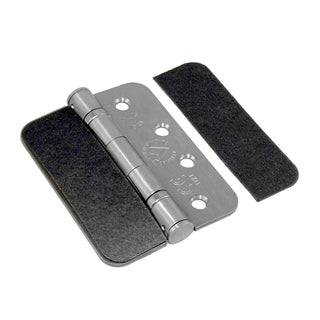
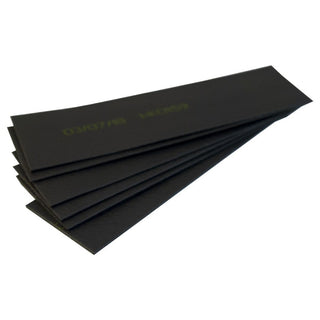
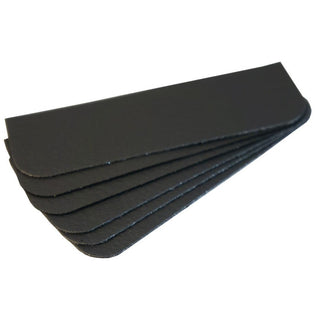
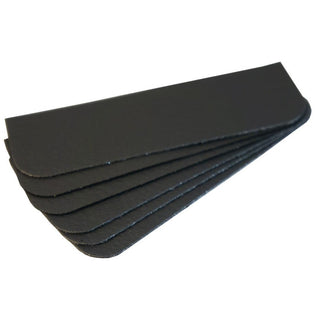
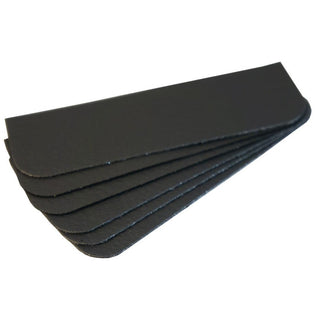
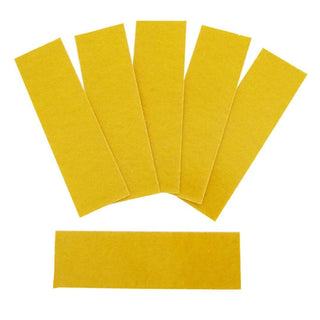
A hinge pad is a thin intumescent sheet that sits in the hinge recess, behind the hinge blade. A lock kit is the same material cut to wrap a lock case or latch. When heat reaches them they expand and fill the gap the hardware leaves in the leaf.
Both exist for one reason. The timber around a recess is part of what made the door pass its fire test. The pad or kit replaces what was removed, so the hardware stops being the cheapest route for fire and smoke through the door.
Why hardware is the weak point in a fire door
The BWF Fire Door Alliance ironmongery fact card says fire doors are tested only as complete assemblies. It tells you to select certificated and compatible ironmongery, and to find the compatible components in the door manufacturer's instructions. Hinges on fire doors should be conformity marked and tested to BS EN 1935.
The Guild of Architectural Ironmongers guide adds the detail. Intumescent is often used around hinges, typically under the hinge blade, and wrapped around the lock case before it goes into the door core. It also says any change to a fire door can nullify its third-party certification.
Fire test evidence decides what you can fit. A hinge, lock or viewer is only as good as its evidence for your door construction.
Hinge pads: thickness, corners and pack size
Every pad below is on the ancillary products collection. The Astroflame pads are 30 by 100mm and 0.8mm thick. Interdens pads come in 1mm and 2mm, and its page says 1mm is typically used for 30-minute applications and 2mm for 60-minute ones.
| Pad | Size and thickness | Pack | Price |
|---|---|---|---|
| Astroflame hinge pads | 30 x 100mm, 0.8mm | 6 | £1.54 |
| Astroflame self-adhesive hinge pads | 30 x 100mm, 0.8mm | 6 | £1.74 |
| Astroflame radius hinge pads | 30 x 100mm | 6 | £1.92 |
| Interdens square hinge pad, 1mm | 100 x 30mm | 6 | £2.94 |
| Interdens square hinge pad, 2mm | 100 x 30mm | 6 | £5.16 |
| Astroflame self-adhesive hinge pads | 30 x 100mm, 0.8mm | 300 | £63.91 |
Match the pad corners to the hinge blade, square or radius. Then check the pack size against the job. A pack of six works out at 29p a pad and the 300-box at 21p, so the box only pays once you need about 220 pads.
Lock and latch kits: which kit for which lock
A lock kit is cut for a lock type and a backset. The backset is the distance from the door edge to the centre of the spindle or keyhole, so measure it before you order. The Astroflame kits below list 64mm or 76mm backsets where they state one.
| Kit | Suits | Price |
|---|---|---|
| Universal tubular latch kit | Tubular latch, 64 or 76mm backset | £2.13 |
| Universal BS sashlock kit | BS sashlock, 64 or 76mm backset | £5.93 |
| Universal BS DIN lock kit | BS or DIN lock, lock types not specified | £6.24 |
| FB1/FB2 deadlock kit | FB1 or FB2 deadlock | £5.47 |
| Flush bolt pad kit | Flush bolts, 150 or 200mm | £2.45 |
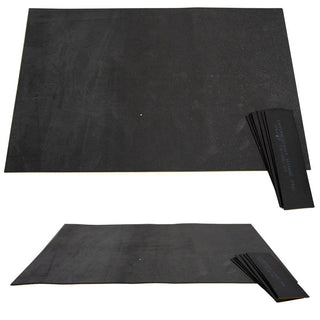
The pages describe each kit as a self-adhesive, graphite-based intumescent sheet, 0.8mm thick, for FD30 and FD60 doors. They cite BS 476 Part 22 and BS EN 1634-1 test standards. The pages do not list how many pieces come in a kit, so check the pack on delivery.
The Guild of Architectural Ironmongers warns that if the lock case corner is cut but the core rebate cannot match that shape, the timber can char and let fire into the void.
Worked example: an eight-door HMO refit
Take eight bedroom doors in an HMO, each with a sashlock and three hinges. These are our assumptions: one pad per hinge, one lock kit per door. Your door certificate decides the real numbers.
| Item | Quantity | Cost |
|---|---|---|
| Astroflame self-adhesive hinge pads, pack of 6 | 4 packs (24 pads) | £6.96 |
| Astroflame universal BS sashlock kit | 8 kits | £47.44 |
| Total for eight doors | £54.40 | |
| Per door | £6.80 |
That is £6.80 a door in protection. Order in whole packs and add a spare pack of six. A pad spoiled in the recess is cheaper to replace than a door that fails inspection.
Viewers, bolts and other cut-outs
Hinges and locks are not the only cut-outs. The Guild of Architectural Ironmongers lists door viewers and letter plates as furniture that may need graphite-based intumescent, and says to check the test evidence for the specific product.
Our Astroflame fire rated door viewer lists 60 minutes for timber fire doors and 30 minutes for composite doors. It suits door thicknesses of 35mm to 55mm, has a 120 degree view, and cites DHF TS002:2009. Letter plates have their own rules, which our letterbox guide covers.
Photograph each hinge recess and lock mortice before the hardware goes in. The photo shows an inspector that the protection is there.
Where hardware protection goes wrong
Pads protect the hardware. Strips and smoke seals protect the gaps, so the fire and smoke seals collection is the other half of the job. These are the habits that fail inspections:
- Fitting a hinge into a recess with no pad because the door looks closed.
- Using hardware that has no test evidence for your door construction.
- Cutting a mortice larger than the door maker's drawing allows.
- Guessing pad thickness instead of matching it to the test evidence.
- Buying without the paperwork. The pages we checked cite tests but link no certificate files, so ask for them first.
What to buy: Astroflame and Interdens ironmongery
The Astroflame collection holds the wider fire door range. Prices are inc VAT and were checked on 27 October 2026. All were in stock. Most pages say the item ships direct from the supplier in three to five working days.
| Product | Use | Price |
|---|---|---|
| Astroflame self-adhesive hinge pads, pack of 6 | Behind hinge blades, FD30 and FD60 | £1.74 |
| Interdens square hinge pad, 2mm, pack of 6 | Hinges, thicker pad | £5.16 |
| Astroflame universal tubular latch kit | Tubular latches | £2.13 |
| Astroflame universal BS sashlock kit | BS sashlocks | £5.93 |
| Astroflame FB1/FB2 deadlock kit | FB1 and FB2 deadlocks | £5.47 |
| Astroflame fire rated door viewer | Viewer, 35 to 55mm doors | £12.72 |
FAQs
Often, yes. A hinge sits in a recess cut into the leaf, and an intumescent pad behind it replaces the protection that was cut away. The door manufacturer's instructions and the hinge test evidence decide the answer. Check both, and ask your supplier for the pad's test evidence before you buy.
The product pages do not say, so it depends on the door. One pad per hinge is our planning assumption, not a rule. Count the hinges, read the door maker's instructions and confirm the number against the certificate, then order whole packs of six or a larger box.
The Interdens page says 1mm is typically used for 30-minute applications and 2mm for 60-minute ones. It also tells you to check the manufacturer's test evidence or Certifire certification. Treat thickness as a starting point, then confirm it against the evidence for your hinge and door.
The Guild of Architectural Ironmongers says intumescent is typically wrapped around the lock case before it is fitted to the door core. A lock case sets into the leaf and removes timber. Check the door instructions, then pick the kit for your lock type and backset.
Only with a viewer that has fire test evidence for your door type. The Guild of Architectural Ironmongers lists viewers among furniture that may need graphite-based intumescent. Our Astroflame viewer lists 60 minutes for timber doors, 30 minutes for composite doors, and door thicknesses of 35mm to 55mm.
Only for hinges that suit the door's certification. The BWF Fire Door Alliance says to use certificated, compatible ironmongery, and to use conformity-marked hinges tested to BS EN 1935 on fire doors. Check the door manufacturer's list of compatible components before you order.
Related reading
Protect the hardware, keep the rating
Match every hinge and lock to a pad or kit with test evidence for your door. Trade buyers can open an account for repeat orders.
Shop fire door ironmongeryOpen a trade account