Fire Blankets for Hotel and HMO Kitchens: What to Buy | KT

A pan of oil catches alight in the middle of a busy breakfast service. In the few seconds that follow, whoever is nearest has to decide what to grab. A fire blanket helps only if it is on the wall, within reach and understood by the people using the kitchen.

Quick Answer

A fire blanket smothers small cooking and bin fires by cutting off the oxygen. The Home Office small guest accommodation guide suggests one in self-catering kitchens, and some council HMO guides require one wherever food is cooked. Choose a BS EN 1869:2019 blanket sized to the kitchen and mount it near the exit, away from the hob.

Shop the Economy Fire Blanket →

What the Guidance Actually Expects

There is no single rulebook for kitchen fire blankets. What you need depends on the type of premises, and two sources cover most of our customers.

  • Small B&Bs, guest houses and holiday lets in England. The Home Office guide Making your small paying guest accommodation safe from fire says guests in self-catering accommodation are not expected to use firefighting equipment, but you may wish to provide a small extinguisher and/or fire blanket in the kitchen area. Each of its example layouts shows both in the kitchen.
  • HMOs. Standards are set locally. Luton Borough Council's HMO fire guide says a fire blanket should be provided in each area where there are cooking facilities, mounted at 1.5m high near an exit door and away from cooking appliances. Your own licensing authority may ask for something different, so check its standard first.

The Home Office guide only applies to premises with a simple layout, sleeping no more than 10 guests. Larger hotels work from the fire risk assessment for the whole building, and that assessment decides how many blankets and extinguishers each kitchen needs.


Which Fire Blanket for Which Kitchen

Fire blankets are for small fires: a pan of cooking oil, a waste bin or burning clothing. The size you pick follows the kitchen and the risk.

Blanket Size Supplier's intended use
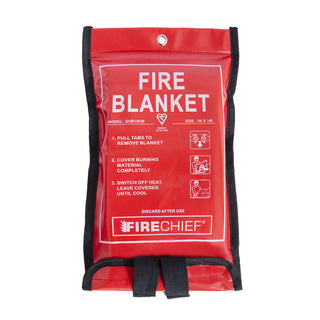
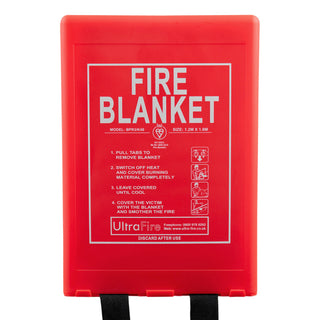
Economy Fire Blanket (FireChief), BS EN 1869:2019 Kitemarked 1.0 x 1.0m, soft pouch Cooking oil fires (up to 3 litres) and waste bin or clothing fires
UltraFire Fire Blanket, BS EN 1869:2019 1.2 x 1.8m, clam shell case Larger or commercial kitchen areas, workshops and clothing fires

Both carry a five-year cloth warranty, and you can see the full range in our Extinguishers & Equipment collection. The soft pouch of the economy blanket suits a compact domestic-style kitchen, while the clam shell case of the larger blanket keeps it protected in a busy back-of-house area.

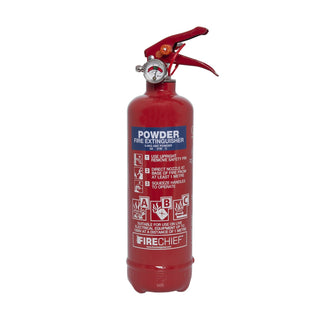
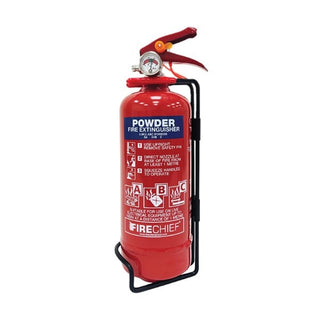
Trade Note: a blanket does not replace an extinguisher in a commercial kitchen. Our fire safety equipment buying guide explains how to select extinguishers by fire class under BS 5306, including wet chemical units for cooking oils, and it is worth reading alongside this one.


Where to Mount It and How It Gets Used

Position decides whether a blanket gets used. Fit it near the kitchen exit so a person can reach it without crossing the fire, and keep it away from the hob or fryer it is protecting. Mount it at a consistent, easy-to-reach height, and make sure it is not hidden behind a door, a shelf or a stack of stock.

Then brief everyone who works in the kitchen. The method is simple, but nobody wants to learn it during a fire:

  • Turn off the heat only if you can do it safely.
  • Hold the blanket up as a shield and lay it over the pan or bin from the side nearest you. Do not throw it.
  • Leave it in place until the pan has cooled completely. Lifting it early can let the fire restart.
  • If the fire spreads, leave the building and call 999. A blanket is for small fires only.
  • Replace it after use, and check at each routine inspection that it is still in its holder with the tapes accessible.
Browse Hotel Supplies →

Do Not Stop at the Blanket

A kitchen fire plan has more parts than one item on the wall. The Home Office guide also says carbon monoxide detectors should be provided where living accommodation contains a gas or solid fuel burning appliance, so add that check to your kitchen review.

Detection and doors matter just as much. Our LD1, LD2 or LD3 fire alarm guide covers which smoke alarm grade suits an HMO, and our guide on why wedging fire doors open is illegal covers the door side of keeping a kitchen fire contained. Passive protection such as seals and stops sits in the Astroflame fire protection range.


Frequently Asked Questions

The Home Office small paying guest accommodation guide says that in self-catering accommodation you may wish to provide a small fire extinguisher and/or fire blanket in the kitchen area, and its example layouts show both in the kitchen. Your fire risk assessment decides what your premises need.
Many council HMO standards ask for one. Luton Borough Council's HMO fire guide, for example, says a fire blanket should be provided in each area where there are cooking facilities. The standard that applies to you is set by your own licensing authority, so check it before you buy.
The UltraFire 1.2 x 1.8m is described by its supplier as suited to larger or commercial kitchen areas, while 1.0 x 1.0m blankets suit smaller kitchens and bins. A blanket is an addition to, not a replacement for, the extinguishers your risk assessment calls for. Our fire safety guide recommends wet chemical extinguishers for commercial kitchens.
Look for BS EN 1869:2019, which both blankets in the table above are certified to. Some older council guides still quote the 1997 edition of the standard, but a blanket certified to the 2019 edition is the current one.
Turn off the heat only if it is safe to do so, hold the blanket in front of you and lay it over the pan from the side nearest you. Leave it in place until the pan has cooled completely. If the fire is spreading or not going out, leave the building and call 999. Replace any blanket that has been used.

Put a Fire Blanket Where It Will Be Used

BS EN 1869:2019 fire blankets for hotel and HMO kitchens, with trade pricing for multi-site orders.

Shop the UltraFire 1.2 x 1.8m Blanket →
Previous articleHotel Room Torches vs Emergency Lighting: What Counts | KT All articles

RELATED ARTICLES

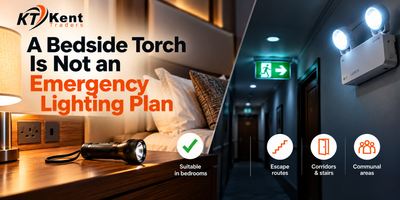
Torch vs Emergency lighting
Hotel Room Torches vs Emergency Lighting: What Counts | KT

Home Office guidance lets the smallest B&Bs and guest houses in England rely on bedroom torches instead of fixed escape lighting. There is a...

Standard letterbox
Why a Standard Letterbox Voids Your Fire Door Rating | KT

A standard letterbox cut into an FD30 fire door is one of the most commonly missed compliance failures on a fire door inspection, and...

Closed vs concealed cistern
Concealed vs Close-Coupled Cisterns: Which for HMO? | KT

Landlords specifying cisterns for an HMO refurb usually pick on looks alone, and that's exactly where it goes wrong. A concealed cistern behind a...

Downlight insulation
Loft Insulation Over Downlights: What Actually Stops Fires

A landlord had fire-rated downlights fitted throughout an HMO loft conversion, then two years later a contractor topping up the loft insulation buried every...

Hotel welcome trays
Hotel Welcome Trays: What Actually Needs PAT Testing | KT

A guest complained her room kettle kept tripping the socket, and maintenance found the element had been failing for weeks. Nobody had tested it...

illuminated mirror and shaver stock
Illuminated Mirrors & Shaver Sockets: What's Legal | KT

A landlord asked an electrician to wire a normal double socket behind an HMO bathroom's new illuminated mirror, and was refused on the spot....

Garden room electrics
Garden Room Electrics: What Cable Actually Goes In | KT

A homeowner ran a heavy-duty extension lead across the lawn to a new garden office, and it tripped the whole house's RCD every time...

Masterplug night light sockets
Night Light Sockets: Do You Need One or a Lamp? | KT

A homeowner upgraded from a 7kW to a 10.5kW shower and kept the existing 6mm cable, assuming a cable is a cable. Within weeks...

USB DESKTOP POWER OUTLET
Reception Desk Power & USB Charging: What to Spec | KT

A guesthouse fitted USB sockets throughout every guest room but left reception on its original two sockets, both already taken by the card machine...

Hotel coffee pod machines
Hotel Kettle or Pod Machine? What Guest Rooms Need | KT

A guesthouse swapped every room kettle for a pod machine and found the sachet-restocking bill roughly doubled while some guests complained they couldn't make...

stairwell and corridor lighting
Corridor & Stairwell Sensor Lighting Guide | Kent Traders

A guesthouse stairwell had a switch only at the bottom, and a guest missed the last two steps coming down in the dark. PIR-controlled...

School Classroom Uk
School & Classroom Electrical Spec Guide | Kent Traders

A primary school fitted standard white moulded sockets along classroom skirting and was replacing cracked faceplates within a term. Schools take more physical abuse...

Extractor fan rates
Extractor Fan Ratings: Litres/Sec by Room | Kent Traders

A landlord replaced a failed bathroom extractor fan with whatever unit looked closest to the old one, and the property still failed its damp...

GU10, B22 or E27? UK Lamp Fittings Explained | KT

A guest ordered ten replacement bulbs for a downlight and every one arrived with the wrong base, because the old bulb wasn't a GU10,...

LD1, LD2 or LD3 Fire Alarms for HMOs? | Kent Traders

A landlord fitted LD3 smoke alarms and still failed his council's HMO licence inspection, because a shared house needs LD1 or LD2 coverage under...

Taps for Low Water Pressure: What to Buy | Kent Traders

A brand new tap that only dribbles is almost never faulty. It is a pressure mismatch. Every tap has a minimum operating pressure in...

Shop products from this guide