GU10, B22 or E27? UK Lamp Fittings Explained | KT

A guest ordered ten replacement bulbs for a downlight fitting and every single one arrived with the wrong base, because "the old one" wasn't a GU10 at all, it was a bayonet cap that only looked similar in the photo.

Quick Answer

GU10 has two pins and a quarter-twist locking action, used almost exclusively in downlights and spotlights. Bayonet (B22) has two side pins that push and twist into a socket, common in older pendant and lamp fittings. Edison screw (E27 standard, E14 small) threads in like a bottle cap. They are not interchangeable, and getting the wrong one means the bulb simply won't fit the holder.

Browse LED Bulbs at Trade Prices →

How Do You Tell GU10, Bayonet and Edison Screw Apart?

The confusion almost always comes from photos. On a screen, a GU10's two short pins and a bayonet's two side pins can look similar enough to order the wrong one, especially when the old bulb has already been thrown away and there's nothing to hold up for comparison.

Fitting How It Connects Where You'll Usually Find It
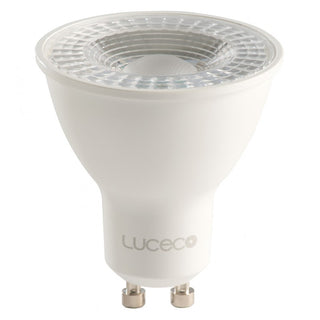
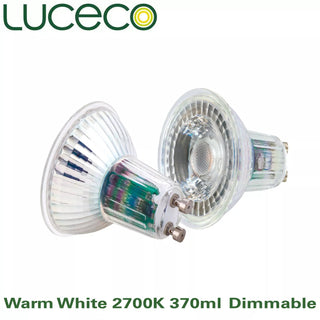
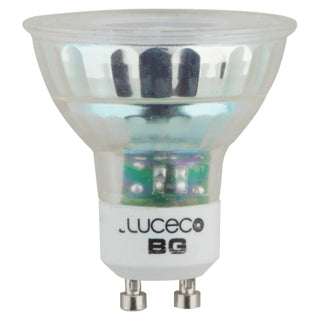
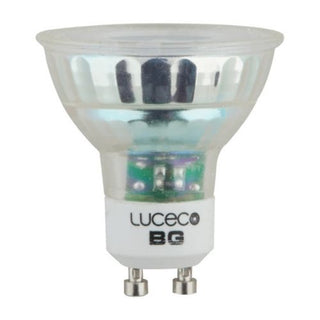
GU10 Two short pins, push in and twist a quarter turn to lock Ceiling downlights, spotlights, kitchen and bathroom recessed fittings
Bayonet (B22) Two pins on opposite sides of the base, push in and twist to lock Older pendant lights, table lamps, many UK ceiling roses
Edison Screw (E27) Threaded metal base, screws in clockwise like a bottle cap Table lamps, decorative fittings, many European-style fixtures
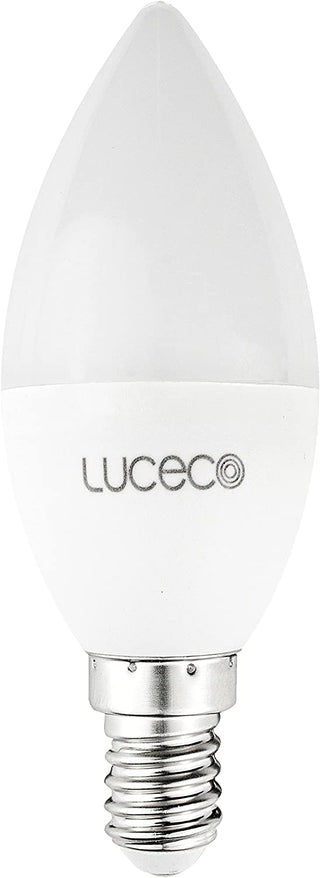
Small Edison Screw (E14) Smaller threaded base, same screw action as E27 Candle-style bulbs, chandeliers, smaller decorative fittings
The fastest way to check: take out the old bulb and look at the base directly, don't go from memory or a photo. Pins mean GU10 or bayonet; a threaded metal collar means Edison screw. If it's pins, count how many and check the spacing, GU10 pins sit close together and bayonet pins sit on opposite sides of a wider base.

Why Doesn't a GU10 Just Fit a Bayonet Socket?

The two pins on a GU10 base are spaced differently from a bayonet's, and a GU10 locks with a quarter twist into a ceramic or plastic holder shaped specifically for it. A bayonet base pushes into a spring-loaded socket instead. Neither the pin spacing nor the locking mechanism is compatible with the other, so there's no way to force a GU10 into a bayonet holder or vice versa, even with adapters, which don't exist for this particular mismatch the way they do between screw sizes.

GU10
Pin fitting, quarter-twist lock

The standard for modern downlights. If the fitting is recessed into a ceiling or a spotlight housing, it's almost certainly this one.

B22 Bayonet
Pin fitting, push and twist

Common in UK homes built or fitted out before LED downlights became standard. Still widely used in table lamps and pendants.

E27 / E14 Edison Screw
Threaded fitting, screws in

E27 is the full-size Edison screw, E14 the smaller version for candle bulbs. Common in decorative and European-style fittings.


Does the Fitting Type Affect Dimmer Compatibility?

The base type itself, GU10, bayonet or Edison screw, has no bearing on whether an LED bulb dimmers properly. That depends entirely on whether the bulb is rated dimmable and whether the dimmer switch is rated for LED loads, most commonly a trailing edge dimmer. A dimmable GU10 LED and a dimmable E27 LED both need the same compatible dimmer type; the connector shape has nothing to do with it.

Where fitting type does matter is stock and replacement speed. GU10 is by far the most commonly stocked LED format for downlights, so if a property has mixed lighting, some GU10 downlights and some bayonet pendants, it's worth keeping both types on hand rather than assuming one will do for both. For anyone speccing lighting at volume rather than replacing a single bulb, it's also worth reading why Luceco has become the trade default for commercial LED lighting, since fitting type is only one of several specification details that catch out a first-time buyer.

Not sure which fitting your downlight takes? Kent Traders stocks GU10, B22 bayonet and E27/E14 Edison screw LED bulbs, dimmable and non-dimmable, with bulk discounts from 2 units.

Shop LED Bulbs by Fitting →

What Should You Check Before Ordering Replacement Bulbs?

  • Check the base on the actual old bulb, not a memory of what it looked like or a photo taken from a distance.
  • Count the pins or look for a thread: two close-set pins is GU10, two wider-set pins is bayonet, a threaded collar is Edison screw.
  • Note the wattage and colour temperature printed on the old bulb if you want a like-for-like replacement rather than just a fitting match.
  • Confirm dimmable vs non-dimmable separately from the fitting type; both are printed on the packaging but answer different questions.

Frequently Asked Questions

GU10 uses two short pins that push in and lock with a quarter twist, mainly found in downlights and spotlights. Bayonet (B22) uses two pins on opposite sides of a wider base that push and twist into a spring-loaded socket, commonly found in older pendant lights and table lamps. The pin spacing and locking mechanism are different, so the two are not interchangeable.
E27 is the standard-size Edison screw, roughly 27mm across the threaded base, used in most table lamps and larger decorative fittings. E14 is the smaller version, around 14mm across, typically used in candle-style bulbs and chandeliers. Measuring the threaded base of the old bulb, or checking the code printed on it, confirms which size you need.
Not with a simple bulb adapter, since the two fittings work on entirely different mechanisms, pins and a twist-lock socket versus a threaded connection with different pin spacing. Converting a fitting from bayonet to GU10 means replacing the light fixture or downlight housing itself, not swapping the bulb.
No. Dimmable and non-dimmable GU10 LEDs both exist, and using a non-dimmable bulb on a dimmer circuit can cause flickering or premature failure. Check the packaging for "dimmable" before fitting one to a circuit with a trailing edge dimmer switch designed for LED loads.
Downlight housings are built with a fixed ceramic or plastic holder shaped for one specific fitting type, almost always GU10 in current UK installations. The holder's pin spacing and locking mechanism physically won't accept a different base, which is why a downlight can't simply be fitted with a bayonet or Edison screw bulb instead.
If it isn't practical to remove the bulb, look at the fixture type instead. Recessed ceiling downlights and spotlight heads are almost always GU10 in modern UK properties. Pendant lights hanging from a ceiling rose and older table lamps are more often bayonet or Edison screw. When in doubt, isolate the circuit and remove the bulb to check the base directly, since visual guessing from a fixture type alone isn't fully reliable on older or mixed installations.

Get the Right Bulb, First Time

GU10, B22 bayonet and E27/E14 Edison screw LED bulbs in stock. Dimmable and non-dimmable. Bulk pricing from 2 units.

Shop LED Bulbs →
Previous articleLD1, LD2 or LD3 Fire Alarms for HMOs? | Kent Traders All articles Next articleExtractor Fan Ratings: Litres/Sec by Room | Kent Traders

RELATED ARTICLES

UK hotel room power load
Hotel Room Power Load: Kettle, Hair Dryer and Iron on One Socket?

A hotel guest room puts a kettle, a hair dryer and sometimes an iron within reach of the same sockets, and a 13A socket...

Astroflame fire door hinge
Fire Door Hinge Pads and Lock Kits: What Needs Protecting

A fire door is tested as a complete assembly, so every hinge recess and lock mortice cut into the leaf has to be protected...

Fire stopping pipe penetration
Fire Stopping Pipe Penetrations in HMOs and Hotels

A pipe through a fire-separating wall or floor is a hole in the fire rating unless it is sealed properly. This guide explains fire...

coshh for carpet cleaning
COSHH for Carpet Cleaning Chemicals in Hotels and HMOs

Carpet cleaning looks harmless until an inspector asks for the paperwork. This guide sets out what COSHH expects for carpet cleaning chemicals in hotels...

Which Shower for your water system
Which Shower for Your Water System? Combi, Tank or Unvented

The same shower can feel superb in one house and weak in the next, and the water system is almost always the reason. This...

Legionaire's Disease
Legionella Flushing for Empty Hotel and HMO Rooms

Empty hotel rooms and HMO bedrooms are where stagnant water collects, and stagnant water is where Legionella bacteria can multiply. This guide sets out...

Hard Water Uk
Hard Water in Hotels: Why Limescale Kills Kettles and Irons

Hard water carries dissolved calcium and magnesium, and heat turns them into limescale on kettle elements, iron soleplates and shower heads. This plain-English guide...

Electric Shower
Electric Shower kW Guide: 8.5, 9.5 or 10.5kW Compared | KT

Which electric shower kW rating do you need? For most homes 9.5kW is the sensible default, but the right answer depends on flow, winter...

Intumescent  strip size
Intumescent Strip Size for Fire Doors: 10, 15 or 20mm? | KT

Which intumescent strip size does your fire door need? Most 30-minute doors take 15mm x 4mm and most 60-minute doors take 20mm x 4mm...

trickle vents
Trickle Vents and Part F: Sizes for Replacement Windows | KT

Do replacement windows need trickle vents? In England, Part F of the Building Regulations says yes in most cases. New vents must match the...

Astro window restrictors
Window Restrictors: The 100mm Rule for Hotels, HMOs | KT

Window restrictors limit how far a window opens, usually to no more than 100mm, so a child or vulnerable adult cannot fall out. HSE...

Part m threshold
Part M Door Thresholds: The 15mm Rule Explained Simply | KT

Approved Document M Volume 2 wants entrance thresholds level, and where a raised one cannot be avoided it caps the total height at 15mm....

Fire blanket
Fire Blankets for Hotel and HMO Kitchens: What to Buy | KT

A fire blanket is the simplest piece of kitchen fire equipment, but only if the right size is mounted where staff can reach it....

Torch vs Emergency lighting
Hotel Room Torches vs Emergency Lighting: What Counts | KT

Home Office guidance lets the smallest B&Bs and guest houses in England rely on bedroom torches instead of fixed escape lighting. There is a...

Standard letterbox
Why a Standard Letterbox Voids Your Fire Door Rating | KT

A standard letterbox cut into an FD30 fire door is one of the most commonly missed compliance failures on a fire door inspection, and...

Closed vs concealed cistern
Concealed vs Close-Coupled Cisterns: Which for HMO? | KT

Landlords specifying cisterns for an HMO refurb usually pick on looks alone, and that's exactly where it goes wrong. A concealed cistern behind a...

Shop products from this guide