A landlord replaced a failed bathroom extractor fan with whatever unit looked closest to the old one on a shelf, and the property still failed its damp inspection six months later, because the replacement moved less than half the air the room actually needed.
Building Regulations Part F sets minimum extraction rates by room type: 15 litres per second for a bathroom or shower room, 30 l/s for a cooker hood mounted directly over a hob, and 60 l/s for a kitchen extractor fan mounted elsewhere in the room. Matching the fan to the room, not just the hole it needs to fit, is what actually clears moisture and prevents mould.
What Extraction Rate Does Each Room Actually Need?
Approved Document F sets a minimum litres-per-second (l/s) figure for each room type, based on how much moisture and airborne pollutant that room typically generates. A fan rated below the minimum for its room will technically run and technically extract air, it just won't do it fast enough to stop condensation and mould building up over time.
| Room Type | Minimum Extraction Rate | Notes |
|---|---|---|
| Bathroom / shower room | 15 l/s (intermittent) | Continuous systems can run lower, around 8 l/s, since they operate constantly rather than in bursts |
| Kitchen, hood over hob | 30 l/s | Lower rate accepted because the hood captures pollutants directly at the source |
| Kitchen, fan elsewhere in room | 60 l/s | Higher rate compensates for the fan being further from where cooking fumes are generated |
| Utility room | 30 l/s | Same principle as a kitchen without a cooker present |
Why Doesn't a Bathroom Fan Just Work in a Kitchen?
The room types generate very different volumes of airborne moisture and grease, and the extraction rate is set accordingly. A bathroom produces steam in short, intense bursts, typically during a shower, so a 15 l/s fan running on a timer for a set period afterward is enough to clear it. A kitchen produces steam, grease particles and combustion by-products continuously while cooking, over a longer period and at a higher volume, which is why the minimum jumps to 30 or 60 l/s depending on where the fan sits relative to the hob.
Short, intense moisture bursts from showering. A timer-controlled fan running for a set period after use is the standard approach.
Captures grease and moisture at the source, which is why the required rate is lower than a fan mounted elsewhere in the room.
Further from the hob means less efficient capture, so the fan has to move significantly more air to compensate.
What Should You Check Before Buying a Replacement Fan?
Fitting like-for-like on the assumption that the old fan was correctly specified in the first place is a common mistake, particularly in older properties or ones that have changed use over time, such as a bedroom converted into an en-suite. A few checks are worth running before ordering:
- Confirm the room type and its minimum extraction rate from the table above, rather than assuming the old fan was sized correctly.
- Check the l/s or m3/h figure on the new fan's specification, converting between the two if the manufacturer only lists one.
- Factor in duct length and bends: a long or heavily bent duct run reduces the effective extraction rate below the fan's rated figure, so oversizing slightly is often sensible on longer runs.
- Match the fan's IP rating to its bathroom zone if it's going in a bathroom, separately from checking its extraction rate.
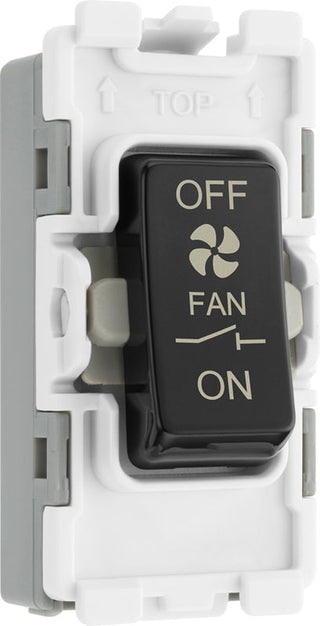
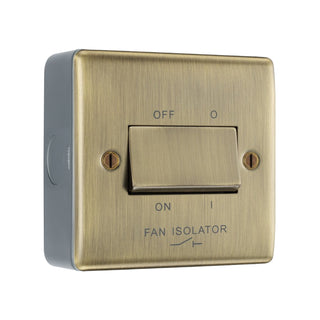
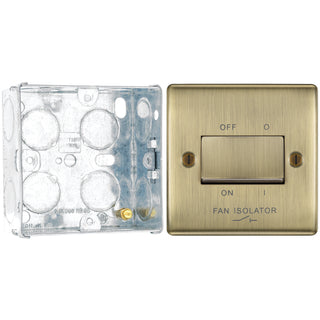
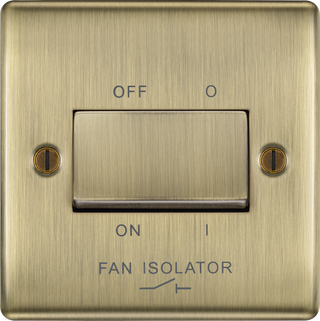
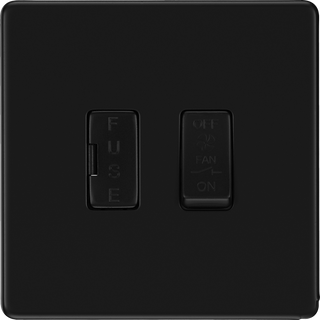
Replacing an extractor fan also means checking the isolator switch. BS 7671 requires a 3-pole isolator for timer and run-on fans, and a standard light switch won't do the job.
Shop Fan Isolator Switches →Does a More Powerful Fan Just Solve the Problem?
Not automatically. A fan rated well above the room's minimum can be noisier than necessary and, in some cases, pull air through gaps and under doors in a way that creates draughts rather than solving ventilation properly. The goal is matching the fan to the room's actual minimum requirement, with a reasonable margin for duct losses, rather than buying the highest-rated unit available on the assumption that more is always better. For a broader look at how bathroom electrical accessories are specified by zone, our fan isolator switch guide covers the isolation side of the same job in more depth.
Frequently Asked Questions
Isolate Every Extractor Fan Correctly
BG fan isolator switches, 3-pole, 10A, in stock across every current finish. Trade pricing, fast UK dispatch.
Shop Fan Isolator Switches →