A primary school's summer refit went in with standard white moulded sockets along the classroom skirting, on the same spec as a house. By October half term, three sockets had cracked where trolleys and chair legs caught them, and the caretaker was fitting replacements every few weeks.
School fit-outs take more physical abuse than a house or office: furniture gets dragged, sockets get kicked, corridors see hundreds of collisions a day. Metal clad accessories, dado trunking above knock height, and fan isolators built for continuous duty hold up where domestic-grade kit fails early. Simple choices, made deliberately rather than defaulting to whatever's cheapest.
Why Classroom Sockets Fail Faster Than Domestic Ones
A socket in a living room gets brushed past occasionally. A socket at skirting height in a classroom sits in the path of stacking chairs, cleaning trolleys, PE equipment and thirty children a day for six hours. White moulded plastic sockets, fine in a bedroom, crack under that kind of repeated mechanical contact faster than most sites expect, and a cracked faceplate on a live socket is exactly the kind of finding that turns up on an EICR.
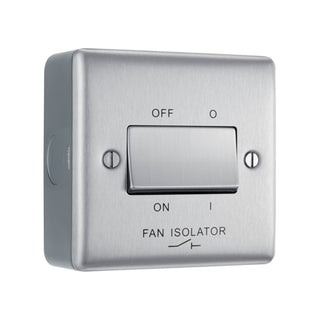
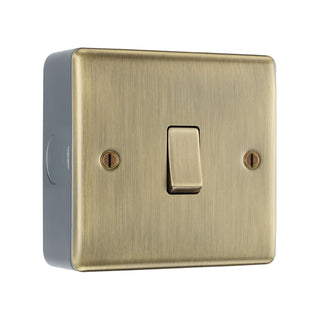
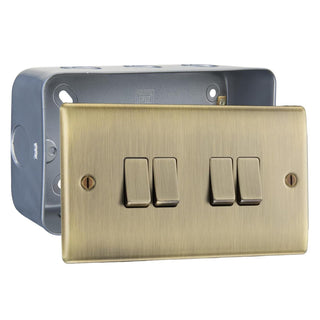
Metal clad sockets and switches wrap the same BS 1363 internals in a galvanised steel shell, which takes knocks that would crack a moulded plastic faceplate. They're standard spec in workshops and industrial settings for the same reason, and a school corridor or classroom sees comparable physical stress even without the industrial environment.
| Area | Typical spec need | Why |
|---|---|---|
| Classroom skirting | Metal clad sockets or robust dado trunking | Furniture contact, cleaning trolleys, high daily footfall |
| Corridors | Fan isolators for any extraction, finger trap door guards | Continuous ventilation duty, RIDDOR-reportable hinge injuries |
| Staffroom / office | Standard BG Evolve or Nexus, RJ45 data outlet | Lower physical stress, staff device charging and network needs |
| Toilets / changing areas | 3-pole fan isolator, IP-rated switches | Wet zone rules apply the same as any commercial washroom |
Worth checking: door hinge finger-trap injuries are RIDDOR-reportable regardless of severity once amputation occurs, under Regulation 4 of the RIDDOR 2013 regulations, and schools are named as a highest-risk setting in HSE guidance. If a refurb is touching classroom doors anyway, it's the moment to add finger guards; our finger trap door guard guide covers the compliance detail.
Dado Trunking: The School-Specific Detail Most Specs Miss
Where classrooms run cabling along the wall rather than chasing it in, dado trunking mounted at 900mm to 1100mm above finished floor level is the standard approach, keeping sockets and data points clear of furniture contact and out of reach of younger pupils at floor level. Trunking height should be coordinated on site against the actual furniture and whiteboard layout, since a generic height assumption from a drawing doesn't always match how a room gets used in practice.
Where trunking carries both power and data, keeping them in separate compartments avoids interference and keeps future re-cabling straightforward without disturbing the mains side.
Browse Fan Isolator Switches →Ventilation and Isolation in Classrooms and Toilets
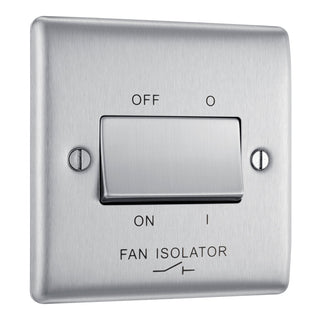
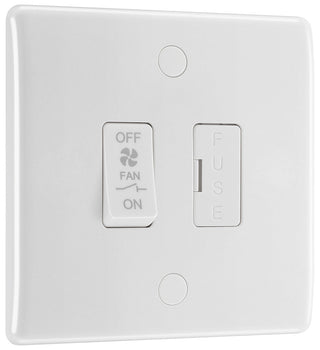
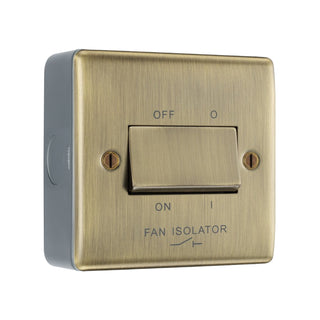
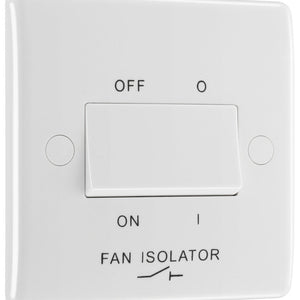
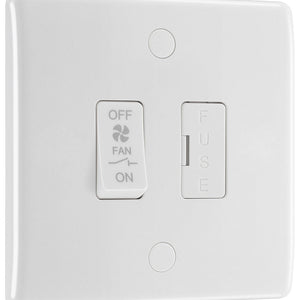
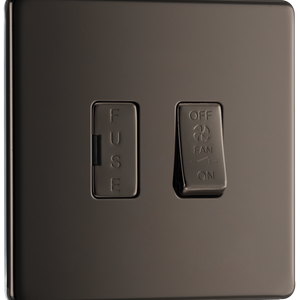
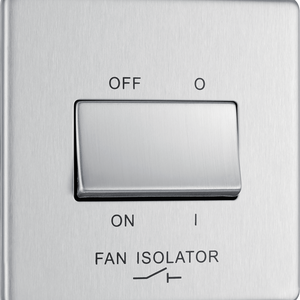
Classroom and corridor extraction, along with toilet block ventilation, typically runs for most of the school day rather than the brief intermittent cycles a domestic bathroom fan sees. A 10A 3-pole fan isolator covers the amperage most classroom and toilet extraction fans need, positioned accessibly but outside any wet zone, in line with the same BS 7671 principles that apply in any commercial building.
Frequently Asked Questions
Spec for the Wear a Classroom Actually Takes
Metal clad accessories, fan isolators and British General switches, trade priced and in stock now.
Browse British General Range →