Why a Standard Letterbox Voids Your Fire Door Rating | KT

A landlord fits a plain brass letterbox into a brand-new FD30 fire door because it matches the handles. The door still looks rated. It isn't. The moment that hole was cut without an intumescent liner, the door's 30-minute certification was voided, and no fire risk assessor is going to miss it on the next inspection.

Quick Answer

Any uncertified aperture cut into a fire door breaks its rating, and a standard letterbox is exactly that. A fire-rated intumescent letter plate seals shut under heat within seconds, restoring the door's protection. For HMOs and communal entrances, this is a five-minute, sub-£25 fix that stops a routine EICR or fire door inspection turning into a C2 finding.

Shop Fire-Rated Letter Plates →

Why the Hole Matters More Than the Door

A fire door is only as good as its weakest opening. The door leaf, frame, intumescent seals around the edges and the self-closer are all tested together as a certified assembly. Cut an uncertified hole through that leaf, for a letterbox, a spyhole, or a cat flap, and you've created a direct path for fire and smoke that the certification never accounted for. The door can still carry an FD30 label on the edge and fail completely at the one point someone actually cut into it.

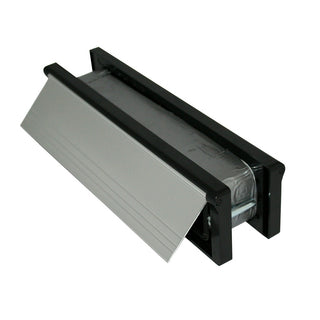
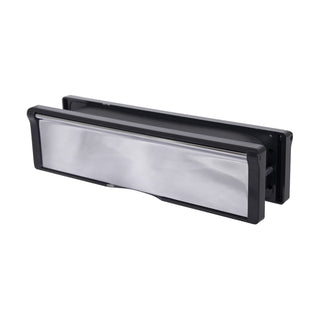
This is exactly why the products sold as "letterboxes" for fire doors aren't just a brass plate with a flap. A fire-rated intumescent letter plate carries its own liner that expands under heat and seals the aperture shut, tested separately to BS 476-20/22 so the whole door assembly keeps its rating even with a hole through the middle of it.

Fitting Standard letterbox Fire-rated (FD30) letter plate
Fire rating impact Voids door certification Maintains FD30 rating
Behaviour under heat Stays open, flap melts or warps Intumescent liner expands and seals
Standard tested to None BS 476-20/22
Typical price £8-£15 £19.99

This is one of the most commonly missed items on a fire door inspection. A door can pass every other check, correct leaf, correct seals, self-closer working, and still fail because of an uncertified letterbox fitted years earlier during a routine refurb. Under the Approved Document B fire safety guidance, any penetration through a fire-resisting door must maintain the door's overall performance, and a standard domestic letterbox was never tested to do that.

Browse Fire Door Accessories →

What to Check Before Your Next Inspection

If a property has fire doors on flat entrances, communal corridors or HMO bedrooms, the letterbox on each one is worth a five-minute check before it becomes someone else's finding.

  • Confirm every fire door with a postal letterbox has a certified fire-rated plate, not a standard domestic one fitted during an earlier refurb
  • Match the plate's fire rating to the door's own rating, an FD30 plate on an FD60 door doesn't carry the door's full protection
  • Check the cut-out size before ordering, the 10" and 12" variants use different internal slot dimensions and aren't interchangeable without re-cutting the door
  • Keep the product's fire test certificate with the property's fire door log, an assessor will ask for it alongside the door's own certification

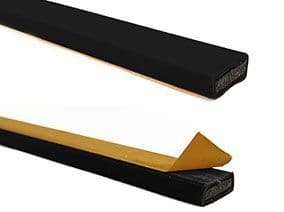
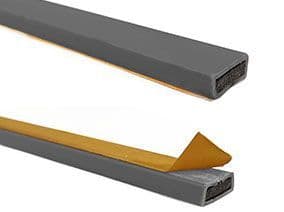
For the wider fire door compliance picture, our guide to fire door hold-open devices covers the self-closer side of the same problem, and our Fire Safety Equipment Buying Guide covers passive protection more broadly, including the intumescent fire and smoke seals and intumescent mastic that go around the frame while the letter plate handles the aperture.


Frequently Asked Questions

Yes. Fire doors are certified as a complete tested assembly. Cutting any uncertified aperture into the leaf, including a standard letterbox, invalidates that certification because the hole was never part of what was tested.
It has a liner built into the frame of the plate that stays inert at normal temperatures but expands rapidly when exposed to heat, sealing the aperture shut within seconds and restoring the door's fire and smoke barrier at that point.
Match the letter plate's rating to the door's own certification. An FD30 door needs at minimum an FD30-rated plate. Fitting a lower-rated accessory to a higher-rated door means the door's overall protection is limited by its weakest component.
Common sizes are 10" (272x70mm) and 12" (306x70mm), each with a different internal slot and cut-out size. Confirm the existing aperture size before ordering, since the two sizes aren't interchangeable without re-cutting the door.
Yes. Letterboxes, spyholes and any other penetration through a fire door are standard checkpoints on a fire door inspection, precisely because they're commonly fitted after the door was installed and certified, often without anyone checking whether the replacement was fire-rated.

Auditing Fire Doors Across a Property?

Kent Traders supplies fire-rated letter plates, intumescent seals and hinge pads with trade pricing on bulk orders for multi-door refurbs.

Apply for a Trade Account →
Previous articleConcealed vs Close-Coupled Cisterns: Which for HMO? | KT All articles

RELATED ARTICLES

Closed vs concealed cistern
Concealed vs Close-Coupled Cisterns: Which for HMO? | KT

Landlords specifying cisterns for an HMO refurb usually pick on looks alone, and that's exactly where it goes wrong. A concealed cistern behind a...

Downlight insulation
Loft Insulation Over Downlights: What Actually Stops Fires

A landlord had fire-rated downlights fitted throughout an HMO loft conversion, then two years later a contractor topping up the loft insulation buried every...

Hotel welcome trays
Hotel Welcome Trays: What Actually Needs PAT Testing | KT

A guest complained her room kettle kept tripping the socket, and maintenance found the element had been failing for weeks. Nobody had tested it...

illuminated mirror and shaver stock
Illuminated Mirrors & Shaver Sockets: What's Legal | KT

A landlord asked an electrician to wire a normal double socket behind an HMO bathroom's new illuminated mirror, and was refused on the spot....

Garden room electrics
Garden Room Electrics: What Cable Actually Goes In | KT

A homeowner ran a heavy-duty extension lead across the lawn to a new garden office, and it tripped the whole house's RCD every time...

Masterplug night light sockets
Night Light Sockets: Do You Need One or a Lamp? | KT

A homeowner upgraded from a 7kW to a 10.5kW shower and kept the existing 6mm cable, assuming a cable is a cable. Within weeks...

USB DESKTOP POWER OUTLET
Reception Desk Power & USB Charging: What to Spec | KT

A guesthouse fitted USB sockets throughout every guest room but left reception on its original two sockets, both already taken by the card machine...

Hotel coffee pod machines
Hotel Kettle or Pod Machine? What Guest Rooms Need | KT

A guesthouse swapped every room kettle for a pod machine and found the sachet-restocking bill roughly doubled while some guests complained they couldn't make...

stairwell and corridor lighting
Corridor & Stairwell Sensor Lighting Guide | Kent Traders

A guesthouse stairwell had a switch only at the bottom, and a guest missed the last two steps coming down in the dark. PIR-controlled...

School Classroom Uk
School & Classroom Electrical Spec Guide | Kent Traders

A primary school fitted standard white moulded sockets along classroom skirting and was replacing cracked faceplates within a term. Schools take more physical abuse...

Extractor fan rates
Extractor Fan Ratings: Litres/Sec by Room | Kent Traders

A landlord replaced a failed bathroom extractor fan with whatever unit looked closest to the old one, and the property still failed its damp...

GU10, B22 or E27? UK Lamp Fittings Explained | KT

A guest ordered ten replacement bulbs for a downlight and every one arrived with the wrong base, because the old bulb wasn't a GU10,...

LD1, LD2 or LD3 Fire Alarms for HMOs? | Kent Traders

A landlord fitted LD3 smoke alarms and still failed his council's HMO licence inspection, because a shared house needs LD1 or LD2 coverage under...

Taps for Low Water Pressure: What to Buy | Kent Traders

A brand new tap that only dribbles is almost never faulty. It is a pressure mismatch. Every tap has a minimum operating pressure in...

Selective Licensing
Selective Licensing Is Expanding Fast: Are You Covered? | KT

A landlord with an ordinary single-family let, no HMO, no lodgers, found his street had quietly fallen inside an expanded selective licensing zone. A...

EICR CODES
EICR Codes Explained: What C1, C2, C3 Actually Mean | KT

A landlord filed his EICR in a drawer without reading the codes properly, and found out about his 28-day deadline when the council's remedial...

Shop products from this guide