A fire safety inspector walking a 30-room HMO in Nottingham found rubber wedges under six fire doors, propped open for ventilation. Every one of those doors would have failed to contain smoke in a real fire. The fix that would have kept them open legally costs less than £200 a door.
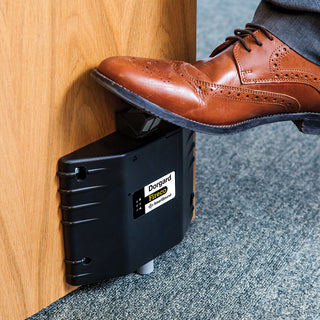
Wedging or propping a fire door open with anything other than an approved hold-open device breaches the Regulatory Reform (Fire Safety) Order 2005. A wireless retainer like Astroflame's Dorgard SmartSound holds the door open legally and releases it automatically when it hears the fire alarm, at around £175 per unit, no wiring required.
Why Is Wedging a Fire Door Actually Illegal?
A fire door only does its job closed. It's tested and certified to hold back fire and smoke for a set period, typically 30 or 60 minutes, and that rating assumes the door is shut. Prop it open with a wedge, a fire extinguisher, or a folded doormat, and the corridor behind it has no fire separation at all. Under the Regulatory Reform (Fire Safety) Order 2005, the "responsible person" for a building has a legal duty to ensure fire doors function correctly, and wedging them open is one of the most commonly cited breaches found on fire risk assessments and enforcement visits.
The frustrating part is that hotels, HMOs and care homes have genuine reasons to want doors open: ventilation, easier access for cleaning trolleys, wheelchair access, and general day-to-day convenience. The law doesn't ban holding doors open. It bans doing it in a way that stops the door closing automatically when it needs to.
What Does a Legal Hold-Open Device Actually Do?
A compliant retainer holds the door open at any angle during normal use, then releases it the moment it detects the fire alarm, letting the door's own closer swing it shut. The Astroflame Dorgard SmartSound is battery-powered and wireless, listening continuously for the specific frequency of a fire alarm rather than reacting to general noise, so it isn't set off by a vacuum cleaner or a slammed door elsewhere in the building. It sits within the wider Astroflame range on the Fire Safety Equipment Buying Guide if a whole building audit is due.
| Spec | Dorgard SmartSound |
|---|---|
| Fitting | Wireless, no cabling, fits in under 5 minutes |
| Battery life | 3 years (2x LR14 C-size batteries included) |
| Max door size | 160kg, 1600mm width |
| Fire rating | Suitable for up to 120-minute fire doors |
| Compliance | EN1155, EN1634, CE marked, BS7273-4:2015 Category B |
| Trade price | £175.35 |
Does This Replace the Door's Own Closer?
No, and this is a genuine point worth getting right rather than assuming. The retainer works alongside the door's existing overhead or floor-spring closer, not instead of it. The closer still does the actual work of pulling the door shut once the retainer releases it. If a fire door doesn't already have a working, correctly adjusted closer fitted, a retainer on its own won't bring the door back to a fully closed and sealed position.
Auditing a whole building's fire doors at once? The compliance side of intumescent seals and stop kits is covered separately.
Read Astroflame Fire Stop Kits for HMO Fire Doors →What Does It Actually Cost to Fix a Building Full of Wedged Doors?
At roughly £175 per door, a 30-room HMO with six problem doors is looking at close to £1,050 to make every one of them compliant, with no ongoing wiring or electrician cost since the units are wireless and battery-powered. Set against the potential enforcement action under the Fire Safety Order, which can include unlimited fines and, in serious cases, imprisonment for the responsible person, this is not a marginal decision. It's also worth checking the wider Astroflame fire safety range, the finger trap guards if the same doors need them, and the Fire Safety Equipment Buying Guide while you're auditing a building, since seals, hinges and door hardware often need attention on the same visit.
Frequently Asked Questions
Stop Wedging, Start Complying
Astroflame Dorgard SmartSound fire door retainers, trade priced and in stock now.
Browse Fire Door Retainers →