Garment Steamer or Iron: Which One Fits Your Hotel? | KT

A boutique hotel in Bath fitted every room with a handheld garment steamer instead of an iron, on the theory that guests would find it more modern. Within a month, business travellers were asking reception for an iron because a steamer cannot put a crease down the front of a pair of trousers.

Quick Answer

A garment steamer relaxes fabric fibres with vapour, good for suits and delicate fabrics without scorch risk, but it cannot press a sharp crease or a flat seam. An iron does both, at the cost of being slower and riskier on delicate fabric. Business-traveller-heavy properties usually need both, or an iron as default with a steamer as backup.

Browse Corby Ironing Range →

What Can a Steamer Actually Do That an Iron Can't?

A steamer works by relaxing the fibres of a fabric with hot vapour rather than pressing them flat under direct heat and weight. That makes it genuinely better for silk, delicate blends and anything with beading, sequins or a structured shape that an iron's flat soleplate and pressure would damage. The Corby Stockton, for example, runs a stainless steel soleplate at a continuous steam rate of 20 to 25 grams a minute from a 270ml tank, enough for several garments before a refill.

What it can't do is put a sharp crease into a pair of suit trousers, or press a flat seam properly on a business shirt. That's a mechanical pressing job, not a fabric-relaxing one, and no amount of steam substitutes for it.


Corby Ironing and Steaming Range at a Glance

Product Best For Spec
Corby Stockton Garment Steamer Suits, delicate fabrics, quick refresh between wears 1500W, 270ml tank, 20-25g/min steam rate
Corby Sherwood Dry Iron Sharp creases, business shirts, budget rooms 1200W, adjustable temperature dial
Corby Oxford Ironing Centre (1200W) Standard guest rooms wanting a full board and iron in one unit 1200W steam iron with anti-theft security box
Corby Oxford Premium Ironing Centre (2000W) Higher-spec rooms, faster heat-up 2000W steam iron with anti-theft security box

This is an honest opinion rather than a spec sheet fact: for a business-traveller-heavy property, the ironing centre with a built-in iron is the safer default, since it covers both the crease and the delicate-fabric job reasonably well, and it's the amenity guests actually expect to see. Reserve a dedicated steamer as an upgrade for boutique or premium rooms where guests are more likely to be steaming dresses and structured jackets rather than pressing shirts.

Fitting out a full refurb? Browse the ironing centre range for the anti-theft security box options covered separately.

Browse Ironing Centres →

Does a Steamer Actually Save Time Over an Iron?

For a quick refresh between wears, yes. A handheld steamer needs no ironing board, works on a garment still on its hanger, and heats up faster than a full-size iron in most cases. For a guest checking in creased from a flight and wanting a genuinely pressed shirt for a meeting in the morning, an iron and board still does the job faster and more completely, since steaming a stubborn crease out of cotton can take considerably longer than a single pass with a hot iron.

Both appliance types are portable electrical equipment under the Electricity at Work Regulations 1989, Regulation 4(2), which requires equipment used at work to be maintained so as to prevent danger. In practice that means both steamers and irons need to sit on the same PAT testing schedule as any other guest-room appliance, not be treated as a lower-risk category because they're smaller.

Trade Note: The Corby Stockton's auto shut-off after 10 minutes of non-use is worth mentioning to housekeeping teams directly. Guests occasionally leave the unit running on a hanger rail and walk away, and the auto shut-off is the safety feature doing the work there, not room supervision.

What Does It Actually Cost to Stock Both?

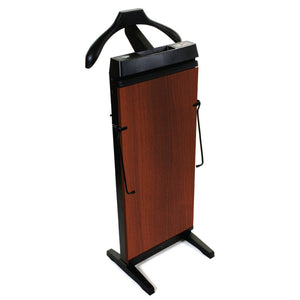
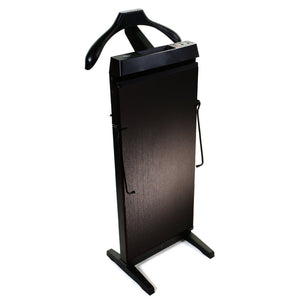
Adding a Corby Stockton steamer alongside an existing ironing centre in a handful of premium rooms is a modest incremental spend, typically well under £100 per room including a caddy or storage bracket such as the Corby Brixton Iron & Steamer Caddy to keep both units tidy and off the floor. For a 20-room property upgrading only its 4 to 6 premium rooms, that's a limited, targeted cost rather than a full refurb line item. If you're speccing the wider guest room amenity list at the same time, the full hotel supplies range and the Hospitality Equipment Buying Guide cover kettles, minibars and safes on the same visit, and our Corby Trouser Press Guide for Boutique Hotels covers the third fabric-care appliance most rooms carry.


Frequently Asked Questions

Not fully. A steamer relaxes fabric fibres with vapour, which is gentler on delicate fabrics, but it cannot press a sharp crease into trousers or a flat seam the way an iron does. Business-traveller-heavy properties usually still need an iron available.
There's less risk of scorching fabric with a steamer, and models like the Corby Stockton include an auto shut-off after 10 minutes of non-use. Neither replaces the need for a properly maintained appliance with a current safety check.
The 270ml tank runs at a continuous steam rate of 20 to 25 grams a minute, which is generally enough for several garments before a refill is needed, depending on fabric and how much steaming each item requires.
Not usually. A sensible default is an ironing centre with a built-in iron across standard rooms, with a dedicated steamer reserved as an added amenity in premium or boutique rooms where guests are more likely to be caring for structured or delicate garments.
No. Garment steamers aren't suitable for suede, waxed fabrics or anything made of plastic, and using one on these materials can damage them.
A dedicated caddy such as the Corby Brixton Iron & Steamer Caddy keeps both units off the floor and tidy, and reduces the chance of a hot appliance being left in an unsafe position on soft furnishings.

Stock the Right Fabric Care for Every Room Tier

Corby garment steamers, irons and ironing centres, trade priced and in stock now.

Browse Corby Ironing Range →
Previous articleWedging Fire Doors Open Is Illegal: The Legal Fix | KT All articles Next articleIdeal Standard Toilets: Which Pan Type Suits HMOs? | KT

RELATED ARTICLES

Hotel LUGGAGE Racks
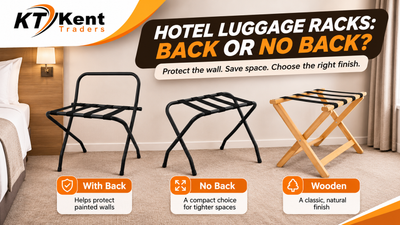
Hotel Luggage Racks: With Back or Without, Metal or Wood?

Hotel luggage racks come with or without a raised back, in metal or wood, and the choice shows up on your walls. This guide...

Basin Mixer or Pillar taps
Basin Mixer or Pillar Taps: Which Suits Your Basin?

Basin mixer or pillar taps? The basin decides it first, because pillar taps need two tap holes and a mono mixer needs one. This...

Bath Shower Mixer Tapes
Bath Shower Mixer Taps: Do They Work on Combi or Gravity?

A bath shower mixer tap looks like a simple swap, but whether it works depends on pressure and flow, not the boiler badge. This...

WALL HUNG WC
Which Wall-Hung WC Frame Height Fits Your Wall?

Wall hung toilet frame height decides whether a pan fits under a window or needs a taller wall. This guide compares the Geberit Alpha...

UK hotel room power load
Hotel Room Power Load: Kettle, Hair Dryer and Iron on One Socket?

A hotel guest room puts a kettle, a hair dryer and sometimes an iron within reach of the same sockets, and a 13A socket...

Astroflame fire door hinge
Fire Door Hinge Pads and Lock Kits: What Needs Protecting

A fire door is tested as a complete assembly, so every hinge recess and lock mortice cut into the leaf has to be protected...

Fire stopping pipe penetration
Fire Stopping Pipe Penetrations in HMOs and Hotels

A pipe through a fire-separating wall or floor is a hole in the fire rating unless it is sealed properly. This guide explains fire...

coshh for carpet cleaning
COSHH for Carpet Cleaning Chemicals in Hotels and HMOs

Carpet cleaning looks harmless until an inspector asks for the paperwork. This guide sets out what COSHH expects for carpet cleaning chemicals in hotels...

Which Shower for your water system
Which Shower for Your Water System? Combi, Tank or Unvented

The same shower can feel superb in one house and weak in the next, and the water system is almost always the reason. This...

Legionaire's Disease
Legionella Flushing for Empty Hotel and HMO Rooms

Empty hotel rooms and HMO bedrooms are where stagnant water collects, and stagnant water is where Legionella bacteria can multiply. This guide sets out...

Hard Water Uk
Hard Water in Hotels: Why Limescale Kills Kettles and Irons

Hard water carries dissolved calcium and magnesium, and heat turns them into limescale on kettle elements, iron soleplates and shower heads. This plain-English guide...

Electric Shower
Electric Shower kW Guide: 8.5, 9.5 or 10.5kW Compared | KT

Which electric shower kW rating do you need? For most homes 9.5kW is the sensible default, but the right answer depends on flow, winter...

Intumescent  strip size
Intumescent Strip Size for Fire Doors: 10, 15 or 20mm? | KT

Which intumescent strip size does your fire door need? Most 30-minute doors take 15mm x 4mm and most 60-minute doors take 20mm x 4mm...

trickle vents
Trickle Vents and Part F: Sizes for Replacement Windows | KT

Do replacement windows need trickle vents? In England, Part F of the Building Regulations says yes in most cases. New vents must match the...

Astro window restrictors
Window Restrictors: The 100mm Rule for Hotels, HMOs | KT

Window restrictors limit how far a window opens, usually to no more than 100mm, so a child or vulnerable adult cannot fall out. HSE...

Part m threshold
Part M Door Thresholds: The 15mm Rule Explained Simply | KT

Approved Document M Volume 2 wants entrance thresholds level, and where a raised one cannot be avoided it caps the total height at 15mm....

Shop products from this guide

Shop the products in this guide

View all