By Kent Traders · Updated 29 October 2026 · 7 min read · UK
A guest arrives, boils the kettle, then reaches for the hair dryer. Both are heavy appliances, and a 13A socket has a hard ceiling. This guide works out the hotel room power load for real Corby products: what each one draws, which pairs fit on one socket, and what a whole floor demands at the morning peak.
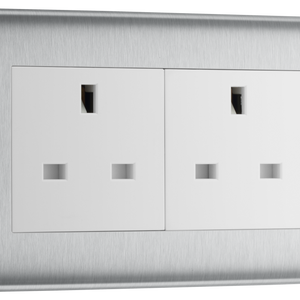
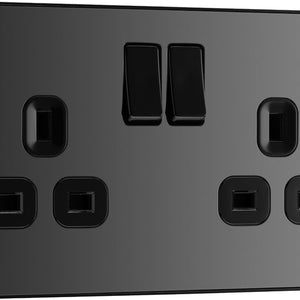
A 13A socket at 230V carries about 2,990W. A 1,000W kettle with a 1,600W hair dryer draws 2,600W and fits. An 1,800W kettle with a 2,000W dryer draws 3,800W and does not. Add up the rated watts, divide by 230 for amps, and stay under 13A.
How much power does a hotel room draw?
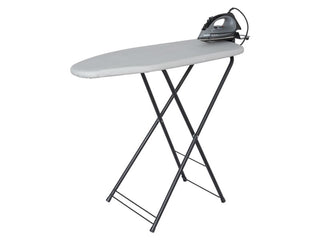
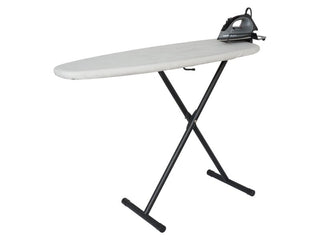
Most of the load in a guest room comes from three appliances: the kettle, the hair dryer and the iron. A TV, chargers and lamps add little beside them. If you stock the room from our hotel supplies collection, those three are the ones to check.
A kettle, a dryer and an iron are heating appliances, so the watts printed on the label are close to what each draws while it runs. A kettle runs for a few minutes and a hair dryer for several. The danger is the overlap.
The circuit behind the room sets the real ceiling, and that is a design question for your electrician under BS 7671. This guide covers what you control: which products you put in the room and how they share sockets.
The 13A limit: watts, amps and the 230V sum
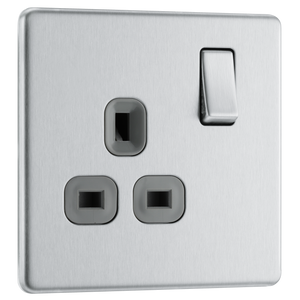
Amps equal watts divided by volts. UK mains is nominally 230V, so a 13A socket supplies 13 x 230, or 2,990W. The Electrical Safety First plugs and fuses guide rounds this to 3,000W, the maximum rating of a wall socket. Its extension lead advice says to use one extension device per socket and never to plug one extension lead into another.
The plugs and fuses guide also covers fuses. A 13A fuse suits appliances from about 700W to 3,000W, and it lists kettles and irons among them. A 3A fuse suits low-power items such as lamps, televisions and computers. Every kettle, hair dryer and iron below is over 700W, so each needs a 13A fuse in its plug.
Divide the total watts by 230 to get amps. If the answer is above 13A, the appliances cannot share that socket or lead.
Wattages of the Corby kettles, dryers and irons
The wattages below come from the Corby datasheets. The product pages on our site do not show wattage in the page text, so we went to the datasheet for each model. Browse the kettles and trays collection for the wider range.
| Product | Rated power | Amps at 230V | Price |
|---|---|---|---|
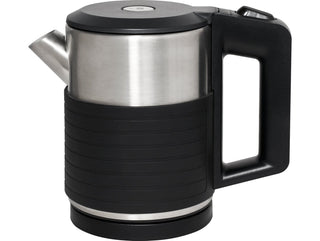
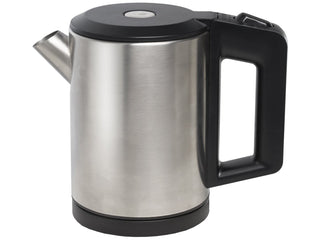
| Corby Canterbury 0.6L kettle | 1,000W | 4.3A | £31.56 |
| Corby Buckingham 1L kettle | 1,250 to 1,500W | 5.4 to 6.5A | £27.39 |
| Corby Hertford 1.8L kettle | 1,800W | 7.8A | £29.96 |
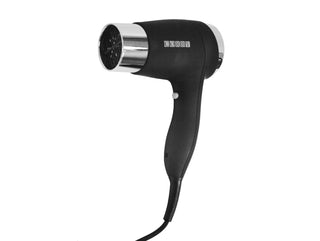
| Corby Linton free-standing hair dryer | 1,200W | 5.2A | £16.43 |
| Corby Dalton hair dryer | 1,600W | 7.0A | £23.35 |
| Corby Stratus hair dryer | 1,800W | 7.8A | £23.35 |
| Corby Bedford foldable hair dryer | 2,000W | 8.7A | £22.48 |
| Corby Milton hair dryer | 2,000W | 8.7A | £20.46 |
| Corby Sherwood steam iron | 1,200W | 5.2A | £21.76 |
| 1600W steam iron (Y-879) | 1,600W | 7.0A | £24.12 |
| Corby Sherwood steam iron | 2,000W | 8.7A | £27.39 |
The Buckingham datasheet table is garbled, so we show the range it gives. Plan on 1,500W, and confirm the figure on the rating label when the stock arrives. Prices are inc VAT and were checked on 29 October 2026.
Which combinations break the limit
Pair any two appliances from the table and add the watts. Anything above 2,990W is over the limit of one 13A socket. Here are the pairs a guest is most likely to run at once.
| Pair | Total watts | Amps | Verdict |
|---|---|---|---|
| Canterbury kettle + Linton dryer | 2,200W | 9.6A | Fits |
| Canterbury kettle + Dalton dryer | 2,600W | 11.3A | Fits |
| Canterbury kettle + Stratus dryer | 2,800W | 12.2A | Fits, little margin |
| Canterbury kettle + Bedford dryer | 3,000W | 13.0A | Over by 10W |
| Dalton dryer + 1600W iron | 3,200W | 13.9A | Over |
| Hertford kettle + Dalton dryer | 3,400W | 14.8A | Over |
| Hertford kettle + Bedford dryer | 3,800W | 16.5A | Over |
The small kettle is the easy win. A 0.6L kettle at 1,000W leaves room for a dryer up to 1,800W, while a 1.8L kettle at 1,800W leaves room for almost nothing else. Size the kettle to the room, not the other way round.
Put the kettle and the hair dryer on different sockets. Then the 13A limit applies to each one alone, and no pairing in the table can overload a single socket.
Worked example: hotel room power load on a guest floor
Here is a hotel room power load check for a floor. These are our assumptions, not your wiring: the sockets on one floor share a 32A circuit, which carries 32 x 230, or 7,360W. Every room runs a Canterbury kettle and a Dalton dryer together. Our hair dryers collection has the alternatives.
| Rooms on the circuit | Load at 2,600W each | Against 7,360W |
|---|---|---|
| 2 rooms | 5,200W | Fits |
| 3 rooms | 7,800W | Over by 440W |
| 4 rooms | 10,400W | Over by 3,040W |
Real peaks are lower, because not every guest dries their hair at the same minute. Mornings are when they overlap, though, so a circuit that looks fine at midday can trip at 7am.
Swap the Dalton for the 1,200W Linton and each room falls to 2,200W. Three rooms then draw 6,600W and fit under 7,360W. The saving is 400W a room, and the Linton costs £6.92 less. Ask your electrician how your floor is actually split before you rely on any sum like this.
Where load planning goes wrong
The arithmetic is simple. The mistakes come from the habits around it. These are the ones that cause trips, warm plugs and failed inspections:
- Running a kettle and a dryer through one extension lead or multi-way adaptor. Electrical Safety First also says never to plug one extension lead into another.
- Reading the low end of a wattage range. Use the higher figure, such as 1,500W for the Buckingham.
- Fitting the wrong plug fuse. Kettles and dryers need 13A fuses. The Corby trouser press manual calls for a 3A BS 1362 fuse.
- Ignoring the iron. A 2,000W iron plus any dryer is over the limit on its own.
- Adding up the appliances but forgetting a portable heater a guest brings.
A warm plug or a scorch mark on a socket means the load is too high or the connection is loose. Take the room out of use and call your electrician before anyone reuses it.
What to buy: lower-load choices
For a low-load room, start with the 1,000W kettle and a dryer or iron at 1,600W or below. The steam irons collection covers the iron side. All items were in stock on 29 October 2026.
| Product | Rated power | Price |
|---|---|---|
| Corby Canterbury 0.6L kettle | 1,000W | £31.56 |
| Corby Linton free-standing hair dryer | 1,200W | £16.43 |
| Corby Dalton hair dryer | 1,600W | £23.35 |
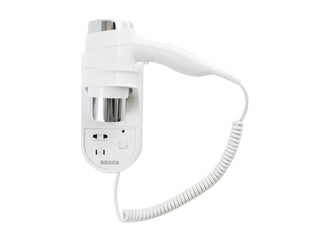
| Corby Kendal wall-mounted hair dryer with shaver socket | 1,600W | £37.32 |
| Corby Sherwood steam iron | 1,200W | £21.76 |
| 1600W steam iron (Y-879) | 1,600W | £24.12 |
FAQs
About 2,990W. A 13A socket at 230V supplies 13 x 230 watts. Electrical Safety First calls 3,000W the maximum rating of a wall socket. Add up the rated watts of everything plugged in, and keep the total under 2,990W with room to spare.
Only if the rated watts add up to under about 2,990W. A 1,000W kettle with a 1,600W dryer draws 2,600W and fits. A 1,800W kettle with a 2,000W dryer draws 3,800W and does not. Better still, put them on different sockets.
Electrical Safety First says plugs for appliances rated from 700 to 3,000W need a 13A fuse, and lists kettles and irons among them. Kettles and hair dryers draw well over 700W, so they take 13A fuses. A trouser press manual may call for a 3A fuse, so always read the instructions.
Not for heavy loads. Electrical Safety First says extension leads are rated at 13A and must not be overloaded. It also says to use one extension device per socket and never to plug one extension lead into another. For a kettle or dryer, the safer plan is a wall socket in the right place.
Look on the rating label on the appliance, or in the manufacturer datasheet. Our Corby kettle, hair dryer and iron pages do not show wattage in the page text, so we read it from the datasheets. For a range such as 1,250 to 1,500W, plan on the higher figure.
Yes, because it cuts the load each room can draw. A 1,200W dryer instead of a 1,600W one saves 400W per room. The trade-off is drying speed, so test one in a room before you roll it out across the whole property.
Related reading
Plan the load, then stock the room
Check the watts before you order, and keep each room within its socket limit. Trade buyers can open an account for repeat orders.
Shop hotel suppliesOpen a trade account