By Kent Traders Team · Updated 10 Oct 2026 · 6 min read · England
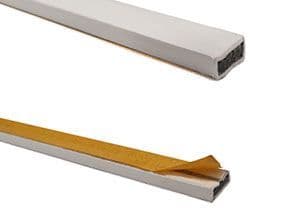
An intumescent strip is the thin seal in the edge of a fire door frame that swells in heat and closes the gap. Buy the wrong size and the door can fail an inspection, even if it looks fine. Most 30-minute doors take 15mm x 4mm and most 60-minute doors take 20mm x 4mm, but your door label has the final say.
Quick answer: Match the strip to the door label. The BWF Fire Door Alliance says most modern 30-minute doors take a 15mm x 4mm strip, and most 60-minute doors take 20mm x 4mm or two 10mm x 4mm strips. Choose fire and smoke strip where smoke sealing is specified, and keep the gap to about 3mm.
Which intumescent strip size does a fire door need?
Match the strip to the door's fire rating and the door maker's specification. The BWF Fire Door Alliance says most modern 30-minute doors take a 15mm x 4mm strip, and most 60-minute doors take 20mm x 4mm or two 10mm x 4mm strips.
| Door rating | Typical strip | Alternative | Who decides |
|---|---|---|---|
| FD30 (30 minutes) | 15mm x 4mm | 10mm x 4mm only where the door maker allows it | Door leaf manufacturer |
| FD60 (60 minutes) | 20mm x 4mm | Two 10mm x 4mm strips side by side | Door leaf manufacturer |
| Existing door, groove already cut | Same width as the groove | Never force a wider strip in | Door certificate or label |
The BWF is blunt on one point: seals must be used as the door leaf manufacturer recommends. If the label or certificate says 15mm, a thicker strip is not extra safety. It is a deviation from the tested door.
Rule: The door maker’s certificate beats any size chart, including this one. Read the label on the door edge first.
Fire-only or fire and smoke: which strip do you need?
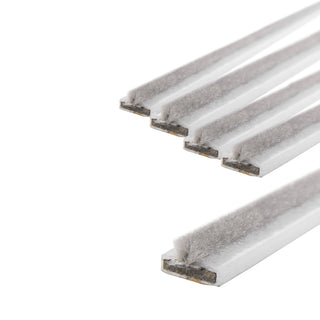
Fire-only strips swell in heat and close the gap. Fire and smoke strips do the same and add a brush or blade that blocks cold smoke before the heat arrives. The BWF notes that smoke seals are a Building Regulations requirement in some circumstances, so check your drawings, licence conditions or fire risk assessment.
| Type | What it does | Sizes we stock | Price (10 Oct 2026) |
|---|---|---|---|
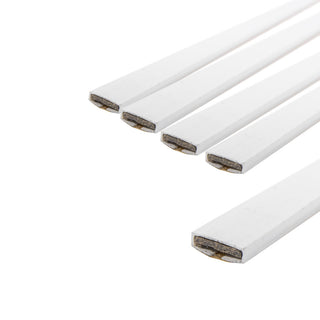
| Fire only (Astro Strip FO) | Expands in fire only | 10, 15, 20, 25mm x 4mm | £1.15 to £3.73 |
| Fire and smoke, brush (FS) | Fire seal plus brush for cold smoke | 10, 15, 20, 25mm x 4mm | £1.38 to £3.95 |
| Fire and smoke, single or twin blade (SB, TB) | Fire seal plus a flexible blade | 10, 15, 20mm x 4mm | £3.57 to £4.62 |
Every strip above is a 2.1m length from Astroflame. Fire-only is cheaper per length, but swapping it in where smoke sealing is specified fails the specification. Use the same seal type around the whole door, as the BWF advises.
How big can the gap be around a fire door?
A strip can only seal a gap it can bridge. The BWF says the gap should not exceed 3mm along the two long edges and across the top. Its installation guide gives the head and side gap as 2 to 4mm, so the door certificate sets the real tolerance.
The bottom gap is separate. The BWF puts it at around 10mm for non-smoke doors and 3mm where smoke seals are required, so check the manufacturer’s instructions.
Watch out: If the gap is wider than the strip can close, fix the door or frame first. Do not stack extra strips to cover a hung door that is out of true.
How to fit an intumescent strip to a fire door
- Read the door label or certificate for the rating, strip size and any smoke requirement.
- Measure the gap at the head and at three points down each side. Anything over 3mm needs fixing before you seal.
- Rout or confirm the groove in the frame so it matches the strip width. The BWF prefers frame fitting, with the door edge as the fallback.
- Cut strips so each run is uninterrupted across the head and down both sides, pressing the self-adhesive backing home.
- Close the door. It should latch without catching, and the strip should sit just proud of the groove.
A standard 1981mm x 838mm door needs about 4.8m of strip: two stiles at 1.98m and a head at 0.84m. That is three 2.1m lengths, with offcuts left over.
Trade tip: Fit strips after decoration, and do not paint over smoke seals unless the manufacturer says you can.
Worked example: an eight-door HMO
A landlord re-seals eight FD30 bedroom doors. Each door needs three 2.1m lengths, so the order is 24 lengths. These are the choices, priced from the Astroflame range.
| Option | Lengths | Price each | Total | Verdict |
|---|---|---|---|---|
| 15mm x 4mm fire only | 24 | £1.70 | £40.80 | Cheapest, no smoke seal |
| 15mm x 4mm fire and smoke, brush | 24 | £1.91 | £45.84 | Best value where smoke sealing is needed |
| 15mm x 4mm fire and smoke, single blade | 24 | £4.20 | £100.80 | Only if the spec calls for blade |
The smoke option adds £5.04 for the whole house, which is why it is usually the sensible default for bedroom doors that open onto a corridor. For the same house in FD60, 20mm brush strip at £1.96 per length (white) costs £47.04 for 24 lengths.
Where strip jobs go wrong
- Choosing by colour or price. Size and rating come from the door, and colour comes last.
- Broken runs. The BWF wants uninterrupted strips, so butt-joining offcuts across a head is a fail.
- Mixing seal types. Different cores react differently, so keep one type around the door.
- Ignoring the gap. A strip cannot rescue a 6mm gap.
- Painting the seal. Thick paint can stop a strip swelling.
- Stripping the bottom. The bottom edge takes a threshold gap or a bottom seal, not a side strip.
What to buy: Astroflame strips and seals
Start with the intumescent fire seals range, which lists over 40 strips across every size above. If the door spec calls for smoke sealing, the fire and smoke seals collection groups the combined strips and door bottom seals.
- Door rating and strip size copied from the label or certificate
- Fire-only or fire and smoke decided from the specification
- Lengths counted: three per standard door, five if you are fitting two 10mm strips per edge
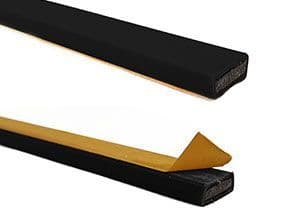
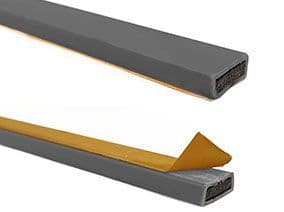
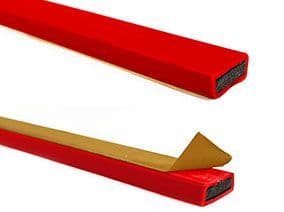
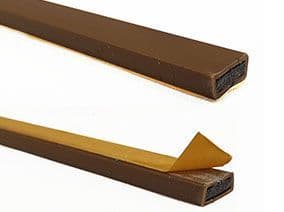
- Colour matched to the frame: white, brown, black, grey or red on fire-only
- Delivery allowed for: dispatch direct from the supplier, usually within 3 to 5 working days
For the rest of the doorset, the Astroflame range also covers finger guards and wraps, collars and sleeves.
FAQs
Use the size on the door label or certificate. As a guide, the BWF Fire Door Alliance says most modern 30-minute doors take 15mm x 4mm and most 60-minute doors take 20mm x 4mm or two 10mm x 4mm strips. The door leaf manufacturer always has the final say.
On a 60-minute door the BWF lists two 10mm x 4mm strips as an accepted alternative to one 20mm x 4mm strip. Fit them only if the door maker specifies it. Two strips mean nearly double the lengths to buy, so check the price before you commit.
A fire-only strip swells in heat to close the gap. A fire and smoke strip adds a brush or blade that blocks cold smoke early. Smoke seals are a Building Regulations requirement in some circumstances, so confirm what your door specification needs before you buy the cheaper option.
Fit it in a groove in the frame along the head and both sides. The BWF prefers frame fitting, with the door edge as the fallback. Keep each run uninterrupted. The bottom edge takes no side strip, so it is left to a threshold gap or a bottom seal.
The BWF says the gap should not exceed 3mm along the long edges and across the top, and its installation guide quotes 2 to 4mm. The bottom gap is around 10mm for non-smoke doors and 3mm with smoke seals. The door certificate sets the true limits.
A standard 1981mm x 838mm door needs about 4.8m of strip, which is three 2.1m lengths. Fitting two 10mm strips per edge takes five lengths, because the two head strips share one. Count the lengths before you order, because a short run across the head is not acceptable.
Related reading
Order your fire door seals
Work out the rating, size and smoke requirement, then order the matching Astroflame strips in one go.