Night Light Sockets: Do You Need One or a Lamp? | KT

A parent asked an electrician to add a dimmer-controlled night light circuit to a nursery, expecting a first-fix job with a new switch and cable run. The actual fix took thirty seconds: a plug-in dusk-till-dawn night light in the existing wall socket, no wiring, no electrician, no new circuit at all.

Quick Answer

A dusk-till-dawn night light plugs straight into any standard socket and switches itself on automatically as the room darkens, using a built-in light sensor. No wiring changes, no electrician, and no new circuit needed. It suits hallways, landings, nurseries and stairwells where a small amount of ambient light at night is useful but a full lighting circuit would be overkill.

Browse Night Lights →

What a Plug-In Night Light Actually Does

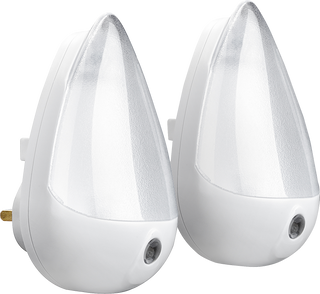
A dusk-till-dawn night light is a small unit that plugs directly into a standard 13A socket, with a built-in light sensor that automatically switches the light on as the room dims and off again once there's enough daylight. There's no timer to set and nothing to remember to turn off, it simply responds to the actual light level in the room.

Because it plugs into a socket that's already there, it needs no rewiring, no new switch, and no electrician. This makes it the fastest way to add a small amount of night-time light to a room, and it's easy to move to a different socket if the layout changes later. RoSPA's home safety checklist specifically lists keeping halls and stairways well lit as a simple way to reduce trips, slips and falls.

Location Why it helps
Nursery or children's bedroom Enough light for a parent to check on a child without a full room light
Hallway or landing Safer navigation at night without needing to find a switch
Stairwell top or bottom Reduces the chance of a missed step in the dark
Guest room in a let or B&B A small, low-cost touch guests notice without needing a wiring upgrade

Not a substitute for a proper landing or stairwell light. A plug-in night light gives low-level ambient light from socket height, not the same coverage as a ceiling fitting. For a stairwell that genuinely needs full lighting at night, a wired solution, like a PIR-controlled fitting, is the more appropriate fix; a plug-in night light suits smaller, lower-traffic spaces.

Browse Masterplug Night Lights →

When a Wired Solution Makes More Sense

A plug-in night light is the right call when the need is small: enough light to see a doorway or avoid stubbing a toe, in a space with an existing socket at a useful height. It isn't the right call for a communal stairwell, a fire escape route, or anywhere genuinely dark corridors need reliable, ceiling-level lighting rather than a low socket-height glow.

For those larger or higher-traffic spaces, a wired PIR-controlled fitting gives proper coverage and doesn't depend on a nearby socket being free or in a useful position.


Frequently Asked Questions

No. It plugs directly into an existing standard socket, the same as any other plug-in appliance, and needs no wiring changes or new circuit.
It uses a built-in light sensor that detects the ambient light level in the room, switching on automatically as it gets dark and off again once there's enough daylight, with no timer or manual switch needed.
It gives low-level ambient light from socket height, suitable for smaller spaces or a general sense of orientation in the dark, but it isn't a substitute for a proper ceiling light in a large or high-traffic hallway or stairwell.
Yes, since it's a plug-in unit rather than a wired fitting, it can be unplugged and moved to any other standard socket if the room layout or need changes.

Add a Night Light in Thirty Seconds, No Electrician Needed

Masterplug dusk-till-dawn night lights, trade priced and in stock now.

Browse Night Lights →
Previous articleReception Desk Power & USB Charging: What to Spec | KT All articles Next articleGarden Room Electrics: What Cable Actually Goes In | KT

RELATED ARTICLES

UK hotel room power load
Hotel Room Power Load: Kettle, Hair Dryer and Iron on One Socket?

A hotel guest room puts a kettle, a hair dryer and sometimes an iron within reach of the same sockets, and a 13A socket...

Astroflame fire door hinge
Fire Door Hinge Pads and Lock Kits: What Needs Protecting

A fire door is tested as a complete assembly, so every hinge recess and lock mortice cut into the leaf has to be protected...

Fire stopping pipe penetration
Fire Stopping Pipe Penetrations in HMOs and Hotels

A pipe through a fire-separating wall or floor is a hole in the fire rating unless it is sealed properly. This guide explains fire...

coshh for carpet cleaning
COSHH for Carpet Cleaning Chemicals in Hotels and HMOs

Carpet cleaning looks harmless until an inspector asks for the paperwork. This guide sets out what COSHH expects for carpet cleaning chemicals in hotels...

Which Shower for your water system
Which Shower for Your Water System? Combi, Tank or Unvented

The same shower can feel superb in one house and weak in the next, and the water system is almost always the reason. This...

Legionaire's Disease
Legionella Flushing for Empty Hotel and HMO Rooms

Empty hotel rooms and HMO bedrooms are where stagnant water collects, and stagnant water is where Legionella bacteria can multiply. This guide sets out...

Hard Water Uk
Hard Water in Hotels: Why Limescale Kills Kettles and Irons

Hard water carries dissolved calcium and magnesium, and heat turns them into limescale on kettle elements, iron soleplates and shower heads. This plain-English guide...

Electric Shower
Electric Shower kW Guide: 8.5, 9.5 or 10.5kW Compared | KT

Which electric shower kW rating do you need? For most homes 9.5kW is the sensible default, but the right answer depends on flow, winter...

Intumescent  strip size
Intumescent Strip Size for Fire Doors: 10, 15 or 20mm? | KT

Which intumescent strip size does your fire door need? Most 30-minute doors take 15mm x 4mm and most 60-minute doors take 20mm x 4mm...

trickle vents
Trickle Vents and Part F: Sizes for Replacement Windows | KT

Do replacement windows need trickle vents? In England, Part F of the Building Regulations says yes in most cases. New vents must match the...

Astro window restrictors
Window Restrictors: The 100mm Rule for Hotels, HMOs | KT

Window restrictors limit how far a window opens, usually to no more than 100mm, so a child or vulnerable adult cannot fall out. HSE...

Part m threshold
Part M Door Thresholds: The 15mm Rule Explained Simply | KT

Approved Document M Volume 2 wants entrance thresholds level, and where a raised one cannot be avoided it caps the total height at 15mm....

Fire blanket
Fire Blankets for Hotel and HMO Kitchens: What to Buy | KT

A fire blanket is the simplest piece of kitchen fire equipment, but only if the right size is mounted where staff can reach it....

Torch vs Emergency lighting
Hotel Room Torches vs Emergency Lighting: What Counts | KT

Home Office guidance lets the smallest B&Bs and guest houses in England rely on bedroom torches instead of fixed escape lighting. There is a...

Standard letterbox
Why a Standard Letterbox Voids Your Fire Door Rating | KT

A standard letterbox cut into an FD30 fire door is one of the most commonly missed compliance failures on a fire door inspection, and...

Closed vs concealed cistern
Concealed vs Close-Coupled Cisterns: Which for HMO? | KT

Landlords specifying cisterns for an HMO refurb usually pick on looks alone, and that's exactly where it goes wrong. A concealed cistern behind a...

Shop products from this guide