A guest unpacks a crumpled suit, looks for the trouser press, and finds nothing but a wonky coat hanger. That review writes itself.
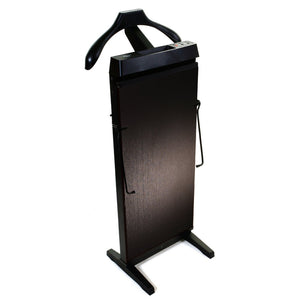
For boutique hotels, the Corby 4400 is the standard fit: 15 and 30-minute cycles, wall-mount or freestanding, and a finish range that matches most room schemes. Step up to the 6600 for full-service properties doing heavier nightly turnover, or the 7700 where the room rate justifies a premium finish like Natural Lancaster Oak. Corby has built these in Windsor since 1930, and every model carries a 3-year guarantee.
Why does a 1930s appliance still matter for a 2026 refurb?
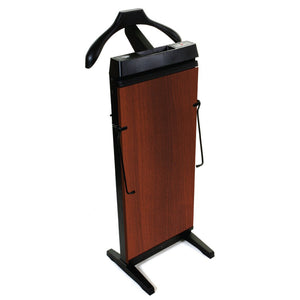
Because guests still wear suits, and ironing boards in a boutique room look like a budget chain. Corby of Windsor invented the trouser press as a valet stand in 1930, and the mechanism hasn't needed reinventing since: a heated stretcher bar that holds the crease without scorching the fabric. What has changed is the range. You're no longer picking one trouser press for the whole hotel, you're picking the right tier for the room rate.
A 40-room boutique in Bath charging £140 a night and a 12-room townhouse conversion in Edinburgh charging £95 have different expectations from the same brand. Get the tier wrong either way and you've either overspent on amenities the guest won't notice, or undersold a room that should be commanding more.
Which Corby model actually fits a boutique hotel budget?
Corby's current range runs five tiers: 3300, 4400, 6600, 7700 and Executive. For boutique and independent hotels, the decision usually comes down to three of these.
| Model | Cycle times | Best for | Mounting |
|---|---|---|---|
| Corby 3300 | 15 / 30 min | Entry-tier B&B, budget boutique | Wall or freestanding |
| Corby 4400 | 15 / 30 min | Standard boutique, most refurbs | Wall or freestanding |
| Corby 6600 | 15 / 30 min | Full-service hotel, higher turnover | Wall or freestanding |
| Corby 7700 | 15 / 30 / 45 min | Premium boutique, suites | Wall or freestanding |
| Corby Executive | Multi-cycle, integrated tie bar | Luxury suites, flagship rooms | Freestanding |
Honest opinion: for most 20 to 60 room boutique refurbs in the UK, the 4400 is the right call and the 7700 is overkill. The extra 45-minute cycle on the 7700 matters for heavier wool suiting, but most guest trousers are lightweight blends that don't need it. Save the 7700 for your premium rooms or suites where the finish needs to match a higher spec, and fit the 4400 everywhere else.
What finish actually suits a boutique scheme?
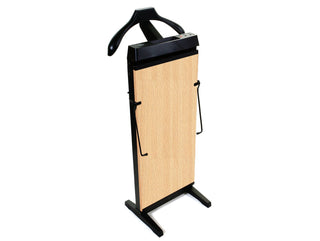
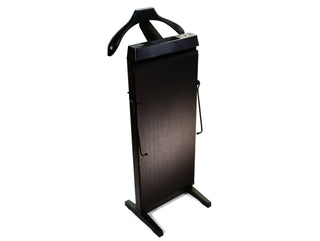
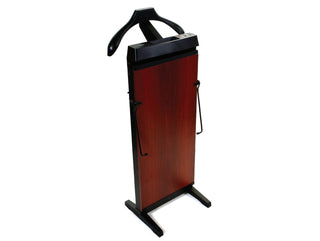
Corby offers finishes across walnut, oak, mahogany, beech, black ash, white and satin chrome depending on model. This is where boutique hotels differ from chain hotels: chains standardise on one finish across every property, but a boutique refurb usually has a room-by-room interior scheme that the trouser press needs to sit inside, not fight against.
- Walnut or mahogany for period properties, Georgian townhouses, anything with dark wood furniture already in the room
- Black ash or satin chrome for contemporary boutique fit-outs, especially where the rest of the joinery is matt or brushed metal
- White or beech for coastal or lighter Scandinavian-influenced schemes
If you're refurbishing in phases, order the same model across all rooms even if finishes vary by floor. Replacement parts and warranty claims are simpler when housekeeping and maintenance only deal with one model number.
The workhorse. Covers the vast majority of boutique refurbs without overspending on cycle options the guest won't use.
Worth the step up if you're running a higher-turnover full-service property where the press gets heavier nightly use.
Reserve this for premium rooms and suites. The 45-minute cycle and finish range justify the cost where the room rate supports it.
Refurbishing more than a handful of rooms? Quantity discounts apply automatically at 2+, 5+, 10+ and 20+ units, so a 40-room rollout costs noticeably less per unit than ordering one at a time.
Get Trade Pricing on Corby Trouser Presses →What electrical specification do you need to check before ordering?
This is the bit that gets missed in interior-led refurb planning. Trouser presses are fixed electrical appliances, and where they're being wall-mounted as part of a refit rather than just plugged into an existing socket, the installation needs to be considered under BS 7671:2018, not bolted on as an afterthought once the joinery is fitted.
- Confirm the socket or fused spur position before the wall-mounting bracket goes up, not after
- If you're running these on the same circuit as kettles, hairdryers and other guest room appliances, check the circuit's total load, not just the trouser press's own draw
- Any new fixed wiring work in guest rooms during a refurb is notifiable under Part P if it's not like-for-like replacement, so loop your electrician in early rather than at snagging stage
Freestanding or wall-mounted: which actually works better in a small room?
Every Corby model ships ready for both, so this is a room-layout decision, not a product limitation. In a tight boutique room, especially anything converted from a Victorian terrace or townhouse where floor space is already compromised, wall-mounting frees up usable floor area and looks more deliberate as part of the fit-out. Freestanding suits larger rooms or suites where it can double as a proper valet stand with the jacket hanger in use, rather than just a wall fixture.
One genuine trade-off: freestanding units are easier for housekeeping to move during deep cleans, wall-mounted units are harder for guests to knock or trip over. For HMO-style serviced apartments with higher guest turnover and less hands-on housekeeping, wall-mounted wins on practicality even in larger rooms.
Frequently Asked Questions
Stop Guessing on Hotel Amenity Specs
Browse the full Corby of Windsor range at trade prices, with automatic volume discounts on every refurb order.
Shop Corby Trouser Presses →