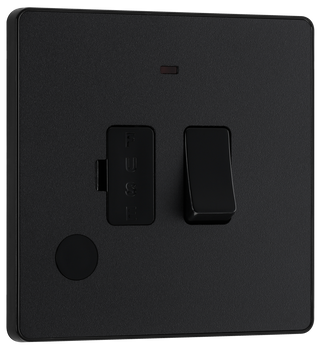
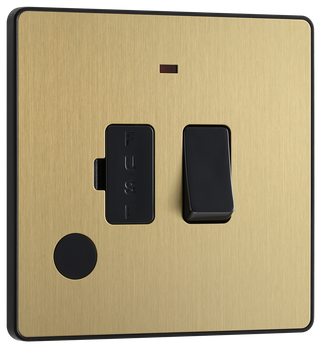
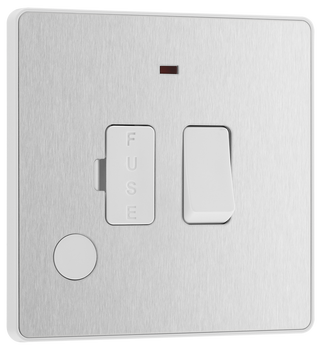
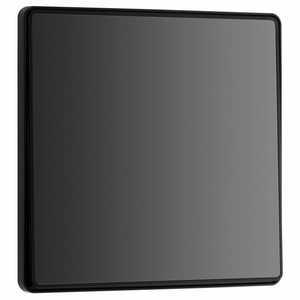
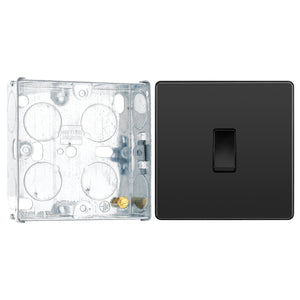
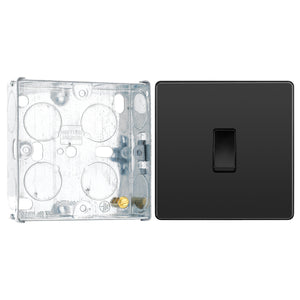
A 6-gang grid plate with two blanks in it because nobody stocks a 4-module version in matt black is not a finished job. It is a job you will get a call about in eight months.
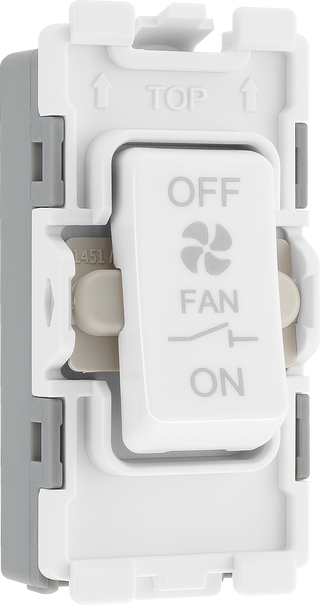
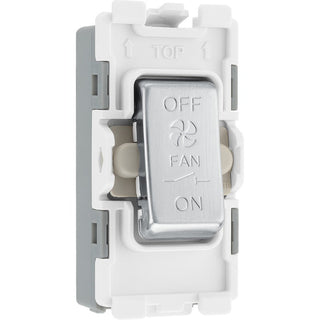
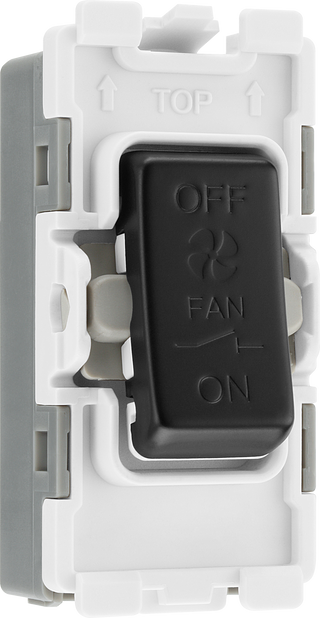
Count your switch positions first: lights, fan isolator, and one rocker per appliance (washing machine, dishwasher, cooker hood). That total is your module count, and BG grid plates come in 1, 2, 4, 6, 8, 10 and 12-gang sizes. If your count falls between sizes, Kent Traders' grid kit builder lets you pick the next plate up and fill the spare gap with a working module instead of a blank, with multi-buy savings applied automatically.
How do you work out what size grid plate you actually need?
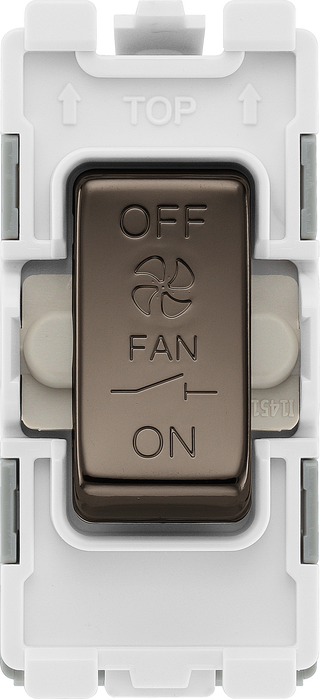
Count first, buy second. Walk the job and list every position that needs a module: each light switch, the fan isolator if there's an extractor, and one rocker per appliance you're switching, washing machine, dishwasher, cooker hood, fridge freezer. Add them up and that's your module count.
Grid systems exist because one gang plate covering five switches looks a lot tidier than five separate plates marching across a utility wall. BG's Nexus and Evolve grid ranges are built on exactly that idea: one front plate, a chassis behind it, and modules that snap into however many positions the plate has.
The problem trade buyers hit every week is that manufacturers only mould plates in fixed sizes, usually 1, 2, 4, 6, 8, 10 and 12 gang. A utility room with a washing machine, tumble dryer, dishwasher and a spare light switch needs exactly 4 modules. Fine. But the second that job needs a fan isolator added for an extractor, you're either buying a 6-gang plate and stuffing two blanks in it, or ordering a whole second plate for one switch.
A landlord in a 12-room HMO in Coventry doesn't want either. They want the plate that fits the job, filled with the modules the job actually needs, in the finish that matches the rest of the property.
Once you know your module count, how do you build the actual kit?
The builder runs in five steps and the whole thing lives on one page, no quote requests, no back and forth.
| Step | What you choose | Options available |
|---|---|---|
| 1. Finish | The visible finish of the front plate | Brushed Steel, Polished Chrome, Black Nickel, Matt Black, Antique Brass, White |
| 2. Plate | Grid system and gang size | BG Nexus Grid, BG Nexus Screwless Grid, BG Evolve Grid, 1 to 12 modules |
| 3. Modules | What goes in each position | Light switches, fan isolators, appliance rockers, dimmer modules, fuse holders, blanks |
| 4. Rockers | Printed labels (optional) | WASHING MACHINE, DISHWASHER, COOKER HOOD and other pre-printed rockers |
| 5. Box | Mounting box (optional) | Surface or flush back box, sized to your plate |
Everything is priced and stocked individually as you build, so what you see on screen is what lands at checkout. There's no separate "kit SKU" with its own lead time. Multi-buy discount tiers (2+, 5+, 10+, 20+) still apply automatically across the parts, the same as buying them loose.
BG grid modules are built to BS EN 60669-1 and are interchangeable across the same plate family. A Nexus Grid plate only takes Nexus Grid modules, and Evolve only takes Evolve. The builder filters this for you automatically, but it's worth knowing if you're matching a kit against stock you've already got on the van.
Custom build vs a pre-packed grid kit: which is actually better value?
Honest answer: it depends what you're fitting. A pre-packed 2-gang kit with two light switches is rarely worth customising, you're not saving anything meaningful. Where the builder earns its keep is anything past 4 modules with a mixed load.
Faster to order if the standard 2 or 4-way switch combination is exactly what you need. Falls apart the moment you need a fan isolator or appliance rocker mixed in, because fixed kits are almost always all-switch.
Costs the same as buying the parts loose, but you build the exact module mix in one pass instead of hunting six separate product pages. Worth it the moment a job needs switches, a fan isolator and an appliance rocker on the same plate.
Got a mixed-module job on the books? Build the plate, drop in the modules, see the total before you commit.
Start Building →What back box and depth do you need for a custom grid kit?
This is the bit that catches people out after the kit's already on site. Grid chassis sit on standard 35mm back boxes for most 1 to 4-gang plates, but anything carrying a dimmer module or running into 8+ gang typically needs the deeper 47mm box to clear the wiring behind the plate without forcing the cores.
If you're retrofitting into an older property, a Victorian terrace in Leeds with solid masonry walls is the classic case, check the existing box depth before you order rather than after. The builder lets you add a surface or flush box matched to your plate size in step 5, so it's one less measurement to get wrong on site.
Is a custom grid kit BS 7671 compliant?
Yes, provided the installation around it is. The grid plate, chassis and modules themselves are manufactured to BS EN 60669-1 and carry UKCA marking same as any other BG wiring accessory, custom-built or not. What you're responsible for on site is the circuit design feeding it: correct protective device, correct cable size for the combined load if you're running multiple appliances off one plate, and compliance with BS 7671:2018+A2:2022 for the installation itself.
A dishwasher and washing machine sharing a plate is fine from a switching perspective. Whether they're on a shared circuit or separate radials is a design decision, not something the grid kit makes for you.
Frequently Asked Questions
BG Nexus and Evolve grid plates run from 1 gang up to 12 gang. Each gang position takes one standard module, so a 6-gang plate holds 6 modules in any mix of switches, fan isolators, appliance rockers, dimmers or blanks.
No. Nexus Grid and Evolve Grid use different chassis fittings, so modules aren't interchangeable between the two ranges. The builder only shows you modules that fit the plate family you've selected, so this isn't something you can get wrong using the tool.
Most 1 to 4-gang plates sit on a standard 35mm back box. Larger plates, or any plate carrying a dimmer module, generally need a 47mm box for cable clearance. You can add the correct box for your plate size directly in the builder.
For multi-appliance utility rooms in hotels and HMOs, yes. A printed WASHING MACHINE or COOKER HOOD rocker removes any ambiguity for housekeeping or future tenants, and it costs very little extra against the labour saved explaining the switchboard later.
No. Every part in the builder is priced individually at the same rate as buying it loose from the relevant collection page. The builder doesn't add a markup, it just saves you assembling the order across multiple product pages, and multi-buy discount tiers still apply.
The grid hardware itself is manufactured to BS EN 60669-1 and isn't affected by Amendment 4. Amendment 4 changes apply to the installation design around it, AFDD requirements and circuit protection, not to the switch and module hardware you're fitting on the plate.
Stop Fitting Blanks Into Plates That Don't Match the Job
Pick your finish, build your plate, add it to cart in one go. Trade pricing and multi-buy savings apply automatically.
Build Your Grid Kit →