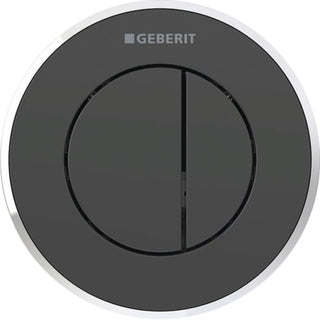
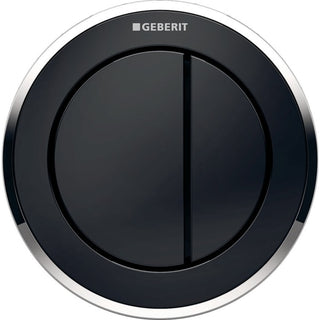
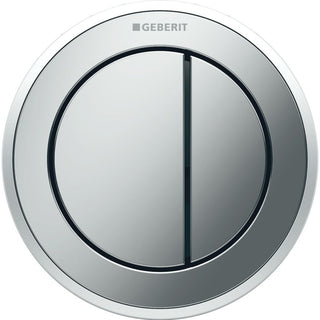
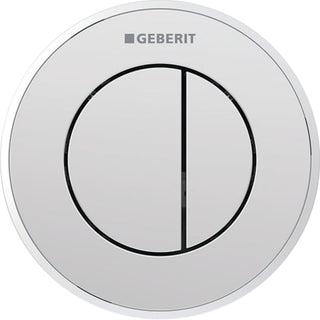
Flush Plate Failures in HMOs: What to Stock as Spares | KT

A 9-bed HMO in Portsmouth had a first-floor cistern trickling continuously for most of a quarter. Nobody reported it, because a running toilet is somebody else's problem in a shared house. The landlord found out from the metered water bill.

Quick Answer

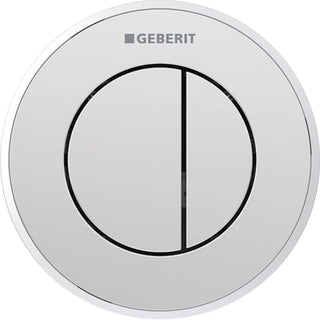
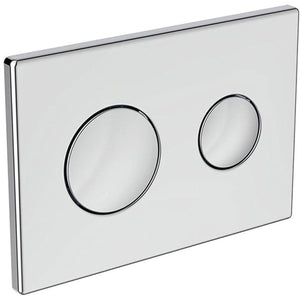
Flush plates and buttons fail in three common ways: a perished or disconnected pneumatic tube, a button jammed by limescale, and clips broken by forced removal. In high-turnover bathrooms these are frequent enough to be a stock item, not a callout. Hold one spare plate and button per series you have installed.

Browse Flush Buttons →

Why Do These Fail More in HMOs and Hotels?

A domestic cistern gets pressed maybe a dozen times a day by people who own the house. A 9-bed HMO bathroom or a hotel guest WC sees several times that, from people with no reason to be gentle and no way of telling you when something feels wrong. A button that's starting to stick gets pressed harder rather than reported, which is how a minor fault becomes a broken mechanism.

Cleaning makes it worse in the other direction. Housekeeping chemicals strong enough to keep a shared bathroom acceptable are also strong enough to attack coated and matt plate finishes over time, and limescale in hard water areas builds up in the button mechanism itself rather than just on the visible surface.


The Three Failure Modes Worth Recognising

Symptom Likely Cause What It Usually Needs
Button presses but nothing happens Pneumatic tube perished, kinked or worked loose from the valve Reseat or replace the tube, not the plate
Button stiff, sticks down, or needs force Limescale in the mechanism, common in hard water areas Descale if caught early, replace the button if not
Plate loose or won't clip back on Retaining clips snapped by forced removal during cleaning or repair Replacement plate in the same series
Cistern runs continuously after flushing Valve seal failure, not a plate fault at all Valve service or replacement, plate is usually fine
Only one of the two dual-flush volumes works Partial actuation failure, one tube or linkage of the pair Inspect both actuation paths before replacing anything
Trade Note: The continuously-running cistern is the one people misdiagnose most. It looks like a flush problem, so the plate gets replaced first, and the trickle carries on because the fault was always in the valve seal. Check the valve before you order a plate.

A Running Cistern Isn't Just a Bill

Under the Water Supply (Water Fittings) Regulations 1999, water fittings must not be installed, arranged or used in a way that causes or is likely to cause waste, misuse or undue consumption of water. A WC left running continuously is exactly the situation those regulations exist to prevent, and Regulation 7 provides for a fine on contravention.

In practice, nobody is fining a landlord for a fault fixed promptly. The exposure is a fault left running for a quarter because the property has no maintenance routine that would catch it, which is a harder position to defend as reasonable. On a metered supply it's also straightforwardly expensive.

Still specifying the original plates? The compatibility guide covers which plate pairs with which cistern series before you order.

Read the Flush Plate Compatibility Guide →

Standardise Now or Chase Spares Forever

This is the operational point most refurbs miss. If twenty bathrooms get fitted over three years by three different contractors, you end up with four or five plate series across one building. Every failure then becomes a small identification exercise before anyone can even order the part, and holding useful spares is impossible because you'd need spares for every series.

Standardising on one cistern and plate series across a property, or at minimum across a floor, turns that into a single spare on a shelf. This is a genuine opinion rather than a rule: the finish variety you give up is worth far less than the maintenance simplicity you gain, and in a rental or hotel nobody is comparing the flush plates between rooms anyway.


What Should Actually Be on the Shelf?

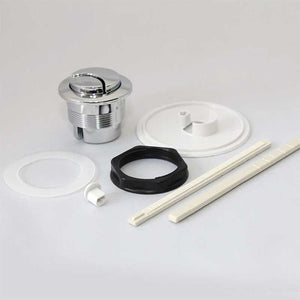
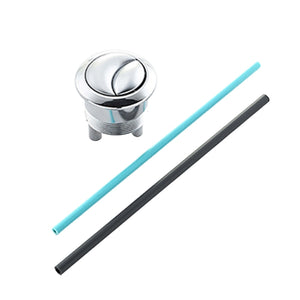
For a property with a consistent cistern series, a workable spares holding is one replacement plate, one spare button or actuator, and a spare pneumatic tube. That covers all three common failure modes without a wait. Add a spare flush valve if the property is in a hard water area, since that's the component behind the continuously-running fault and the one with the longest lead time to notice.

Cost-wise this is modest against the alternative. A quarter of a running cistern on a metered supply in a busy HMO will usually exceed the cost of the spares kit several times over, before counting the callout to diagnose it. If the bathrooms are due wider work anyway, our BS 6465 HMO Bathrooms: How Many Do You Need? covers the provision side, and the wider toilet accessories range covers seats, fixings and the smaller consumables that fail alongside.


Frequently Asked Questions

Often not. On a pneumatic system the most common cause is the air tube perishing, kinking or working loose from the valve. Check and reseat the tube before ordering a replacement plate.
That's usually a flush valve seal failure rather than a plate or button fault. Replacing the plate won't fix it, which is why this one gets misdiagnosed and money gets spent on the wrong part.
The Water Supply (Water Fittings) Regulations 1999 require that fittings aren't used in a way likely to cause waste or undue consumption of water, with Regulation 7 providing for a fine on contravention. A fault left running for months is the situation those rules address.
Hard water is the usual reason. Limescale builds up inside the button mechanism rather than only on the visible surface, so the action stiffens gradually until someone forces it and breaks something.
They can be, particularly on matt and coated finishes over repeated use. Where housekeeping uses aggressive products as standard, a harder-wearing finish is worth specifying over a delicate coated one.
One replacement plate, one spare button or actuator and a spare pneumatic tube per cistern series installed, plus a spare flush valve in hard water areas. Standardising the series across the property is what makes that holding practical.

Keep the Spare on the Shelf, Not on Order

Flush plates, buttons and cistern spares, trade priced and in stock now.

Browse Flush Plates →
Previous articleHand Dryers or Paper Towels in Hotel Washrooms? | KT Guide All articles Next articleAwaab's Law and Your HMO: What Actually Applies Now | KT

RELATED ARTICLES

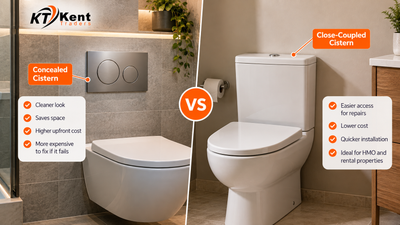
Closed vs concealed cistern
Concealed vs Close-Coupled Cisterns: Which for HMO? | KT

Landlords specifying cisterns for an HMO refurb usually pick on looks alone, and that's exactly where it goes wrong. A concealed cistern behind a...

Downlight insulation
Loft Insulation Over Downlights: What Actually Stops Fires

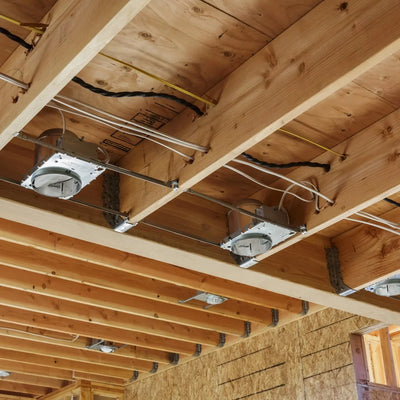
A landlord had fire-rated downlights fitted throughout an HMO loft conversion, then two years later a contractor topping up the loft insulation buried every...

Hotel welcome trays
Hotel Welcome Trays: What Actually Needs PAT Testing | KT

A guest complained her room kettle kept tripping the socket, and maintenance found the element had been failing for weeks. Nobody had tested it...

illuminated mirror and shaver stock
Illuminated Mirrors & Shaver Sockets: What's Legal | KT

A landlord asked an electrician to wire a normal double socket behind an HMO bathroom's new illuminated mirror, and was refused on the spot....

Garden room electrics
Garden Room Electrics: What Cable Actually Goes In | KT

A homeowner ran a heavy-duty extension lead across the lawn to a new garden office, and it tripped the whole house's RCD every time...

Masterplug night light sockets
Night Light Sockets: Do You Need One or a Lamp? | KT

A homeowner upgraded from a 7kW to a 10.5kW shower and kept the existing 6mm cable, assuming a cable is a cable. Within weeks...

USB DESKTOP POWER OUTLET
Reception Desk Power & USB Charging: What to Spec | KT

A guesthouse fitted USB sockets throughout every guest room but left reception on its original two sockets, both already taken by the card machine...

Hotel coffee pod machines
Hotel Kettle or Pod Machine? What Guest Rooms Need | KT

A guesthouse swapped every room kettle for a pod machine and found the sachet-restocking bill roughly doubled while some guests complained they couldn't make...

stairwell and corridor lighting
Corridor & Stairwell Sensor Lighting Guide | Kent Traders

A guesthouse stairwell had a switch only at the bottom, and a guest missed the last two steps coming down in the dark. PIR-controlled...

School Classroom Uk
School & Classroom Electrical Spec Guide | Kent Traders

A primary school fitted standard white moulded sockets along classroom skirting and was replacing cracked faceplates within a term. Schools take more physical abuse...

Extractor fan rates
Extractor Fan Ratings: Litres/Sec by Room | Kent Traders

A landlord replaced a failed bathroom extractor fan with whatever unit looked closest to the old one, and the property still failed its damp...

GU10, B22 or E27? UK Lamp Fittings Explained | KT

A guest ordered ten replacement bulbs for a downlight and every one arrived with the wrong base, because the old bulb wasn't a GU10,...

LD1, LD2 or LD3 Fire Alarms for HMOs? | Kent Traders

A landlord fitted LD3 smoke alarms and still failed his council's HMO licence inspection, because a shared house needs LD1 or LD2 coverage under...

Taps for Low Water Pressure: What to Buy | Kent Traders

A brand new tap that only dribbles is almost never faulty. It is a pressure mismatch. Every tap has a minimum operating pressure in...

Selective Licensing
Selective Licensing Is Expanding Fast: Are You Covered? | KT

A landlord with an ordinary single-family let, no HMO, no lodgers, found his street had quietly fallen inside an expanded selective licensing zone. A...

EICR CODES
EICR Codes Explained: What C1, C2, C3 Actually Mean | KT

A landlord filed his EICR in a drawer without reading the codes properly, and found out about his 28-day deadline when the council's remedial...

Shop products from this guide

Shop the products in this guide

View all