Induction has quietly become the default choice in new and refurbished UK kitchens. Here is how it works, what it costs to run, and the wiring you need to budget for.
How induction works
An induction hob uses an electromagnetic coil under the glass to induce a current directly in the base of a ferrous (magnetic) pan, heating the pan itself. Nothing heats up except the cookware, so response is instant and control is precise, like gas but cleaner.
Why UK kitchens are switching
Speed and control are the headline reasons: water boils noticeably faster than on gas or ceramic. Safety is the other: the surface only gets warm from the pan's residual heat, there is no flame, and most hobs cut out when the pan is removed, which matters in family and rental kitchens. With gas being phased out of many new-build homes, induction is the natural electric replacement.
Efficiency and running costs
Induction puts around 85 to 90% of its energy into the pan, against roughly 70% for ceramic electric and about 40% for gas, so less energy is wasted as ambient heat. Electricity costs more per unit than gas, so the saving is mostly in speed and reduced waste rather than a dramatic bill drop, but in a well-insulated all-electric home it pairs well with solar or a heat pump.
Wiring and the circuit you need
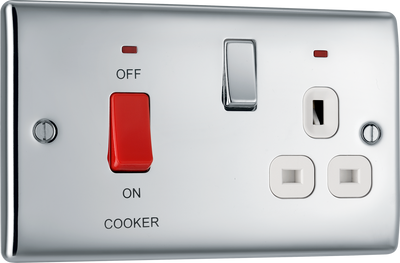
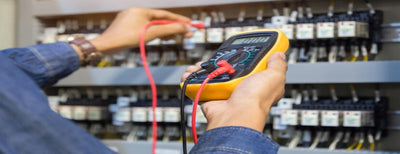
Most induction hobs draw enough current to need a dedicated cooker circuit and a 45A cooker control switch, not a 13A plug. Smaller or power-limited models can run on a 32A circuit, but always size from the appliance rating plate. This is fixed wiring and notifiable under Part P, so it must be installed or certified by a qualified electrician, who will also confirm your consumer unit has spare capacity. See our cooker switch guide for choosing the right isolator.
Pans you will need
Induction only works with ferrous cookware: cast iron, enamelled iron and most stainless steel. A quick test is whether a magnet sticks firmly to the base. Aluminium, copper and glass pans will not work unless they have an induction-rated base.
Pros and cons at a glance
| Pros | Cons |
|---|---|
| Fastest heat-up and precise control | Needs ferrous pans |
| Most energy-efficient hob type | Higher purchase price |
| Safer cool-ish surface, auto cut-out | Needs a dedicated 45A cooker circuit |
| Easy to wipe clean flat glass | Can hum/buzz with some pans |
FAQs
Do induction hobs need a special circuit? Yes, most need a dedicated cooker circuit and a 45A cooker switch; only low-power models suit a 32A circuit. An electrician sizes it.
Are induction hobs cheaper to run than gas? They are far more efficient, but electricity costs more per unit than gas, so the saving is mainly speed and reduced waste rather than a big bill cut.
What pans work on induction? Ferrous pans — cast iron and most stainless steel. If a magnet sticks to the base, it will work.
Can I install an induction hob myself? No, the cooker circuit is notifiable fixed wiring; use a qualified electrician.
Is induction safer than gas or ceramic? Generally yes: no flame, the surface stays cooler, and most hobs switch off when the pan is removed.
Shop the range at Kent Traders
Fitting an induction hob? It needs a dedicated cooker circuit and a 45A switch — we stock the control units and isolators. Browse our UK range:
Shop cooker switches