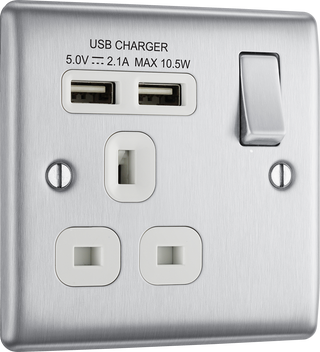
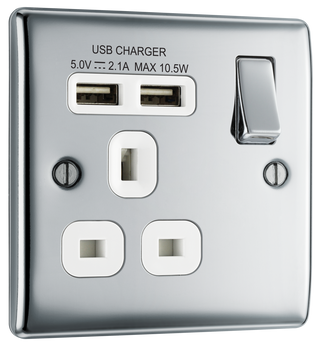
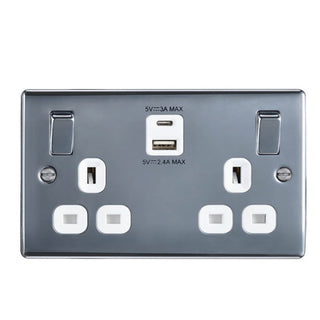
As modern homes rely more on mobile devices, USB socket outlets have become increasingly popular in the UK. These outlets combine traditional plug sockets with built-in USB charging ports, allowing devices such as smartphones and tablets to be powered directly from the wall socket.
While convenient, USB outlets require careful consideration during installation to ensure safe operation.
What Is a USB Socket Outlet?
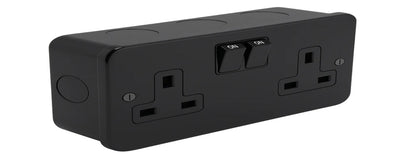
A USB socket outlet is a standard UK wall socket that includes integrated USB charging ports. These ports convert the mains supply voltage (230V AC) into low-voltage DC power suitable for charging electronic devices.
Most USB outlets provide outputs such as:
- 5V DC
- 2.1A or 3A charging current
Some advanced models support fast charging technologies.
Internal Power Conversion
Inside a USB outlet is a small power supply unit known as a switch-mode power supply (SMPS). This component converts the incoming AC voltage into regulated DC output.
The process involves:
- Rectification of AC voltage
- High-frequency switching
- Voltage regulation
Although compact, this circuit generates heat during operation and must be properly designed for continuous use.
Load Considerations
When installing USB outlets, electricians must consider the total load on the circuit. While the USB ports themselves draw relatively small currents, the traditional plug sockets may still supply larger appliances.
For example:
- Phone chargers draw minimal power
- Laptops and small electronics may draw more current
Although USB charging typically consumes less than 20W, multiple devices connected simultaneously can increase heat within the socket unit.
Installation Guidelines
USB outlets are installed similarly to standard socket outlets but must meet UK electrical safety requirements. Important considerations include:
- Adequate back box depth to accommodate internal electronics
- Proper earthing connections
- Use of certified products compliant with UK standards
Installers should also avoid placing USB outlets in areas where ventilation is limited.
Advantages of USB Outlets
USB outlets offer several practical benefits:
- Reduced need for plug adapters
- Convenient charging locations
- Cleaner wall socket appearance
- Improved cable management
They are commonly installed near bedsides, kitchens, and home offices.
Limitations
Despite their convenience, USB outlets may become outdated as charging technology evolves. Newer devices may require higher power levels than older sockets provide.
For this reason, some electricians recommend installing a mix of traditional outlets and USB charging points.
Conclusion
USB electrical outlets provide a convenient solution for charging modern electronic devices in UK homes. However, proper installation and load management are important to ensure safe and reliable performance.
As technology continues to evolve, USB sockets are becoming a standard feature in many new residential and commercial electrical installations.