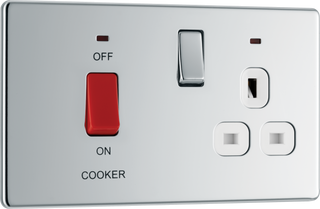
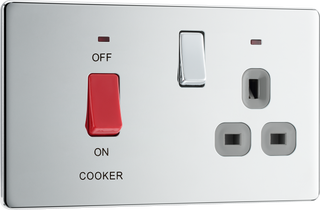
Which cooker switch do I need? 45A cooker switches explained (UK)

Quick answer: Most domestic cookers, ovens and hobs in the UK need a 45A double-pole cooker control switch. Pick a 45A switch (with or without a 13A socket), wired on its own dedicated circuit by a qualified electrician under Part P of the Building Regulations.

A cooker switch (also called a cooker control unit) isolates your cooker, oven or hob from the mains so it can be switched off safely. Getting the rating and type right matters for safety and for passing inspection under BS 7671 (the 18th Edition Wiring Regulations).

45A or 32A: which rating do I need?

Match the switch to the circuit and appliance load. Most family cookers and dual ovens draw enough current to need a 45A switch on a dedicated radial circuit. A compact single oven or hob under roughly 7.2kW can sometimes run on a 32A circuit, but 45A is the common, future-proof choice. If in doubt, your electrician will size it from the appliance rating plate and the cable.

Option Best for
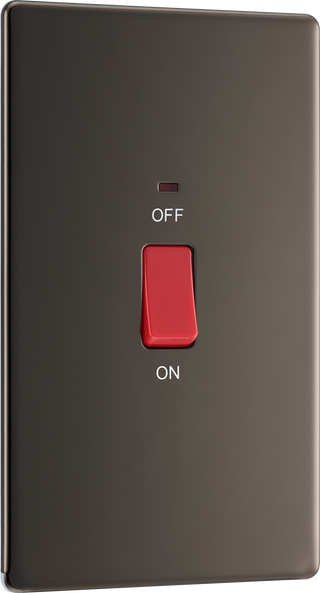
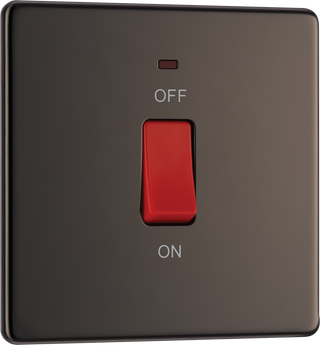
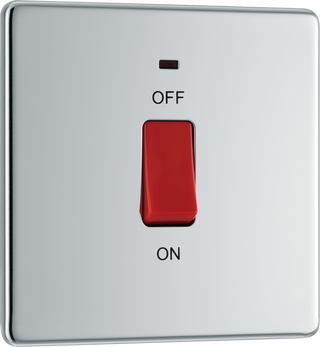
45A double pole, no socket Most cookers/ovens; clean look, no extra socket
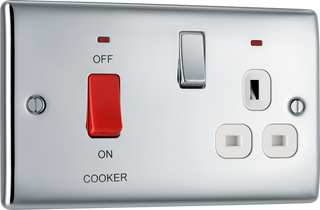
45A double pole with 13A socket Where you also want a worktop socket nearby
32A circuit Small single ovens/hobs only, on a suitably rated circuit

With or without a socket?

A cooker switch with an integrated 13A socket gives you a handy worktop outlet. Note that newer wiring guidance discourages siting sockets directly above a hob, so many installers now choose the version without a socket, or place a separate socket to the side.

Where should the cooker switch go?

Under BS 7671 the switch should be readily accessible, typically within 2 metres of the appliance, and not directly above the hob where a cable or your arm would cross the hotplates. A position to one side at worktop height is ideal.

Can I fit it myself?

A cooker circuit is a fixed-wiring job and is notifiable work under Part P in England and Wales. It should be installed or certified by a qualified electrician. You can choose and buy the switch yourself, then have it fitted.

FAQs

Do I need 45A or 32A? Most full-size cookers need 45A on a dedicated circuit; only small single ovens/hobs suit 32A. Your electrician sizes it from the appliance and cable.

Single or double pole? Cooker switches are double pole, which isolates both live and neutral for safe maintenance, the correct choice for a cooker.

Cooker switch with or without a socket? Either is fine; pick a socket version only if you want a worktop outlet, and avoid siting it above the hob.

How far from the cooker? Readily accessible and usually within about 2 metres, to one side rather than above the hotplates.

Can I install it myself? No, it is notifiable fixed-wiring work; use a qualified electrician.

Shop the range at Kent Traders

Fitting or replacing a cooker circuit? We stock 45A cooker switches and control units from BG and leading UK brands. Browse our UK trade range:

Shop cooker switches

Previous articleDo you need a fan isolator switch? 3-pole isolators explained All articles Next articleDo you need a fan isolator switch? 3-pole isolators explained

RELATED ARTICLES

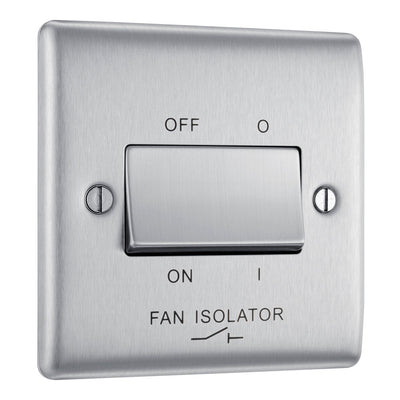
BG 3-pole fan isolator switch
Do you need a fan isolator switch? 3-pole isolators explained

Why timer and overrun extractor fans need a 3-pole fan isolator switch, where to fit it, and how to choose one.

Power Factor in Household Appliances
Power Factor in Household Appliances: Why It Matters in UK Electrical Systems

Most discussions around electrical appliances focus on power consumption in watts, but another important factor often ignored in domestic settings is power factor. While...

Voltage Drop in UK Electrical Circuits
Voltage Drop in UK Electrical Circuits: Impact on Appliances and How to Manage It

Voltage drop is an important factor in electrical installations, especially in UK homes where multiple appliances operate across different circuits. If not properly managed,...

What Are the Types of USB Socket
What Are the Types of USB Socket? A Complete Guide for UK Homes

USB charging has become a standard part of everyday life. From smartphones and tablets to smart devices, most modern electronics rely on USB power....

IP Ratings for Socket Outlets in the UK
IP Ratings for Socket Outlets in the UK: Understanding Protection Levels and Applications

Ingress Protection (IP) ratings are an important consideration when selecting socket outlets for different environments in the UK. Not all sockets are suitable for...

Socket Outlet Polarity in the UK
Socket Outlet Polarity in the UK: Importance, Testing and Fault Risks

Correct polarity is a fundamental requirement in UK electrical installations, especially for socket outlets. Even if a socket appears to function normally, incorrect polarity...

Socket Outlet Back Boxes in the UK
Socket Outlet Back Boxes in the UK: Types, Depth Requirements and Installation Standards

Quick answer: The back box depth you need depends on the accessory: 25mm suits most flush light switches and single sockets, 35mm gives extra...

Floor Socket Outlets in the UK
Floor Socket Outlets in the UK: Applications, Installation and Safety Considerations

Floor socket outlets are a specialised type of electrical outlet installed directly into the floor rather than on walls. They are increasingly used in...

Smart Electrical Outlets in UK Homes
Smart Electrical Outlets in UK Homes: Technology, Energy Control and Installation Considerations

Smart electrical outlets are becoming a popular addition to modern UK homes. These outlets allow users to control connected appliances remotely using smartphones, voice...

USB Electrical Outlets in UK Homes
USB Electrical Outlets in UK Homes: Design, Load Considerations and Installation

As modern homes rely more on mobile devices, USB socket outlets have become increasingly popular in the UK. These outlets combine traditional plug sockets...

Residual Current Devices in UK Appliances Circuits
Residual Current Devices (RCDs) in UK Appliances Circuits: Why They Are Essential for Electrical Safety

Electrical safety is a major concern in modern UK homes and workplaces. With the increasing use of electric appliances such as washing machines, kettles,...

Portable Appliance Testing (PAT) in the UK
Portable Appliance Testing (PAT) in the UK: Technical Procedure and Compliance Requirements

Portable Appliance Testing (PAT) is a critical safety process for electrical appliances used in workplaces, rental properties, schools and construction sites across the UK....

Inrush Current in UK Electric Appliances and Power Tools
Inrush Current in UK Electric Appliances and Power Tools: Circuit Design and Protection Essentials

Inrush current is an important but often overlooked factor in UK electrical installations. Many electric appliances and professional power tools draw a short but...

Earthing System Types in the UK
Earthing System Types in the UK: TN-S, TN-C-S and TT System Design Considerations

Understanding earthing arrangements is critical for safe and compliant installations. In the UK, the primary earthing systems are TN-S, TN-C-S (PME), and TT systems....

Smart Meters in UK Homes
Smart Meters in UK Homes: How They Help You Monitor Electricity Usage

Smart meters have become increasingly common across the UK. Many energy suppliers now install them as standard, helping households better understand how much electricity...

Understanding Consumer Units in UK Homes
Understanding Consumer Units in UK Homes: The Heart of Your Electrical System

The consumer unit, often referred to as the fuse box, is one of the most important components of a UK home’s electrical system. Although...

Shop products from this guide