Most discussions around electrical appliances focus on power consumption in watts, but another important factor often ignored in domestic settings is power factor. While it is more commonly discussed in industrial systems, power factor also affects household appliances and overall electrical efficiency.
Power quality principles, including power factor, are recognised under standards published by BSI.
What Is Power Factor?
Power factor is the ratio between real power (kW) and apparent power (kVA) in an electrical system. It indicates how efficiently electrical power is being used.
A power factor of 1 (or unity) means all supplied power is effectively used. A lower power factor means some power is wasted due to reactive components in the system.
Why Power Factor Matters for Appliances
Many modern household appliances contain inductive or electronic components that affect power factor.
Examples include:
- Washing machines
- Refrigerators
- Air conditioners
- LED lighting drivers
- Laptop chargers
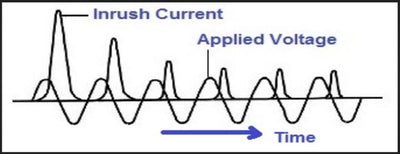
These devices do not draw current in a perfectly smooth waveform, which can reduce efficiency.
Effects of Low Power Factor
In domestic installations, the impact of low power factor is usually less noticeable compared to industrial setups, but it still has technical effects:
- Increased current flow in cables
- Additional heat generation
- Reduced efficiency of electrical systems
- Potential stress on wiring and protective devices
Although UK households are not typically charged for poor power factor, it can still affect system performance.
Power Factor Correction in Appliances
Many modern appliances include built-in power factor correction (PFC) circuits. These circuits improve efficiency by aligning current and voltage more closely.
For example:
- LED drivers often include PFC
- Computer power supplies are designed with active PFC
- High-quality appliances generally have better power factor performance
Practical Considerations
Electricians should consider power factor when:
- Designing circuits with multiple electronic loads
- Assessing overall load on a system
- Selecting appropriate cable sizes
Although it is not a primary concern in small installations, it becomes more relevant in homes with high electronic usage.
Future Relevance
With the rise of smart homes, EV chargers, and energy-efficient appliances, power factor is becoming more relevant even in residential environments.
Efficient appliances with good power factor contribute to better energy usage and reduced system losses.
Conclusion
Power factor may not be widely discussed in domestic installations, but it plays an important role in overall electrical efficiency. As UK homes continue to adopt advanced appliances, understanding power factor will become increasingly important for electricians and homeowners alike.