Inrush current is an important but often overlooked factor in UK electrical installations. Many electric appliances and professional power tools draw a short but very high surge of current when first switched on. Although this surge lasts only milliseconds, it can affect circuit breakers, cause nuisance tripping, and impact overall system stability.
For electricians working under BS 7671 standards issued by BSI, understanding inrush current is essential for proper circuit design and protective device selection.
What Is Inrush Current?
Inrush current is the initial surge of current drawn at the moment an appliance is energised. This current can be several times higher than the equipment’s rated operating current.
For example:
- A 9A motor-driven appliance may draw 40A or more during startup.
- A transformer-based device may experience a brief but very high magnetising current.
- LED drivers and switch-mode power supplies can produce sharp charging spikes.
Even though the duration is short, the magnitude may be high enough to activate the magnetic trip element of an MCB.
Why It Happens
Different types of equipment produce inrush for different reasons.
Induction Motors
When first powered, the motor rotor is stationary. With no back EMF to limit current, the motor draws a high locked-rotor current until it accelerates. This applies to appliances such as refrigerators, air conditioning units, vacuum cleaners, and site tools like drills and saws.
Transformers
When energised, transformer cores can saturate briefly, producing a high magnetising inrush current depending on the point of the AC waveform.
Capacitive Loads
Modern electronics with internal capacitors draw high charging currents at startup. This is common in LED lighting systems and IT equipment.
Interaction with MCB Types
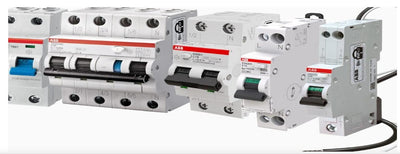
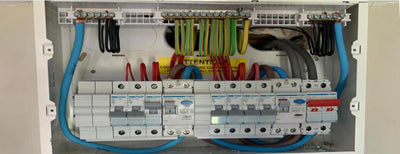
Miniature Circuit Breakers have thermal and magnetic trip mechanisms. The magnetic element reacts almost instantly to high current.
In the UK, common tripping curves include:
- Type B: Trips at 3–5 times rated current
- Type C: Trips at 5–10 times rated current
- Type D: Trips at 10–20 times rated current
If a motor-driven appliance is connected to a Type B breaker, the startup surge may cause nuisance tripping even though the running current is within limits.
For circuits supplying moderate motor loads, Type C breakers are often more suitable. However, selection must always consider cable capacity and prospective fault current.
Domestic Installation Considerations
In UK homes, several high-inrush appliances may operate from the same consumer unit. Kitchens commonly include induction hobs, ovens, refrigeration units, and washing machines.
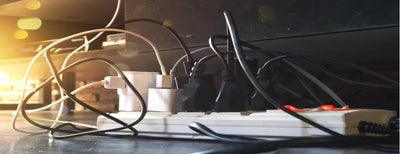
After a power cut, multiple appliances restarting simultaneously can create cumulative inrush demand. Proper circuit segregation and dedicated radials for large appliances help reduce this risk.
Electricians should review:
- Breaker characteristics
- Appliance manufacturer data
- Diversity factors
- Load distribution across circuits
Commercial and Site Applications
Workshops and construction sites often use heavy-duty tools with high startup currents. Compressors, saws, and grinders can cause upstream breakers to trip if protection is not correctly coordinated.
In such environments, discrimination between protective devices is critical. Type C or Type D breakers may be required, along with soft-start systems where appropriate.
Measurement and Fault Diagnosis
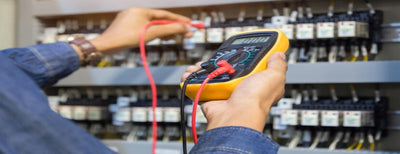
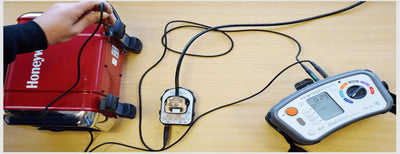
Modern clamp meters with inrush capture functions allow electricians to measure startup current accurately. If a breaker trips immediately on startup but not during continuous operation, inrush current may be the cause.
However, simply upgrading breaker type without checking cable ratings and fault levels is not acceptable. All changes must comply with BS 7671.
Conclusion
Inrush current is a short-duration but high-impact characteristic of many UK electric appliances and power tools. While steady-state current determines long-term load, startup behaviour directly affects protective device performance.