A resident is helped into the shower, the cold supply drops as a toilet fills somewhere else in the building, and the water surges hot. For a frail person who cannot move away quickly or feel the heat clearly, that few seconds is how a serious scald happens.
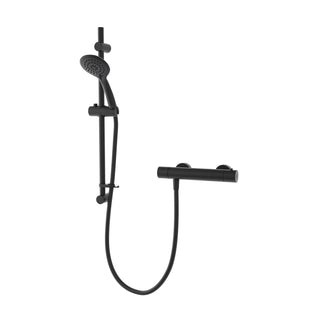
In care settings, hot water for bathing and showering must be controlled so a vulnerable person cannot be scalded. The fix is a thermostatic shower that holds a set temperature and shuts off fast if the cold supply fails, fitted with a cool-touch body so the valve itself cannot burn on contact. HSE guidance points to a maximum outlet temperature around 44 degrees for baths and showers where residents are at risk.
Why scalding is a care-sector problem, not a domestic one
A healthy adult feels water getting too hot and pulls away in a fraction of a second. Many care residents cannot. Thinner skin scalds at a lower temperature and in less time, reduced sensation means the heat is not felt until damage is done, and limited mobility means the person cannot step out of the flow. Put those together and a temperature that would merely be uncomfortable for staff can cause a full-thickness burn on a resident.
That is why this is treated as a genuine safety duty rather than a comfort preference. The HSE guidance on managing scalding and burning risks in health and social care expects providers to assess the risk and control hot water delivered to baths and showers, and a scald serious enough to need treatment is reportable. Getting the shower specification right is the practical part of meeting that duty.
What a thermostatic shower actually does
A thermostatic valve blends hot and cold to a set temperature and then holds it, using a wax or similar element that reacts to the water temperature many times a second. The safety behaviour is the important part: if the cold supply drops away, the valve rapidly closes down the hot rather than letting the outlet run scalding. A basic manual mixer does the opposite, because with the cold gone the hot simply takes over. For anyone who cannot react quickly, that fail-safe is the whole point.
Here is how the options compare for a care setting.
| Type | Behaviour if cold fails | Suitable for care? |
|---|---|---|
| Manual mixer valve | Outlet runs hot, no protection | No, not for at-risk users |
| Thermostatic mixer valve | Shuts down the hot quickly | Yes, the core requirement |
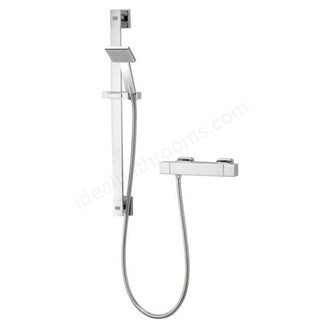
| Thermostatic with cool-touch body | Shuts down hot, and body stays cool to touch | Yes, best practice |
| Thermostatic to the TMV3 scheme | As above, tested to healthcare criteria | Yes, where TMV3 is specified |
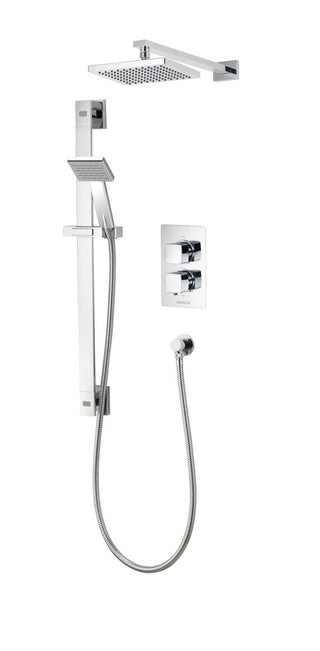
Fitting out a whole home? Specify one thermostatic valve family across the rooms so maintenance holds one set of spares and staff learn one control. Consistency across a building is a safety feature in itself.
See Complete Showers →TMV2 or TMV3, and why cool-touch matters
Thermostatic mixing valves are tested against two schemes. TMV2 covers general domestic and commercial use. TMV3 applies tighter performance criteria for healthcare and higher-risk settings, and it is the one often specified for hospitals and some care environments. Which you need depends on the setting and the specifier's risk assessment, so confirm the requirement for the particular home rather than assuming. Either way, the valve must be commissioned to the right blend temperature and then checked periodically, because a thermostatic valve that has drifted or furred up in a hard-water area no longer protects anyone.
Cool-touch is the second half of the job and is easy to overlook. On a standard valve the brass body sits in the hot flow and can reach a temperature that burns a hand resting on it. A cool-touch valve is engineered so the outer body stays safe to touch even in use, which matters when a resident may steady themselves on the valve or a carer works close to it. If you are choosing the wider bathroom brand and layout at the same time, our guide on Geberit vs Grohe vs Aqualisa covers the range decision.
The commissioning point people miss
Buying the right valve is only half the safeguard. A thermostatic valve has to be set to the correct maximum blend temperature at installation and then verified on a schedule, because performance can drift, especially where limescale builds up. Build a simple temperature check into the home's maintenance routine, keep a record, and replace or service a valve that no longer holds its setting. A valve installed and forgotten is a false sense of security, whereas one commissioned and checked is a genuine control that stands up to scrutiny.
Frequently Asked Questions
Specify Showers That Protect the People Using Them
Aqualisa thermostatic and cool-touch shower valves, trade priced for care homes, assisted living and supported housing projects.
Shop Showering →