Replacing Toilet Seats in HMOs: Get the Fit Right | KT

Check-out day, and the toilet seat is cracked, wobbling or missing a hinge again. It is one of the most replaced items in a rented bathroom, and the job stalls the moment you realise the new seat you grabbed does not line up with the pan.

Quick Answer

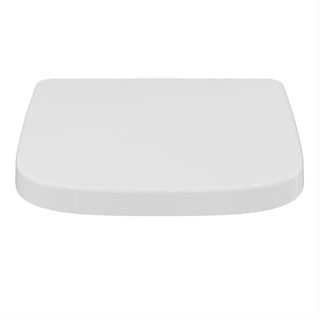
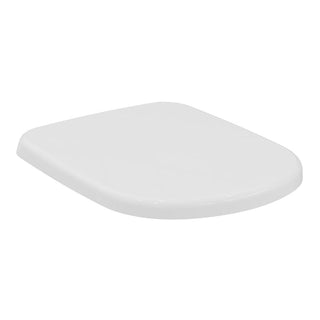
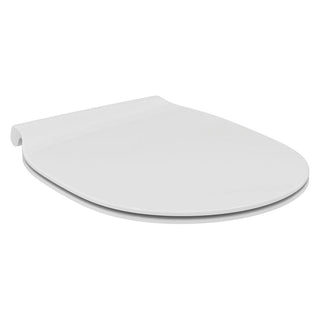
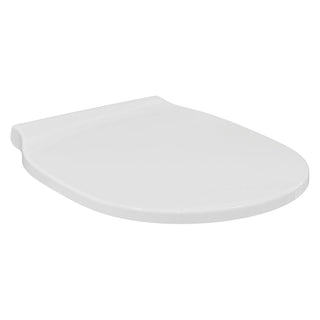
Toilet seats fail fast in shared housing because of heavy use and cheap hinges. For HMO turnover, fit a soft-close seat with a quick-release, top-fixing hinge: soft-close stops the slamming that cracks seats and pans, and quick-release lets housekeeping lift the seat off to clean. Match the seat to the pan model or shape, because seats are not universal.

Browse Toilet Seats →

Why toilet seats fail so fast in HMOs

A seat in a family home might last a decade. In a six-bed HMO it can be months. The reasons are simple: far more users, far more slams, and the cheapest possible seat fitted at the last refurb. Standard hinges take the shock of a dropped lid until the fixing cracks or the seat itself splits at the hinge lugs. Once a seat is loose it rocks on the pan, which loosens it further and, in the worst cases, chips the porcelain underneath.

This matters beyond comfort. A broken or unhygienic toilet seat is the sort of disrepair that counts under the Housing Health and Safety Rating System councils use to assess rented homes, and it is an easy complaint for a tenant to raise. Replacing seats properly on turnover is cheaper than being chased on it later.

Soft-close is not a luxury in a rental The single biggest cause of a cracked seat or a chipped pan is the lid being dropped. A soft-close hinge removes that entirely by lowering the seat under damped control. In a high-use property it pays for itself by outlasting several cheap standard seats.

The features that matter for turnover

Ignore styling for a moment: three practical features decide how a seat performs in a rental and how easy it is to live with. Get these right and you cut both breakages and cleaning time.

Feature What it does Why it matters in an HMO
Soft-close hinge Lowers seat and lid under damped control Stops the slamming that cracks seats and chips pans
Quick-release Seat lifts off the hinge in seconds Lets housekeeping clean around and under the fixing properly
Top-fixing hinge Fixes from above the pan, not underneath Fits back-to-wall and boxed-in pans where you cannot reach below
Wrap-over shape Seat overlaps the pan rim Hides the pan edge for a cleaner look on tired suites

Running a portfolio? Standardise on one or two seat models across your pans and keep a couple on the shelf. A same-day swap on turnover beats waiting on a delivery while a room sits empty.

See Ideal Standard Toilets & Seats →

Matching the seat to the pan: the bit that trips people up

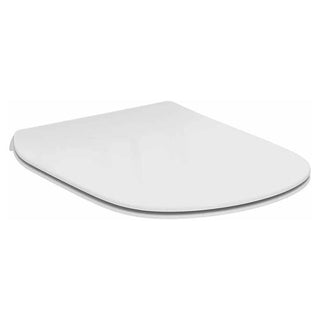
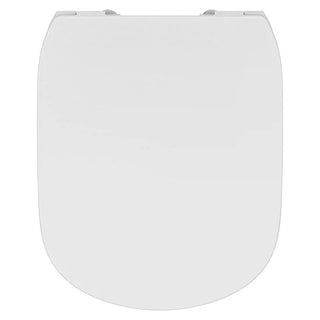
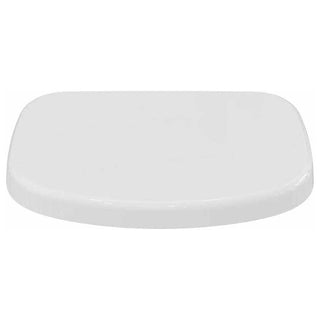
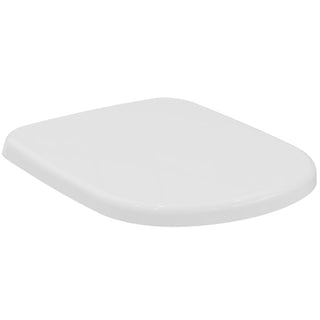
Toilet seats are not universal, and this is where a quick job turns into a second trip to the merchant. A seat has to match the pan it sits on, and the safest match is by manufacturer and range. An Ideal Standard Tesi pan takes the Tesi seat, a Tempo pan takes the Tempo seat, and so on, because the fixing centres and the seat footprint are designed together. If you are replacing on a mixed-suite portfolio, note the pan model before you order, or measure three things: the distance between the fixing hole centres, the overall length from the fixing holes to the front of the pan, and the widest point of the bowl.

If the pan is an older or unbranded one, a seat with an adjustable top-fixing hinge gives you some tolerance on the fixing centres. For a like-for-like Ideal Standard replacement it is simpler to match the range. Our guide on which Ideal Standard pan type suits HMOs covers choosing the pan itself if you are replacing the whole suite rather than just the seat.

What to keep on the shelf

The trade habit that saves the most time is holding a small stock of the seats that fit your pans. If your properties run on one or two Ideal Standard ranges, keep a soft-close seat for each on hand. When a tenancy ends, the seat swap is a five-minute job done during the same visit as the rest of the turnaround, rather than a return trip once a part arrives. For a landlord juggling void periods, that is the difference between a room ready to view on Monday and one still waiting on Thursday. Buy the seat with the pan whenever you refurbish a suite, so the matched replacement is already in your hands.

Frequently Asked Questions

No. Seats have to match the pan's shape and fixing centres, so the safest approach is to match by manufacturer and range, such as an Ideal Standard Tesi seat for a Tesi pan. For unbranded pans, measure the fixing hole spacing, the length to the front, and the bowl width before ordering.
Yes. Slamming is the main cause of cracked seats and chipped pans, and soft-close removes it by lowering the lid under control. In a high-use HMO a soft-close seat typically outlasts several cheap standard seats, so it works out cheaper over time.
A quick-release seat lifts off its hinges in seconds without tools, so housekeeping can clean around and under the fixings properly and refit it just as fast. In shared bathrooms this makes a real difference to hygiene and to how quickly a room is turned around.
A bottom-fixing seat bolts on from underneath the pan, which is awkward on back-to-wall or boxed-in toilets where you cannot reach below. A top-fixing seat fixes from above, so it suits modern concealed-cistern and back-to-wall pans common in HMO refurbishments.
Measure three things: the distance between the two fixing-hole centres at the back of the pan, the length from those holes to the front edge of the bowl, and the widest point of the bowl. Those dimensions, or the pan's make and model, let you match the correct seat.
Yes. A loose seat rocks on the pan, which works the fixings looser and can chip or crack the porcelain rim over time. Tightening or replacing a loose seat promptly avoids a much more expensive pan replacement later.

Turn a Bathroom Round Without a Second Trip

Ideal Standard soft-close and standard toilet seats, matched to the pan, trade priced with the spares you need on the shelf.

Shop Toilets & Seats →
Previous articleGuestroom Ironing Setup for Hotels and B&Bs | KT All articles Next articleAnti-Scald Care Home Showers: Thermostatic Spec Guide | KT

RELATED ARTICLES

Astro window restrictors
Window Restrictors: The 100mm Rule for Hotels, HMOs | KT

Window restrictors limit how far a window opens, usually to no more than 100mm, so a child or vulnerable adult cannot fall out. HSE...

Part m threshold
Part M Door Thresholds: The 15mm Rule Explained Simply | KT

Approved Document M Volume 2 wants entrance thresholds level, and where a raised one cannot be avoided it caps the total height at 15mm....

Fire blanket
Fire Blankets for Hotel and HMO Kitchens: What to Buy | KT

A fire blanket is the simplest piece of kitchen fire equipment, but only if the right size is mounted where staff can reach it....

Torch vs Emergency lighting
Hotel Room Torches vs Emergency Lighting: What Counts | KT

Home Office guidance lets the smallest B&Bs and guest houses in England rely on bedroom torches instead of fixed escape lighting. There is a...

Standard letterbox
Why a Standard Letterbox Voids Your Fire Door Rating | KT

A standard letterbox cut into an FD30 fire door is one of the most commonly missed compliance failures on a fire door inspection, and...

Closed vs concealed cistern
Concealed vs Close-Coupled Cisterns: Which for HMO? | KT

Landlords specifying cisterns for an HMO refurb usually pick on looks alone, and that's exactly where it goes wrong. A concealed cistern behind a...

Downlight insulation
Loft Insulation Over Downlights: What Actually Stops Fires

A landlord had fire-rated downlights fitted throughout an HMO loft conversion, then two years later a contractor topping up the loft insulation buried every...

Hotel welcome trays
Hotel Welcome Trays: What Actually Needs PAT Testing | KT

A guest complained her room kettle kept tripping the socket, and maintenance found the element had been failing for weeks. Nobody had tested it...

illuminated mirror and shaver stock
Illuminated Mirrors & Shaver Sockets: What's Legal | KT

A landlord asked an electrician to wire a normal double socket behind an HMO bathroom's new illuminated mirror, and was refused on the spot....

Garden room electrics
Garden Room Electrics: What Cable Actually Goes In | KT

A homeowner ran a heavy-duty extension lead across the lawn to a new garden office, and it tripped the whole house's RCD every time...

Masterplug night light sockets
Night Light Sockets: Do You Need One or a Lamp? | KT

A homeowner upgraded from a 7kW to a 10.5kW shower and kept the existing 6mm cable, assuming a cable is a cable. Within weeks...

USB DESKTOP POWER OUTLET
Reception Desk Power & USB Charging: What to Spec | KT

A guesthouse fitted USB sockets throughout every guest room but left reception on its original two sockets, both already taken by the card machine...

Hotel coffee pod machines
Hotel Kettle or Pod Machine? What Guest Rooms Need | KT

A guesthouse swapped every room kettle for a pod machine and found the sachet-restocking bill roughly doubled while some guests complained they couldn't make...

stairwell and corridor lighting
Corridor & Stairwell Sensor Lighting Guide | Kent Traders

A guesthouse stairwell had a switch only at the bottom, and a guest missed the last two steps coming down in the dark. PIR-controlled...

School Classroom Uk
School & Classroom Electrical Spec Guide | Kent Traders

A primary school fitted standard white moulded sockets along classroom skirting and was replacing cracked faceplates within a term. Schools take more physical abuse...

Extractor fan rates
Extractor Fan Ratings: Litres/Sec by Room | Kent Traders

A landlord replaced a failed bathroom extractor fan with whatever unit looked closest to the old one, and the property still failed its damp...

Shop products from this guide