A landlord in Leeds with a single-family buy-to-let, no lodgers, no HMO, nothing he'd ever thought needed a licence, found his street sat inside a selective licensing zone that expanded in February 2026. He wasn't running anything unusual. He was just late finding out the rules had moved under him.
Selective licensing can require a council licence for any privately rented property in a designated area, including an ordinary family let. A December 2024 rule change removed the Secretary of State approval councils needed, and schemes have expanded fast through 2026 in Leeds, Hackney, Croydon, Manchester and others. Letting without a required licence risks an unlimited fine or a civil penalty up to £30,000.
Selective, Additional or Mandatory: Which One Actually Applies?
| Scheme | What It Covers | Where It Applies |
|---|---|---|
| Mandatory HMO licensing | Any HMO let to 5+ people forming more than one household | Everywhere in England and Wales, since 2006 |
| Additional licensing | Smaller HMOs, sometimes as few as 3 or 4 unrelated occupants | Only in council areas that have designated a scheme |
| Selective licensing | Any privately rented property, HMO or not, including a single-family let | Only in council areas that have designated a scheme |
The confusion that catches people out is assuming licensing is only ever about HMOs. Selective licensing specifically is not. A three-bedroom house let to one family, with a single tenancy agreement and no shared facilities in the HMO sense at all, can still need a licence if it sits inside a selective licensing zone. Havering's March 2026 scheme, for example, applies to properties let to single families or up to two unrelated tenants, and explicitly does not require the property to be an HMO at all.
Why Are So Many New Schemes Appearing in 2026?
Before December 2024, a council wanting to designate a selective licensing scheme covering more than 20% of its area, or more than 20% of privately rented homes, needed prior approval from the Secretary of State. The Selective Licensing General Approval 2024, in force from 23 December 2024, removed that requirement, and councils that had schemes stuck in the approval queue, or had avoided proposing larger ones because of the risk of refusal, moved quickly. Leeds expanded its scheme to cover an estimated 12,500 properties from 9 February 2026. Hackney introduced a borough-wide additional licensing scheme alongside selective licensing from 1 May 2026. Manchester, Westminster, Reading, Croydon, Havering, Barking & Dagenham and Bexley have all introduced or expanded schemes through 2026.
What Happens If You Let a Property Without a Required Licence?
The consequences go beyond a straightforward fine. Letting a property that needs a licence without one can mean prosecution with an unlimited fine, or a civil penalty of up to £30,000 issued directly by the council. Tenants or the council can also apply for a rent repayment order, requiring the landlord to repay up to 12 months of rent received while the property was unlicensed. On top of the financial exposure, an unlicensed HMO or selective licensing property can invalidate a Section 21 or Section 8 possession notice, which matters considerably if you need to recover the property from a problem tenancy.
This is a genuine trade opinion rather than a legal certainty: don't assume your existing HMO licence covers you for selective licensing too, and don't assume a property outside the more famous London schemes is automatically safe. Councils across the country, not just London boroughs, have used the 2024 deregulation to expand quietly, and the properties getting caught out are disproportionately ordinary single lets whose landlords never thought licensing applied to them at all.
How Do You Actually Check If Your Property Is Covered?
Search the specific local council's website for "selective licensing" or "additional licensing" alongside the property's postcode, since scheme boundaries are usually published as ward-level maps or address lookup tools on the council's own site. Checking once isn't a permanent answer either. Schemes are actively being consulted on and expanded through 2026, so a property outside a scheme this year is not guaranteed to stay that way, particularly if you're in an area a council has already flagged for housing condition or enforcement concerns.
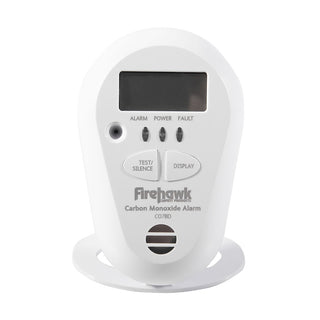
If a licence application does flow into physical works, most conditions attached to selective and additional licences cover the same ground as general HMO management standards: working smoke alarms, safe electrical installations, and satisfactory means of escape. Our HMO Compliance Checklist covers that ground in detail.
Frequently Asked Questions
Check the Council Site Before the Council Checks You
Print our full HMO compliance checklist and keep licensing, EICR and fire safety records in one place.
Get the HMO Compliance Checklist →