Imagine walking into your living room and charging your phone, laptop, or even your vacuum cleaner all without plugging in a single cable. This isn’t science fiction anymore. Wireless power is slowly becoming a reality, and UK homes may soon benefit from this cable-free future.
What is Wireless Power?
Wireless power, also called wireless charging or power transfer, uses electromagnetic fields to transmit energy between a power source and a device without cables. You’ve probably already seen it in action with smartphone charging pads.
But in 2025, the idea goes far beyond phones. The technology is being developed to power:
- Kitchen appliances
- TVs and entertainment systems
- Laptops and workstations
- Even electric cars parked in driveways
How Does It Work?
There are a few main methods of wireless power:
- Inductive charging – Already used in phone pads, it works when two coils are close together.
- Resonant charging – Allows energy transfer across a short distance, powering multiple devices at once.
- Long-range wireless power – Still experimental, using radio waves or lasers to send energy further.
In UK homes, the most likely systems will be short-range charging built into furniture, flooring, or walls.
Benefits for UK Homes
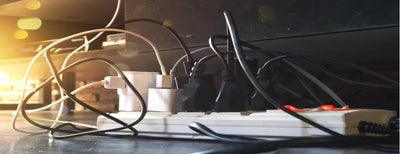
- No more tangled cables – Cleaner, safer spaces without wires everywhere.
- Convenience – Devices automatically charge when placed in a room or on a surface.
- Safety – Reduces risks of tripping hazards or damaged cables.
- Future-ready – As more appliances go wireless, UK homes can stay ahead of the curve.
Current Developments
- IKEA already sells furniture with built-in wireless charging pads.
- Wi-Charge, a tech company, has demoed systems that power devices across a whole room.
- Automakers are developing wireless EV charging pads for driveways.
While most UK homes don’t yet use full wireless power systems, the technology is being tested worldwide and may reach consumers soon.
Challenges Ahead
- Efficiency – Wireless charging often wastes more energy than wired charging.
- Costs – New infrastructure, like wireless-enabled walls or furniture, can be expensive.
- Compatibility – Devices need to be designed for wireless power.
- Health and safety – Long-range wireless power still needs thorough testing for safety in homes.
The Future of Cable-Free Homes in the UK
Experts believe that within the next decade, wireless charging could be built into new UK housing developments. For example:
- Kitchen counters could charge kettles and blenders.
- Coffee tables could charge laptops and game controllers.
- EV driveways could charge cars automatically overnight.
This shift would make daily life smoother, greener, and far less dependent on cluttered cables.
Final Thoughts
Wireless power is not fully mainstream yet, but it’s advancing quickly. For UK households, the potential is huge: safer spaces, greater convenience, and homes that feel truly futuristic. The real question isn’t whether wireless power will arrive, but how soon we’ll see it built into everyday living.