Workplace toilets have a legal minimum, and it follows your busiest headcount, not your payroll. This guide gives the HSE numbers, the rule for sites over 100 people, four worked examples and what to fit around every toilet. Prices were checked on 19 November 2026.
Up to 5 people need 1 toilet and 1 washbasin. Then 2 for 6 to 25 people, 3 for 26 to 50, 4 for 51 to 75 and 5 for 76 to 100. Above 100, add one of each for every 25 people or part of 25. Count the most people on site at once, not the payroll.
How many toilets does a workplace need?
HSE publishes one table for mixed-use or women-only toilets and a second for men-only toilets. Most employers use the first, because it also fits unisex rooms with lockable doors. The numbers sit on the HSE workplace facilities page and in Table 1 of the L24 approved code of practice.
| People at work | Toilets | Washbasins |
|---|---|---|
| 1 to 5 | 1 | 1 |
| 6 to 25 | 2 | 2 |
| 26 to 50 | 3 | 3 |
| 51 to 75 | 4 | 4 |
| 76 to 100 | 5 | 5 |
Above 100 people, L24 paragraph 200 adds one toilet and one washbasin for every 25 people over 100, or part of 25. So 101 people need 6 of each. 125 people also need 6, and 126 people need 7.
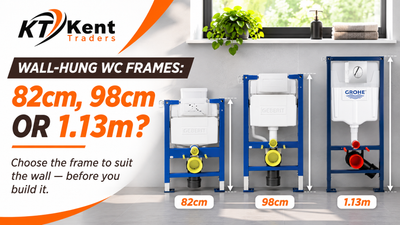
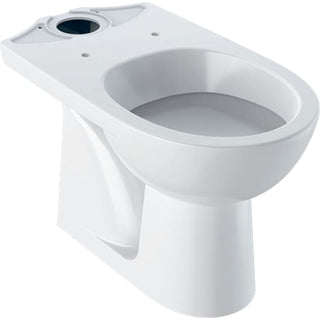
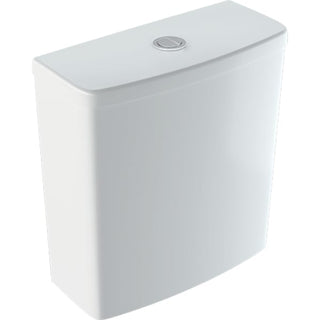
Each toilet needs a pan, a cistern or frame, a flush plate and a seat. Our toilets range covers Geberit, Grohe, Ideal Standard and RAK Ceramics, with the flush plates and seats to finish.
Whose headcount do you count?
L24 paragraph 197 defines the first column as the maximum number of workers likely to be in the workplace at any one time. That is peak occupancy, not the payroll.
A hybrid office with 60 staff and a busiest day of 22 people sits in the 6 to 25 band, so it needs 2 toilets. A site with two shifts of 40 counts 40, not 80, as long as the shifts never overlap. Allow for the handover.
The tables cover people at work, not customers or guests. Plan public toilets in a shop, cafe or hotel separately.
The 1992 Regulations apply in England, Wales and Scotland. Northern Ireland has its own rules, so check with HSENI there.
Do you need separate men's and women's toilets?
Not if every toilet sits in its own room with a door that locks from the inside. Regulation 20(2)(c) of the Workplace (Health, Safety and Welfare) Regulations 1992 makes that exception. HSE repeats it, and L24 paragraph 196 asks for each toilet to be in a separate room or cubicle with a door that can be secured from inside.
Unisex rooms use the mixed-use table above. If a toilet is used by men only, Table 2 applies and urinals enter the count.
| Men at work | Toilets | Urinals |
|---|---|---|
| 1 to 15 | 1 | 1 |
| 16 to 30 | 2 | 1 |
| 31 to 45 | 2 | 2 |
| 46 to 60 | 3 | 2 |
| 61 to 75 | 3 | 3 |
| 76 to 90 | 4 | 3 |
| 91 to 100 | 4 | 4 |
Table 2 gives cubicles and urinals in separate columns, so a urinal never stands in for a cubicle.
Worked examples: four sites, four counts
| Site | Peak people | Rule used | Toilets | Washbasins |
|---|---|---|---|---|
| Office with unisex lockable rooms | 40 | Table 1, 26 to 50 | 3 | 3 |
| Hybrid office, 60 on payroll | 22 | Table 1, 6 to 25 | 2 | 2 |
| Warehouse, one shift | 130 | Table 1 plus paragraph 200 | 7 | 7 |
| Men-only workshop | 45 | Table 2, 31 to 45 | 2, plus 2 urinals | One by the toilets |
The warehouse is the one people miscount. The first 100 people need 5 toilets. The 30 people above 100 are 1.2 lots of 25, which rounds up to 2 more. That makes 7 toilets and 7 basins.
Specify the washroom in five steps
- Fix the peak headcount. Write down the most people on site at once and get the site manager to sign it off.
- Read the numbers. Take toilets and basins from Table 1 or Table 2, then add one of each per 25 people above 100.
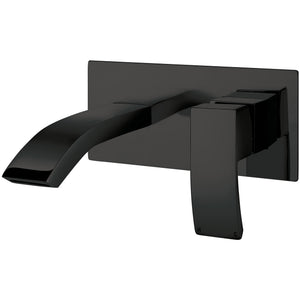
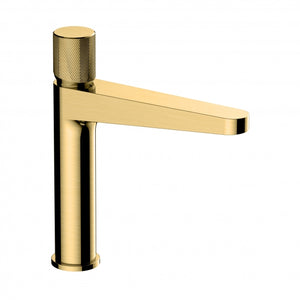
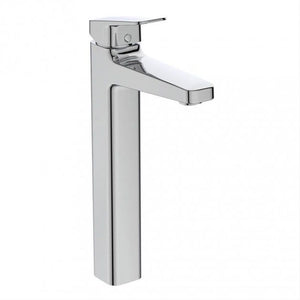
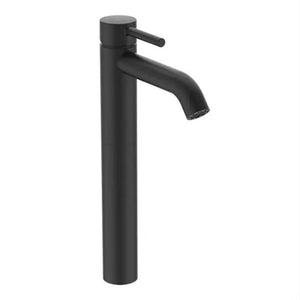
- Put a basin by every toilet. HSE asks for hot and cold, or warm, running water. Our basin taps include the Ideal Standard Ceraplan BD246AA at £137.13 and the Scudo Descent wall-mounted mixer at £59.99, both inc VAT and in stock on 19 November 2026.
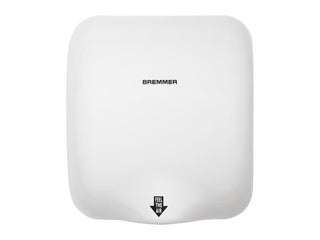
- Add soap and a way to dry hands. HSE accepts paper towels or a hot-air dryer. Our hand dryers are five Bremmer models, from the Generic Turbo in white at £97.99 inc VAT.
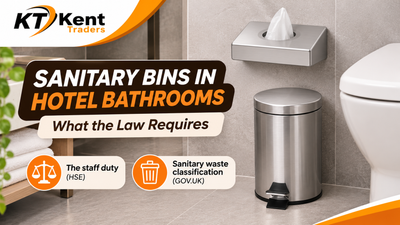
- Provide sanitary disposal in women's toilets. L24 paragraph 192 asks for suitable means of disposal. A 3 litre Corby Croft pedal bin is £9.94, and the sanitary bin guide below covers the waste rules.
Several wall-hung and back-to-wall pans in the toilets range showed low stock on 19 November 2026. For a six or seven cubicle job, confirm quantities before you fix the programme.
Where workplace toilets fall short
- Counting the payroll. The table uses peak occupancy, so a hybrid office needs fewer toilets than its staff list suggests.
- Missing the extras above 100. Paragraph 200 adds a toilet and a basin for every 25 people or part of 25.
- Treating a urinal as a cubicle. Table 2 lists them in separate columns.
- Fewer basins than toilets. In the mixed-use table the two numbers match.
- Unisex rooms with no inside lock. Without the lock, you need separate men's and women's rooms.
- No sanitary disposal. Women's toilets need it under L24 paragraph 192.
- Poor light and ventilation. Regulation 20(2) asks for rooms that are adequately ventilated and lit, and kept clean and orderly.
The test in Regulation 20(1) is "suitable and sufficient sanitary conveniences" at readily accessible places. The HSE tables are the minimum for meeting it.
Workplace washroom buying checklist
Run this list before you order.
- Peak headcount written down and signed off by the site manager.
- Toilets and basins match the table, plus the extras above 100 people.
- Every toilet in a room or cubicle with a lock on the inside.
- A basin by each toilet with hot and cold, or warm, running water.
- Soap, plus paper towels or a hand dryer.
- Sanitary disposal in every women's toilet.
- Stock confirmed for the whole run, not just the first cubicle.
Frequently asked questions
Two toilets and two washbasins. HSE's mixed-use table puts everyone from 6 to 25 people at work in the same band, so a workplace of 10 needs 2 of each. Count the most people on site at once, not the payroll, and make sure each toilet has a lock on the inside of its door.
Three toilets and three washbasins. HSE's mixed-use table gives 3 of each for 26 to 50 people at work. At 51 people the count rises to 4. Check the number against your peak headcount, because one extra person at the top of a band can add a whole toilet.
Not when each toilet sits in its own room with a door that locks from the inside. Regulation 20(2)(c) allows that exception. Otherwise you need separate rooms for men and women. L24 paragraph 196 asks for each toilet to be in a separate room or cubicle with a door that can be secured from inside.
Start from 5 toilets and 5 washbasins for up to 100 people. Then add one toilet and one washbasin for every 25 people above 100, or part of 25. That is L24 paragraph 200. For 130 people the total is 7 of each, because the 30 extra people round up to two lots of 25.
No. HSE's men-only table lists cubicles and urinals in separate columns, so a urinal does not replace a cubicle. For 31 to 45 men, Table 2 asks for 2 cubicles and 2 urinals. Treat the urinal count as an addition to the cubicle count, not a swap.
HSE asks for hot and cold, or warm, running water, enough soap or other washing agents, and a way to dry hands such as paper towels or a hot-air dryer. Basins must be large enough to wash hands, and forearms if necessary, and sit close to the toilets.
Yes. L24 paragraph 192 says that in toilets used by women, suitable means for the disposal of sanitary dressings should also be provided. A pedal bin in each cubicle is one way to meet that. Our guide to sanitary bins covers the waste rules in more detail.
No. The Workplace (Health, Safety and Welfare) Regulations 1992 apply in England, Wales and Scotland. Northern Ireland has its own regulations, so check with HSENI before you plan a site there. The legislation.gov.uk page for Regulation 20 marks its extent as England, Wales and Scotland.
Related reading
Fit out the washroom
Browse toilets, flush plates and seats, then apply for a trade account if you buy regularly.