Search for a hotel sanitary bin and most results are waste companies saying you must have one. The real position is narrower, and it affects what you fit. This guide separates the clear duty from the common practice, using GOV.UK and HSE guidance and our bathroom bins collection.
Quick answerFor staff toilets, HSE says employers must provide somewhere to dispose of sanitary dressings for female workers. We found no UK rule naming guest bathrooms, but a lidded bin or bag dispenser is standard practice, and sanitary waste must never go in recycling. Check with your waste contractor.
Is a sanitary bin a legal requirement in a hotel?
For staff, yes. For guest bathrooms, we could not find a rule that names them. HSE's workplace facilities guidance lists, among the toilets and washing facilities an employer must provide, somewhere for female workers to dispose of sanitary dressings.
That duty is written for workers. A guest bedroom is accommodation, not a workplace, and neither the HSE page nor the GOV.UK waste guidance we checked mentions guest bathrooms. Waste companies often describe a bin as a legal requirement for any business, which is a sales claim rather than a quote from a regulation.
Trade tipYour insurer, licensing officer or local authority may set its own conditions for a hotel or HMO. Ask them before you rely on our reading.
Staff and public toilets: where the duty is clear
If staff use a toilet, the HSE line applies to it. In practice that means a lidded bin in every cubicle used by female staff, and a plan for who empties it. HSE's page was updated on 26 January 2026 and applies in Great Britain.
Public toilets in a hotel bar or restaurant are used by staff and visitors alike, so most hotels fit a bin there too. It is the simplest way to show you have thought about the duty.
What counts as sanitary waste, and where it goes
GOV.UK treats hygiene waste and sanitary protection, such as nappies and incontinence pads, as municipal offensive waste. The Environment Agency classification guide says it is non-infectious, non-hazardous, and uses code 20 01 99.
There is a weight rule. If you produce more than 7kg of municipal offensive waste, or more than one bag in a collection period, you must segregate it from mixed municipal waste. Below that, it can go in the black bag with the general waste, using code 20 03 01. This guidance is for England, so Wales and Scotland differ.
Weigh a fortnight of bags from a few rooms before you assume you are under the limit. If you are over it, ask your waste contractor what service they offer.
Watch outSanitary waste is not recycling. A dual recycling bin in the bedroom is the wrong place for it, and our bedroom bins guide explains the split.
Hygiene bag dispenser or pedal bin: which does a guest bathroom need?
Most guest bathrooms use a bin, a bag dispenser, or both. A dispenser gives the guest a discreet bag to wrap items in, and the bin takes the wrapped bag.
| Option | What it does | Size and mounting | Price, 16 Nov 2026 |
|---|---|---|---|
| Corby Kent hygiene bag dispenser | Holds hygiene bags for guests | 136mm wide, 98mm deep, 25mm high; wall mountable | £5.77 |
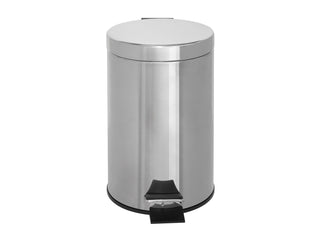
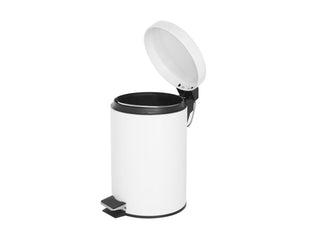
| Corby Croft pedal bin, 3L | Lidded pedal bin for the bathroom | Black, polished steel or white; floor standing | £9.94 inc VAT |
| Both together | Bag, then lidded bin | One dispenser on the wall, one bin by the toilet | £15.71 per bathroom |
The dispenser listing does not say whether bags are included, or what size bag it takes, so check before you order. The Croft is a general lidded pedal bin for bathroom or bedroom use, not a dedicated sanitary unit. Both are Corby of Windsor items, in stock when we checked.
Worked example: a 20-room hotel and a three-bathroom HMO
A small hotel fits one dispenser and one pedal bin in each of 20 guest bathrooms.
- 20 dispensers: 20 at £5.77 is £115.40.
- 20 Croft bins: 20 at £9.94 is £198.80.
- Total: £314.20, or £15.71 a bathroom.
A landlord with a three-bathroom HMO fits the same pair in each shared bathroom, which comes to £47.13. Our HMO bathrooms guide covers how many bathrooms a house needs. Council licence conditions vary, so ask yours what it expects.
Setting up sanitary disposal in five steps
- Decide who uses each toilet, because staff toilets carry a clear duty.
- Fit a lidded bin within reach of the toilet, and a dispenser on the wall beside it.
- Stock the dispenser, and tell housekeeping which bin is which.
- Keep sanitary bags out of the recycling stream, using a separate bag on the trolley.
- Weigh the waste for a fortnight, then ask your contractor about collection.
Where hotel sanitary disposal goes wrong
- No bin at all. Guests flush items instead, which risks blocked drains.
- A dispenser with no bags. It looks fitted, and fails at the first guest.
- Using the bedroom bin. The recycling side is the wrong place for it.
- Open bins. A lid and a pedal keep the room fresh between services.
- Assuming the law decides. Staff toilets carry a duty, and guest rooms are about practice.
Buyer's checklist
- A lidded pedal bin in every guest bathroom.
- A wall dispenser stocked with bags you have confirmed fit.
- A bin in every toilet staff use.
- A housekeeping routine that keeps sanitary waste out of recycling.
- A call to your contractor once you know your weekly weight.
For the rest of the room, see the wider guest room items range and the bedroom bins collection.
FAQs
For staff toilets, HSE says employers must provide somewhere for female workers to dispose of sanitary dressings. We found no UK rule naming guest bathrooms, though a bin is standard practice. Ask your local authority or insurer if you need certainty for your own premises.
GOV.UK lists hygiene waste and sanitary protection, such as nappies and incontinence pads, as municipal offensive waste. It is non-infectious and non-hazardous, and uses code 20 01 99. It is not clinical waste, so it does not need the clinical route.
Under 7kg of municipal offensive waste, and no more than one bag in a collection period, it can go in the black bag using code 20 03 01. Above that, GOV.UK says you must segregate it. This is guidance for England, so check your contractor.
No. GOV.UK classes sanitary waste as municipal offensive waste, not a recyclable, so it belongs in the general or segregated offensive stream. Keep it out of dual recycling bins, and tell housekeeping exactly which bag on the trolley is which.
The listing describes a wall-mountable dispenser with a removable base, 136mm wide, 98mm deep and 25mm high. It does not state the bag size or whether bags are included, so check with us before ordering. It was £5.77 and in stock on 16 November 2026.
It is a 3 litre lidded pedal bin for bathroom or bedroom use, in black, polished steel or white. The listings do not mark it as a dedicated sanitary unit. It was £9.94 including VAT and in stock on 16 November 2026.
Fit one bin in every guest bathroom, one in each staff toilet and one in each shared HMO bathroom, with a dispenser beside it if you want one. For 20 rooms that is a £314.20 outlay on the items we list. Your council or insurer may ask for more.