Fire door checks are routine, visual and cheap, yet one failed door can undo a fire strategy. This guide covers how often to check, which buildings the English rules reach, eight points to inspect and what each fix costs. Prices checked 21 November 2026.
Under the Fire Safety (England) Regulations 2022, communal fire doors need checking at least every 3 months and flat entrance doors at least every 12 months, in buildings over 11 metres. Checks are visual: gaps, seals, hinges, glazing, letterbox and self-closing. Record every result, including any flat you could not enter.
How often do fire door checks need to happen?
The gov.uk fire door guidance asks for communal fire doors to be checked at least every 3 months. Flat entrance doors need checking at least every 12 months, on a best endeavours basis, because you cannot force entry to a flat. Keep a record of each check, and of any refused access.
Regulation 10 adds that every check must confirm the self-closing device works.
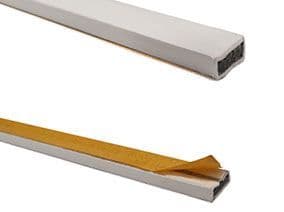
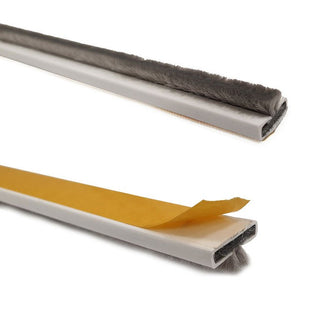
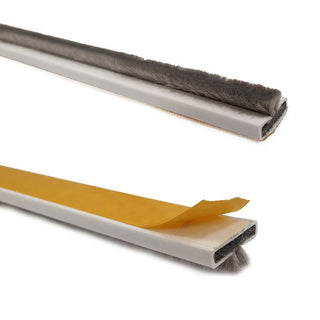
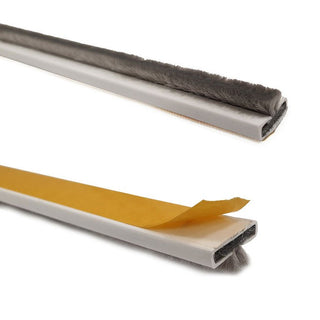
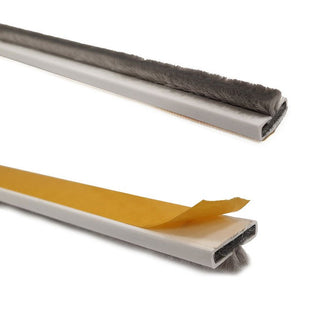
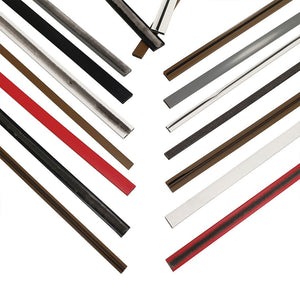
Most failures are small and cheap. A strip painted over or a smoke seal peeled off costs pounds to fix. Our intumescent fire seals range had 43 products in stock on 21 November 2026, from 10mm fire-only strips at £1.15 inc VAT.
Does this apply to your building or HMO?
The routine checks apply to buildings with two or more homes and shared escape routes, where the top storey is more than 11 metres above ground. That is typically a block of more than four storeys. The duty to give residents fire door information applies to every block of flats.
The guidance does not mention HMOs, so do not assume it covers yours or excludes it. A converted building with several flats is in scope when it is tall enough. For a standard HMO, the Regulatory Reform (Fire Safety) Order 2005 asks for a fire risk assessment of the shared areas, and that assessment should set your door routine.
These are England rules. Wales, Scotland and Northern Ireland have their own fire safety laws, so check the local position there.
The eight-point fire door check
The guidance lists what a routine check covers. We have turned it into eight points to walk through, door by door.
- Is it still a fire door? Look for a visible fire rating. A fire door swapped for an ordinary one fails every other check.
- Is the door, frame and wall sound? Check for damage, defects and unauthorised alterations.
- Is the glazing intact? Fire-resisting glass, side panels and over panels should be undamaged.
- Are the hinges and ironmongery sound? Look for missing or loose screws, and for ventilation grilles that should not be there.
- Are the strips and seals in place? They should be undamaged, touching the door or frame and not painted over.
- Is the gap small enough? The guidance gives 4mm as the industry standard maximum, with the bottom gap as small as practicable.
- Is the letterbox closed? It should not be jammed open, and a new one must suit a fire door.
- Does it self-close? Test it from fully open and from about 15 degrees. It must shut fully each time.
How big can a gap around a fire door be?
The gov.uk guidance names 4mm as the industry standard maximum between door and frame. It asks for the bottom gap to be as small as practicable. The guidance does not give a single legal figure for the bottom gap.
Your door's certification gives the tolerance its test covered. A wider gap than the certificate allows is a failed door, even if it closes well.
Which fix goes with which fault?
Most check failures have an off-the-shelf fix. Strips and smoke seals sit in our fire and smoke seals collection, which showed 54 products on 21 November 2026. Perimeter and acoustic seals are in the smoke and acoustic seals range, and retainers and fire foam are in door protection and hardware.
| Fault found | Fix | Price inc VAT, 21 Nov 2026 |
|---|---|---|
| Strip missing or painted over, 30 minute door | Astroflame 15x4x2.1m 30min strip, fire and smoke | £1.91 per length |
| Strip missing or painted over, 60 minute door | Astroflame 20x4x2.1m 60min strip, fire and smoke | £1.96 per length |
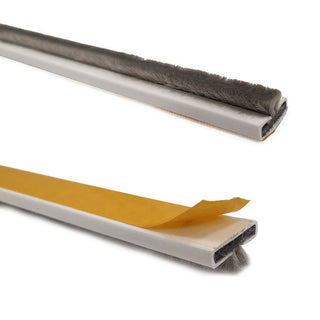
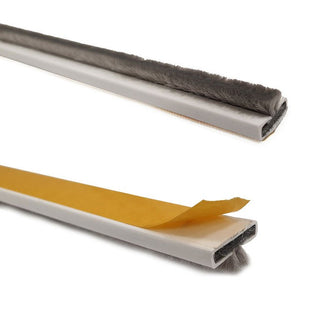
| No smoke seal at the perimeter | Astroflame ASP twin fin seal, 2100mm | £3.44 per length |
| Gap at the bottom of the door | Astroflame AFASDB acoustic rated door bottom seal | £13.16 to £16.55 |
| Door wedged open | Astroflame Dorgard SmartSound retainer | £175.35 |
Strip size must match the door's rating and its groove. Our guide to strip sizes below covers 10, 15 and 20mm. Closers, hinges and replacement doors are outside this range, so ask a competent joiner.
Fix the fault with a product that suits your door's certification. If the paperwork is missing, ask the door supplier or a fire door inspector before you alter the door.
Worked example: inspecting 12 doors
A landlord walks 12 doors in a converted building and finds the faults below. The prices use the lowest listed price in each range, inc VAT, on 21 November 2026.
| Finding | Doors | Fix | Quantity | Cost |
|---|---|---|---|---|
| Strips painted over | 4 | 15mm 30min strip, fire and smoke | 12 lengths, three per door | £22.92 |
| No smoke seal | 2 | ASP twin fin seal | 6 lengths, three per door | £20.64 |
| Large gap at the bottom | 1 | AFASDB door bottom seal | 1 | £13.16 |
| Total materials | 7 of 12 | £56.72 |
A standard single door needs about 5 metres of strip, so three 2.1m lengths cover the head and both jambs. Five doors passed. The seven fixes cost £56.72 in materials. Re-check each fixed door and log the result.
Where fire door checks go wrong
- Checking once and filing nothing. The guidance asks for records, including flats you could not enter.
- Painting over strips during redecoration. Painted strips fail the check and cannot expand as they should.
- Fitting the wrong strip. A 60 minute door with a 10mm strip is under-protected. Check the rating first.
- Ignoring the letterbox. A jammed or unsuitable letterbox is a listed check point.
Fire door check record and ordering checklist
Run this list on each inspection day and before you order.
- Door list written down, with each rating and the last check date.
- Communal doors checked in the last 3 months, flat entrance doors in the last 12.
- All eight points ticked, with photos of any fault.
- Refused or missed flat entries logged with the date and the attempt made.
- Strip size, smoke seals and bottom seals matched to each door and gap.
- Residents given the three instructions, and reminded within 12 months.
Frequently asked questions
In England, the gov.uk guidance says communal fire doors need checking at least every 3 months and flat entrance doors at least every 12 months. That duty applies where the top storey is more than 11 metres above ground. Following the same rhythm in smaller buildings is sensible practice.
No. The guidance describes the checks as simple and visual, and says they need no specialist. A trained caretaker, landlord or managing agent can do them. A specialist is worth calling when you find damage, a door of unknown rating, or a fault you cannot fix with seals or screws.
The gov.uk guidance gives 4mm as the industry standard maximum gap between door and frame, with the bottom gap kept as small as practicable. Your door manufacturer's certification is the final word, so check it before you trim a door or add a seal.
The gov.uk guidance does not mention HMOs, so it does not settle the question. It covers buildings with two or more homes and shared escape routes. For an ordinary HMO, your fire risk assessment and licence conditions set the routine, and the same eight checks are a sound starting point.
No. The guidance lists strips and smoke seals that are painted over as a check failure, along with strips that are damaged or no longer touch the door or frame. Painted strips cannot do their job, so replace them rather than scraping them. Match the new strip to the door's fire rating.
The guidance says the door should close fully from fully open and also from about 15 degrees. Test both. A door that stops short of the latch fails, whatever its seals look like. Report a weak closer straight away, because the Regulations expect every check to confirm that self-closing works.
Tell residents to keep fire doors shut when not in use, not to tamper with self-closing devices, and to report any fault or damage straight away. New residents need this information soon after moving in, and every resident needs a reminder at least once in each 12 months.
No. The Fire Safety (England) Regulations 2022 apply in England only. Wales, Scotland and Northern Ireland have their own fire safety laws, so check the local rules before you set a schedule there. The eight checks themselves are still good practice anywhere.
Related reading
Replace the strips and seals your check found
Browse intumescent strips and smoke seals in stock, then match each one to the door's rating.