Quick answer: A UK induction hob needs its own dedicated cooker circuit, not a 13A plug. Most domestic hobs draw 3.5kW to 7.4kW, so they are wired in 6mm² or 10mm² cable on a 32A or 40A MCB or RCBO, with a 45A double pole cooker switch within two metres for isolation. It has to be installed by a qualified electrician to BS 7671. Get the circuit right and induction is the most efficient hob you can fit.
Induction is taking over UK kitchens, and for good reason: it is faster, safer and far more efficient than gas or ceramic. The catch is the wiring. A modern hob is a serious load, and the number one mistake is treating it like a plug-in appliance. Here is what it actually needs.
How induction works (in one paragraph)
A coil under the glass creates a magnetic field that heats the pan directly, not the surface. Because the energy goes straight into the pan, very little is wasted and the glass stays cooler. The trade-off is that only ferromagnetic pans work: if a magnet sticks to the base, it will heat.
Electrical requirements in a UK home
| Item | Typical spec |
|---|---|
| Power rating | 3.5kW to 7.4kW (larger units higher) |
| Circuit | Dedicated cooker circuit, not a ring final |
| Cable | 6mm² or 10mm² depending on load and run |
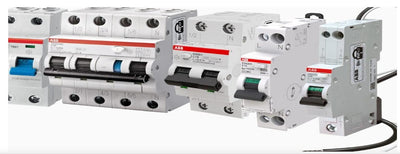
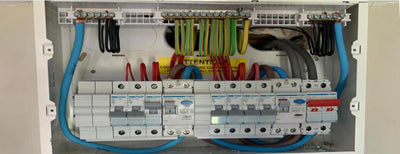
| Protection | 32A or 40A MCB or RCBO, RCD protection to BS 7671 |
| Isolation | 45A double pole cooker switch within 2m |
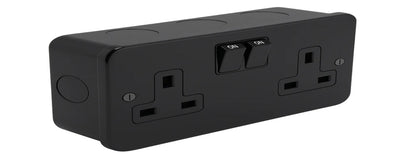
The isolation point is where most kitchens use a 45A cooker switch, often with a 13A socket built in for a kettle. It must be a double pole switch so both live and neutral are broken: our double pole switch guide explains why that matters on a 230V supply. Many older homes need a consumer unit upgrade or a load check before a hob goes in.
Why induction wins on efficiency
Induction converts roughly 85 to 90 percent of the electricity into useful heat. Ceramic electric sits near 65 percent, gas nearer 40 percent. Combined with shorter boil times, that is real money on a time-of-use tariff, and it pairs well with solar or a heat pump in an all-electric home.
Three myths worth clearing up
- "It is expensive to run." It draws high power briefly, but cooks faster, so the energy used per meal is usually lower than ceramic.
- "It is unsafe." No flame, and the surface cools fast once the pan is lifted. Safer than gas on every count that matters in a kitchen.
- "Any pan works." Only ferromagnetic cookware. Aluminium and copper need a magnetic base layer.
Frequently asked questions
Can I plug an induction hob into a normal socket?
Small portable single-zone hobs up to about 3kW can run from a 13A socket. A built-in multi-zone hob cannot: it needs a dedicated cooker circuit sized by an electrician.
What size cable does an induction hob need?
Usually 6mm² for hobs up to about 7kW on a short run, or 10mm² for higher loads or longer runs. The electrician sizes it to the rating, the protective device and the cable route.
Does an induction hob need its own circuit?
Yes. A fixed induction hob needs a dedicated cooker circuit from the consumer unit, with its own MCB or RCBO and a local 45A double pole isolation switch.
Do I need to upgrade my consumer unit?
Often in older homes, yes. There may be no spare way, or the existing board may lack RCD protection. An electrician assesses the load and the board before installation.
Wiring an induction kitchen?
- Cooker switches and sockets — 45A double pole isolation
- Fused connection units for fixed appliances
- BG sockets and switches for the rest of the kitchen
See the switches and sockets buying guide for ratings, or open a trade account for kitchen-project pricing. This guide is general information, not a substitute for advice from a qualified electrician.